Black and pink hair brings a dark, striking base together with a fun burst of color. Whether you are looking for black with pink subtly woven in or a full transformation, exploring pink black hairstyles is a fun way to upgrade your look. You can keep the pink hidden beneath your natural hair, place it around the face, blend it through the ends or divide the two colors into a bold split-dye design.
The best black and pink hair ideas include hot-pink highlights, peekaboo underlayers, pink money pieces, black and pink ombre hair, balayage, chunky streaks and half-black, half-pink hair. The right option depends on how visible you want the pink to be and how much maintenance you are prepared to manage. For example, a hidden underlayer is low-maintenance and great for beginners, whereas a half-and-half split dye requires frequent root touch-ups and strict at-home color care.
Pastel pink usually appears brightest on pre-lightened hair. Magenta, raspberry and deep fuchsia can create a stronger effect on a darker base, resulting in a striking dark and pink hair aesthetic, although dark hair may still need lightening to a level 8 or 9 (light blonde) when you want a vivid result.
Best Black Hair With Pink Highlights
Exploring black with pink highlights hair gives you plenty of ways to tailor the look. Whether you want subtle babylights or vivid panels, putting pink in black hair adds instant depth. From black hair with pink highlights to bold block coloring, here are the best options.
1. Fine Raspberry Pink Highlights on Black Hair
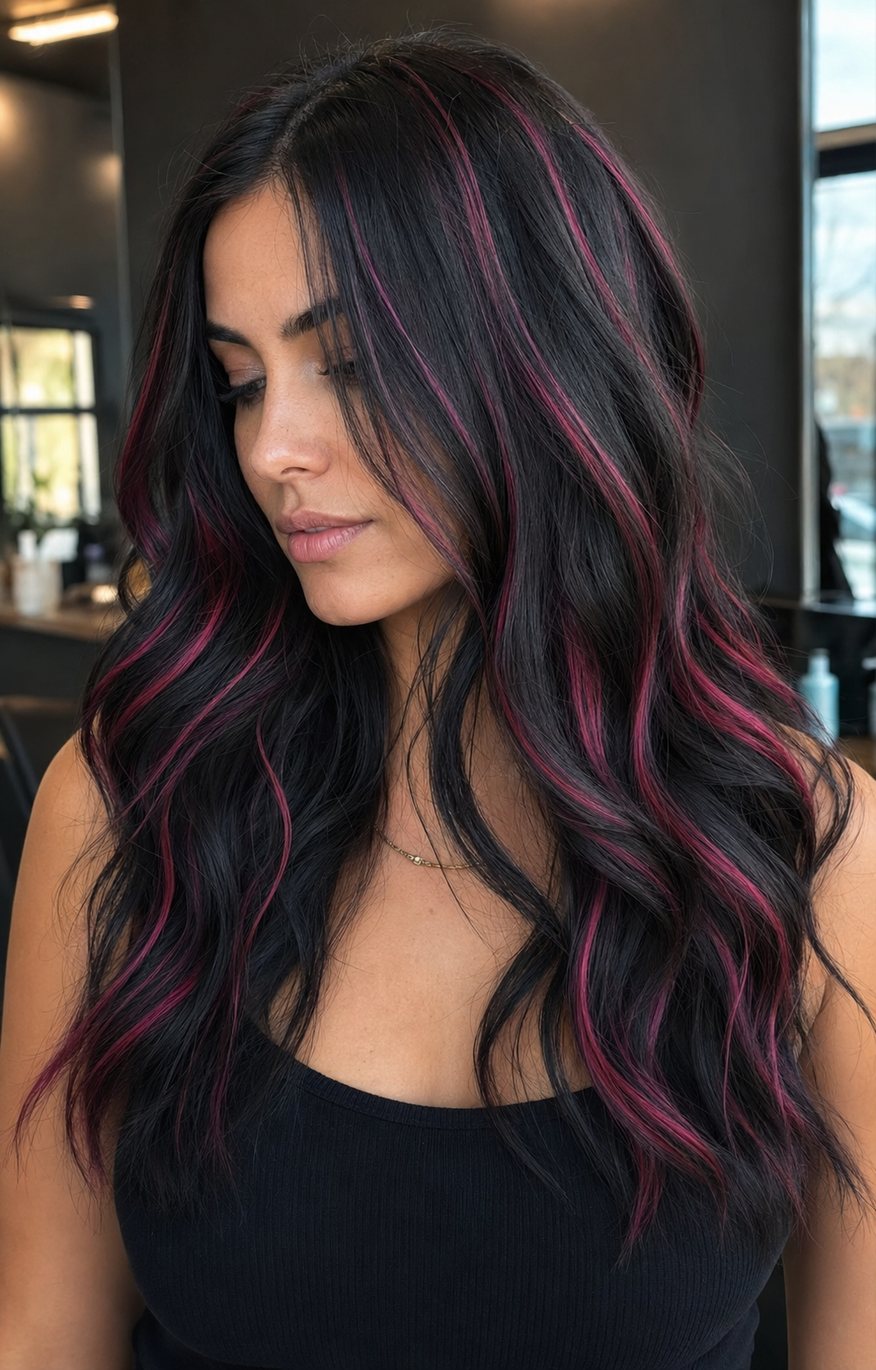
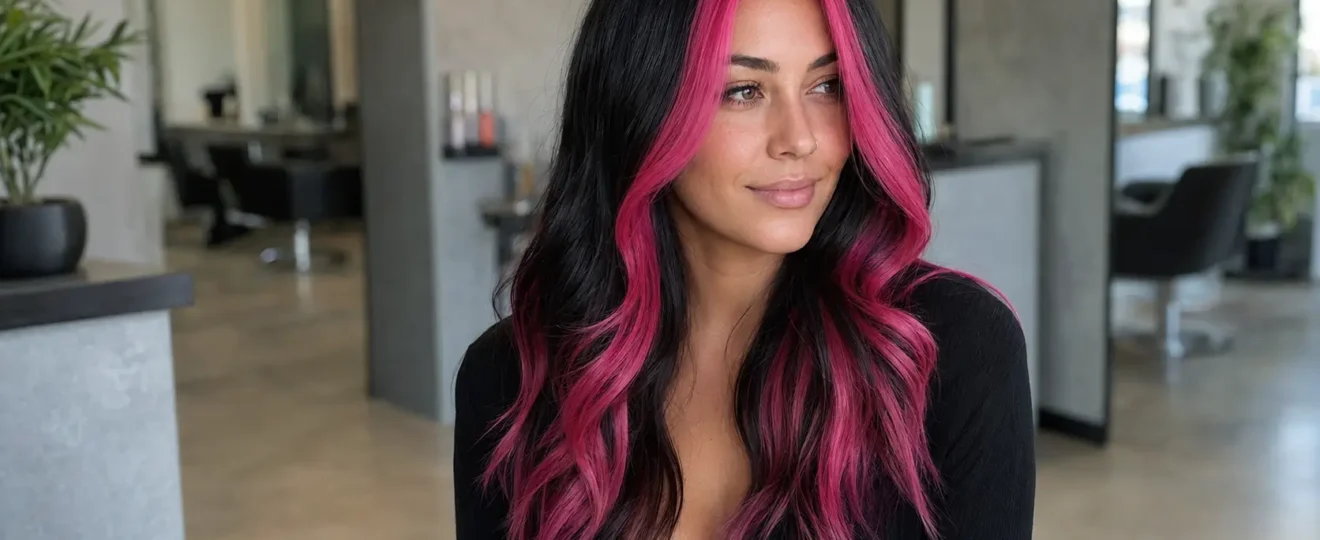
Fine pink highlights create narrow ribbons of color that appear between the darker strands. Ask your colorist to use a weaving technique to distribute the highlights evenly from the crown through the ends, rather than concentrating them in one solid chunk.
A deep rose or raspberry shade creates a more blended result. Bright bubblegum pink produces stronger contrast. It looks best on long, wavy hair because the movement reveals different pieces of color. It’s one of the easiest black and pink highlights styles to wear.
2. Hot-Pink Face-Framing Money Pieces
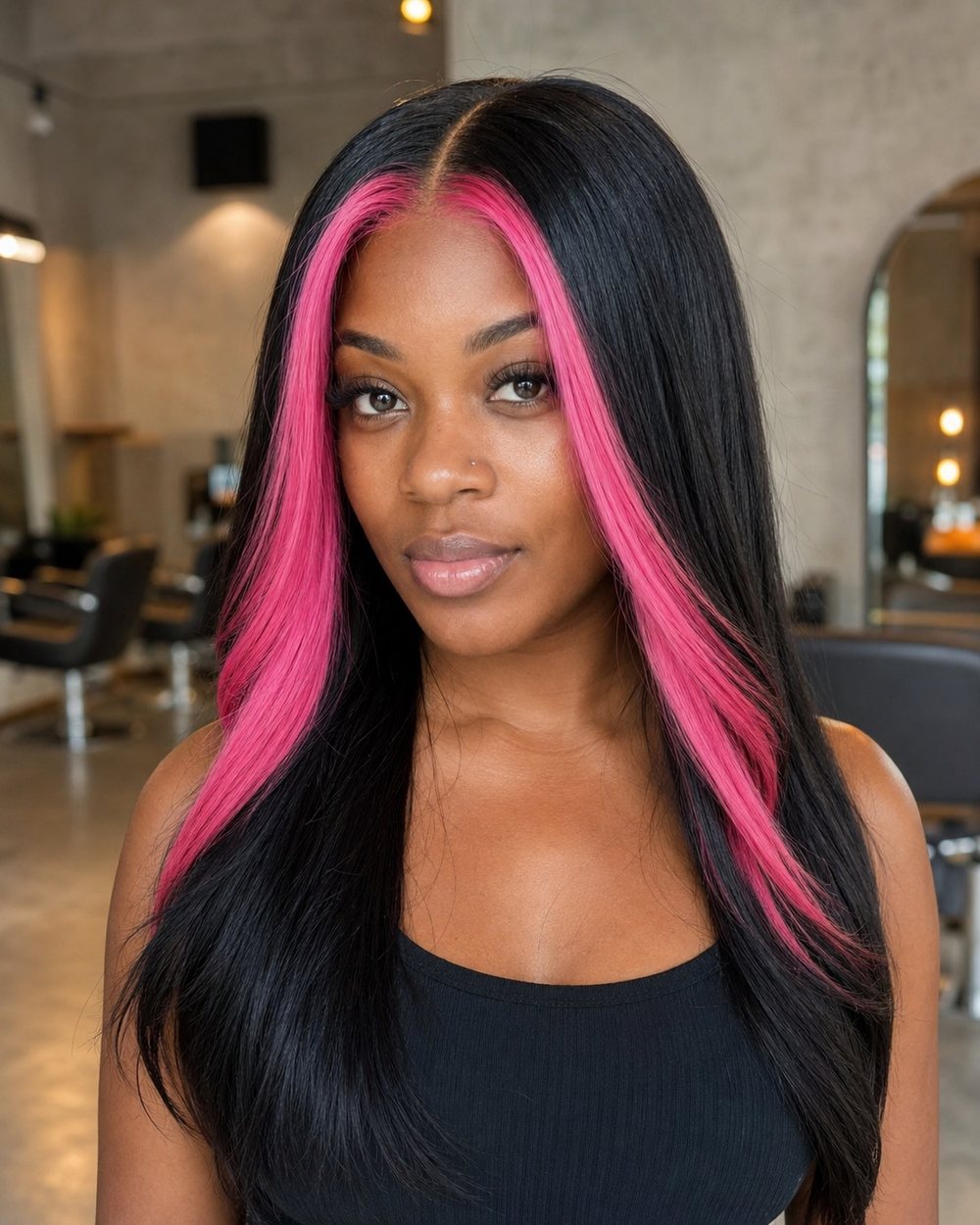
Place two vivid hot-pink sections around the front of the hair while keeping the remaining length black. The result frames the face without requiring a full head of fashion color. It’s a go-to for black and hot pink hairstyles.
The pink pieces can start directly at the roots for maximum impact, or begin one to two inches below the hairline for a softer, more blended grow-out phase that hides regrowth. This style is often called a pink money piece.
3. Black Hair With a Single Pink Money Piece
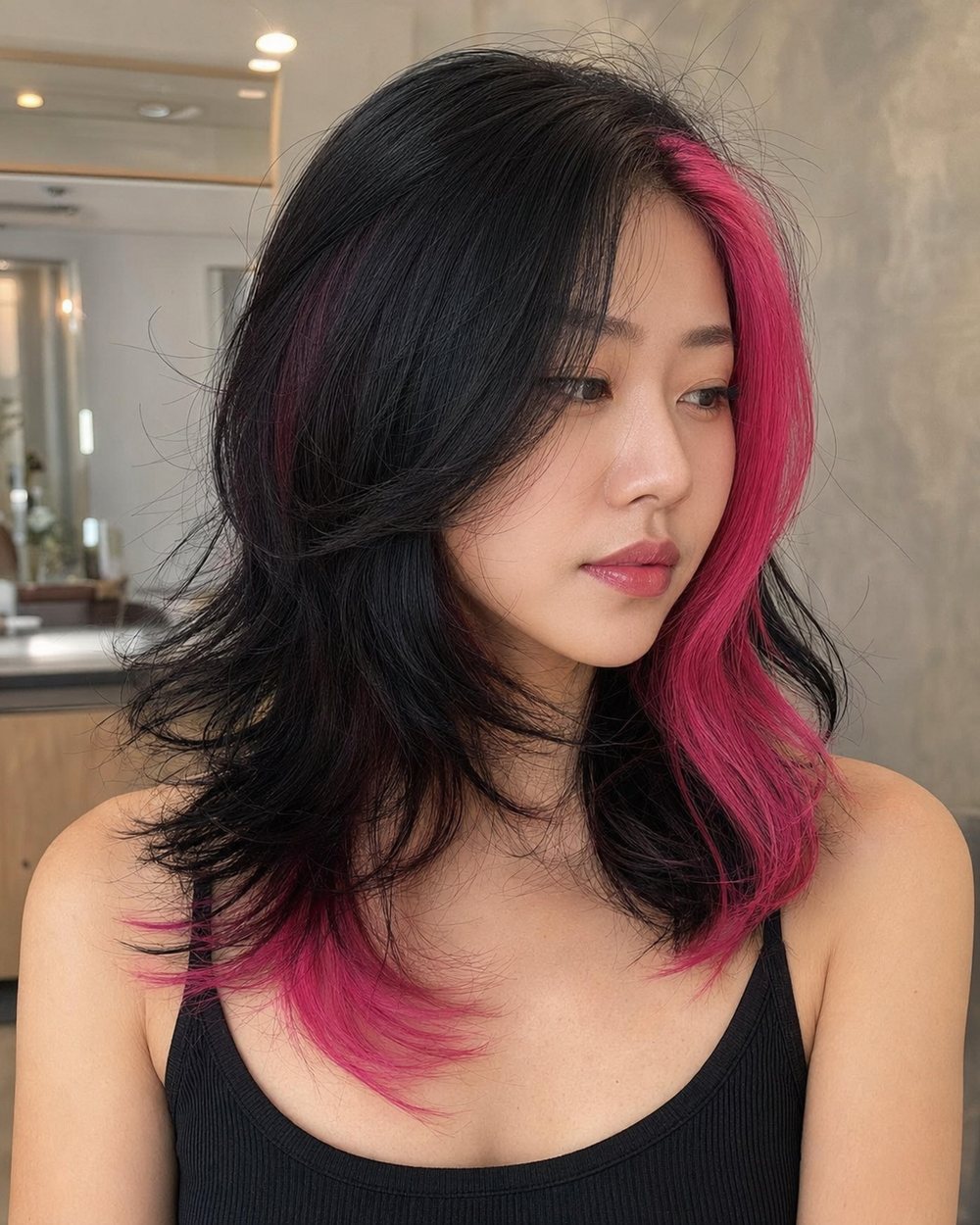
A single pink money piece creates an intentionally uneven, editorial look. Instead of coloring both sides, lighten one front section and apply a saturated fuchsia, neon pink or magenta tone.
The asymmetry suits side parts, layered cuts and choppy bangs. It is also an effective way to test whether you enjoy wearing a vivid shade before fully committing to black with pink hair.
4. Chunky Bubblegum-Pink Highlights
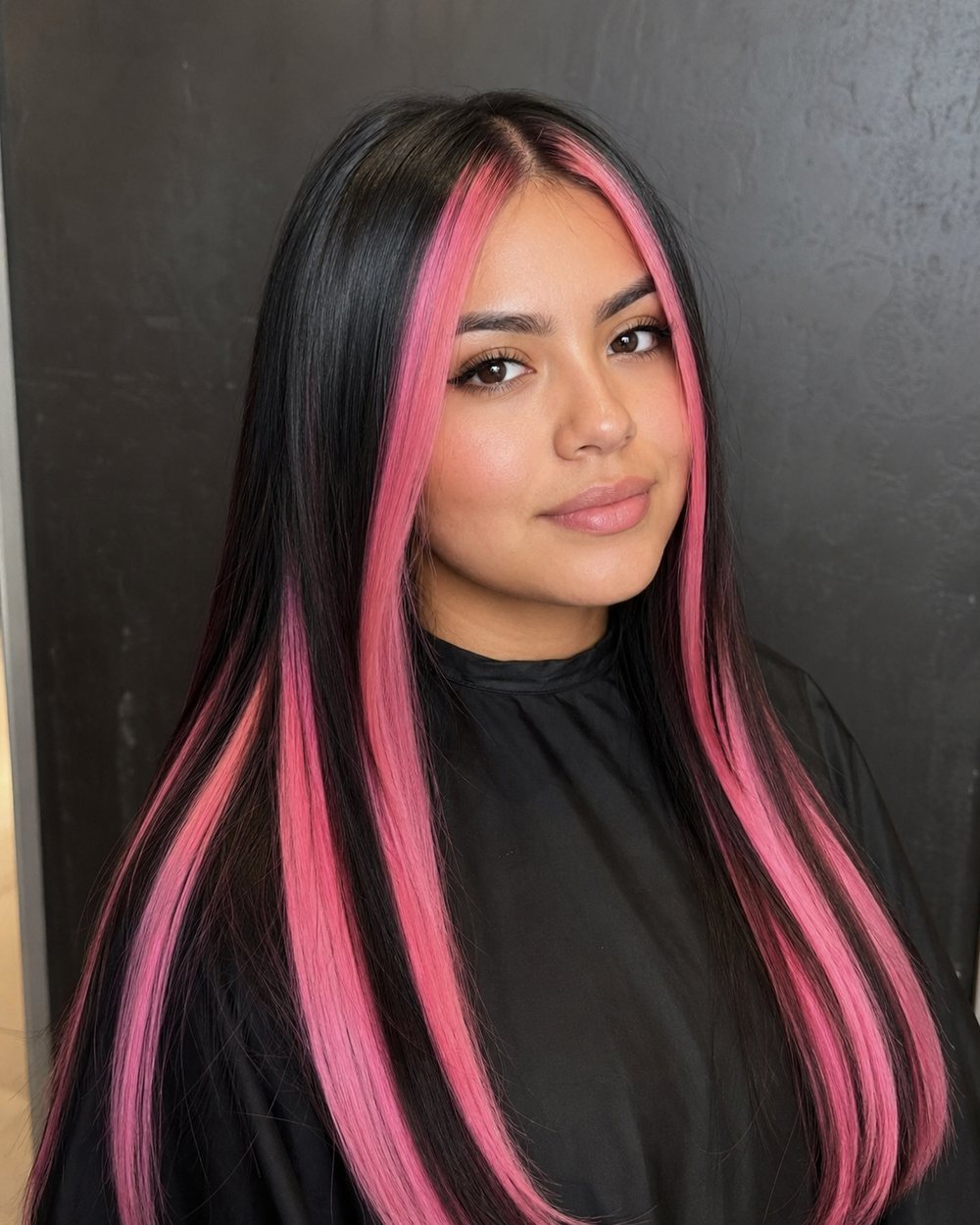
Chunky pink highlights use wide, half-inch to one-inch sections rather than fine ribbons. The strong separation between black and pink gives the hairstyle a graphic, early-2000s appearance.
Place the sections around the face, beneath the parting and through the lower lengths. Keep each pink panel clearly defined—ask your stylist for “color blocking” rather than blending if you want the contrast to remain visible when the hair is straight.
5. Magenta Highlights on Jet-Black Hair
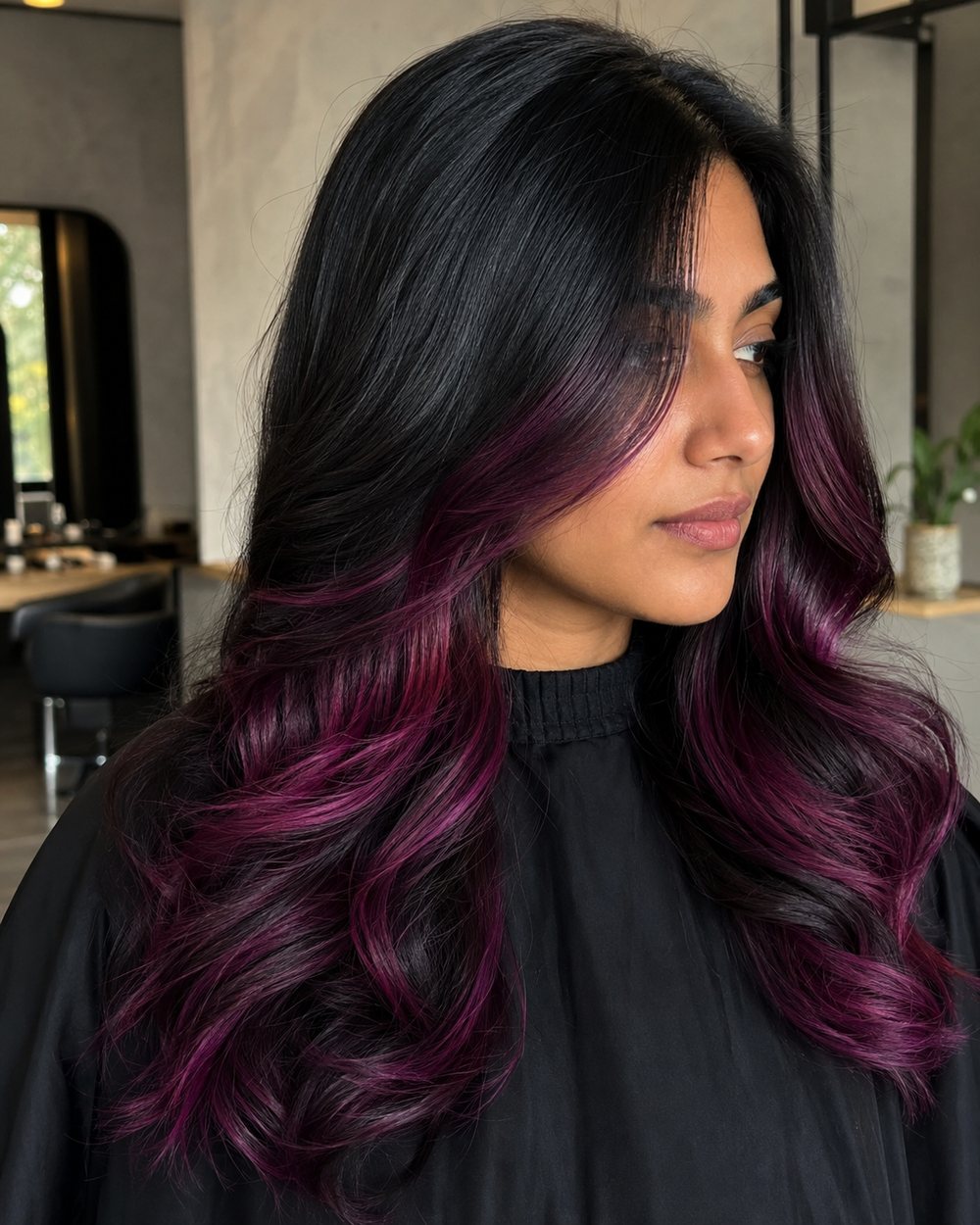
Magenta provides a deeper alternative to bubblegum or pastel pink. Its purple-red undertone creates rich contrast against a cool jet-black base, giving your black and pink hair a rich twist.
Use magenta through the mid-lengths and ends while leaving the top 2-3 inches of roots dark. Leaving the roots dark means you can wait 8 to 12 weeks between touch-ups. The darker pink shade can also retain more visual depth than a very pale pastel, especially when worn on curls or glossy waves.
6. Pink Skunk-Stripe Highlights on Black Hair
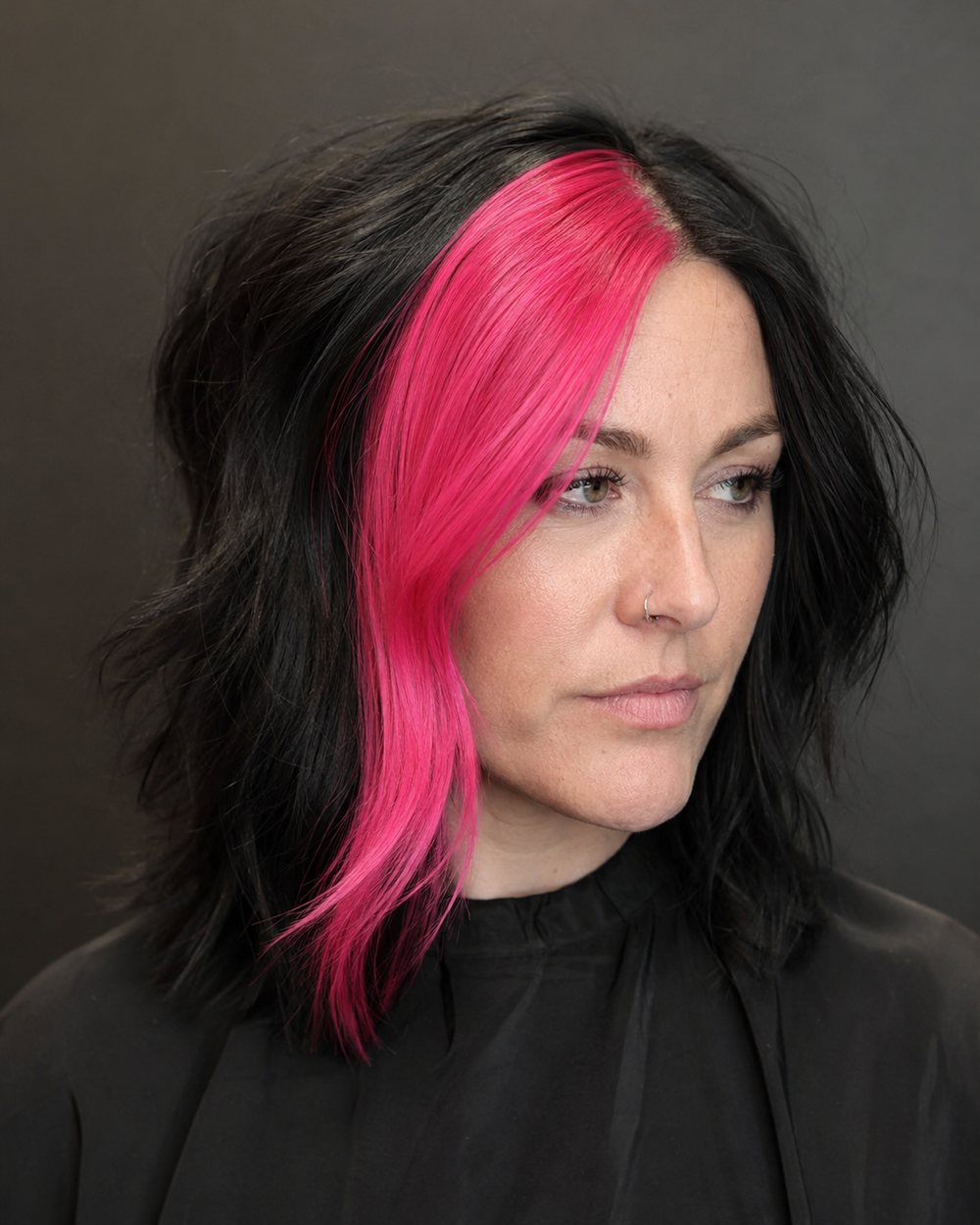
Skunk-stripe hair uses one or two wide, high-contrast panels near the front of the head. Replace the traditional blonde stripe with bright pink for a stronger pink black hair combination.
A thick streak placed right at the hairline near a middle or side part creates the clearest effect. You can continue the panel to the ends or restrict it to the fringe and temple area.
7. Black Hair With Muted Pink Babylights
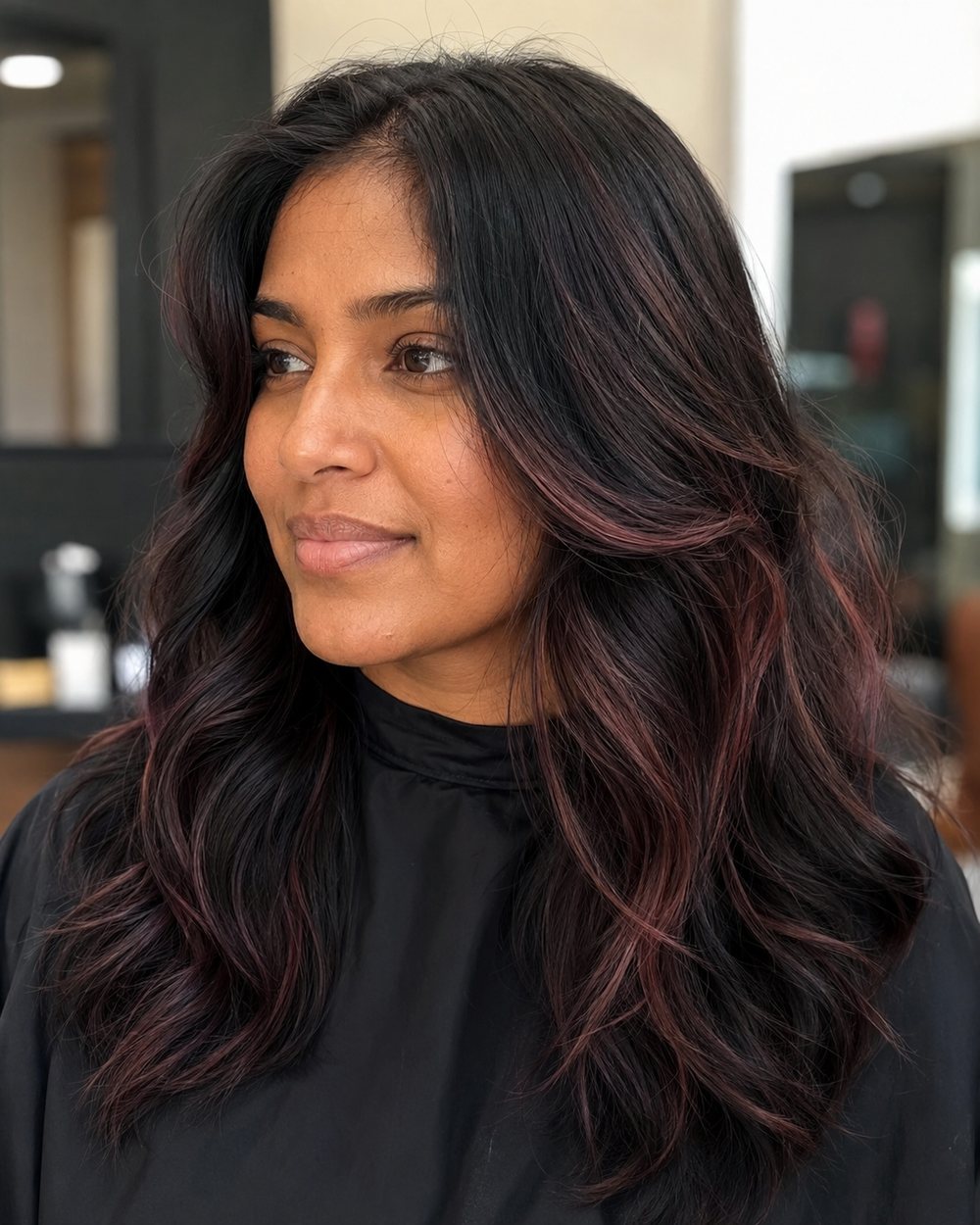
Pink babylights are much finer than standard highlights. They use ultra-fine sections to add a soft haze of color rather than obvious pink chunks.
Try this approach when you want dimension but do not want the pink to dominate your black base. Dusty rose, mauve pink and muted berry shades mimic the way sunlight naturally lifts color, creating the most understated effect.
8. Alternating Black and Pink Streaks
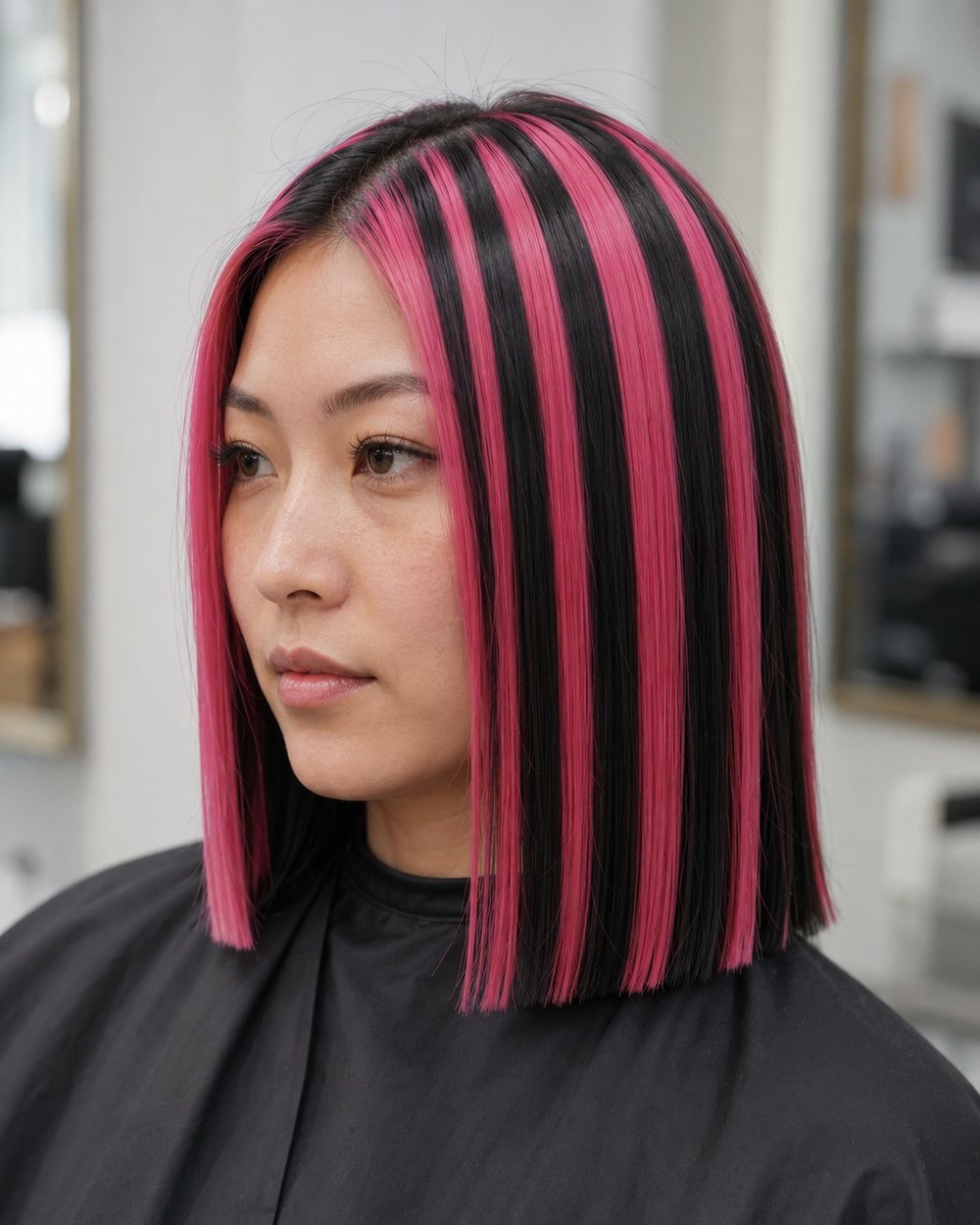
Alternate black and pink sections around the entire head for a clearly striped result. The panels can be thin and consistent or vary in width for a less uniform finish.
This style looks especially defined on straight hair, blunt cuts and smooth extensions. Waves will soften the stripes and blend the two colors visually.
Peekaboo Black Hair With Pink Underneath
9. Pink Peekaboo Hair Under a Black Top Layer
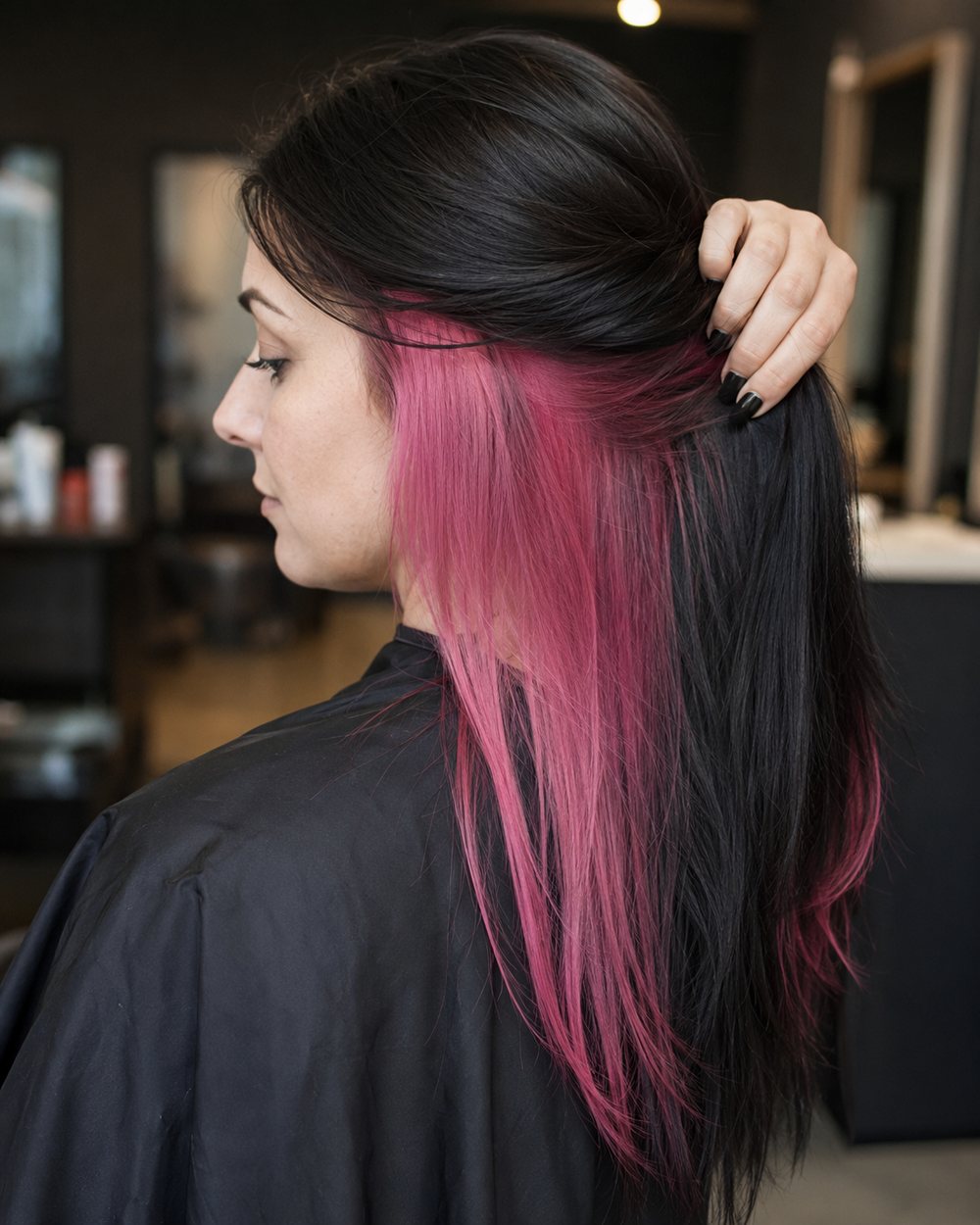
Pink peekaboo hair places the bright color beneath a black top layer. The pink remains completely hidden when the hair is worn straight down, but becomes visible in ponytails, braids and half-up styles.
Ask your colorist to place the pink along the lower back curve of your head. This keeps the color tucked under the top layers but makes it pop perfectly when you pull your hair up.
10. Hot-Pink Nape Underlayer on Black Hair
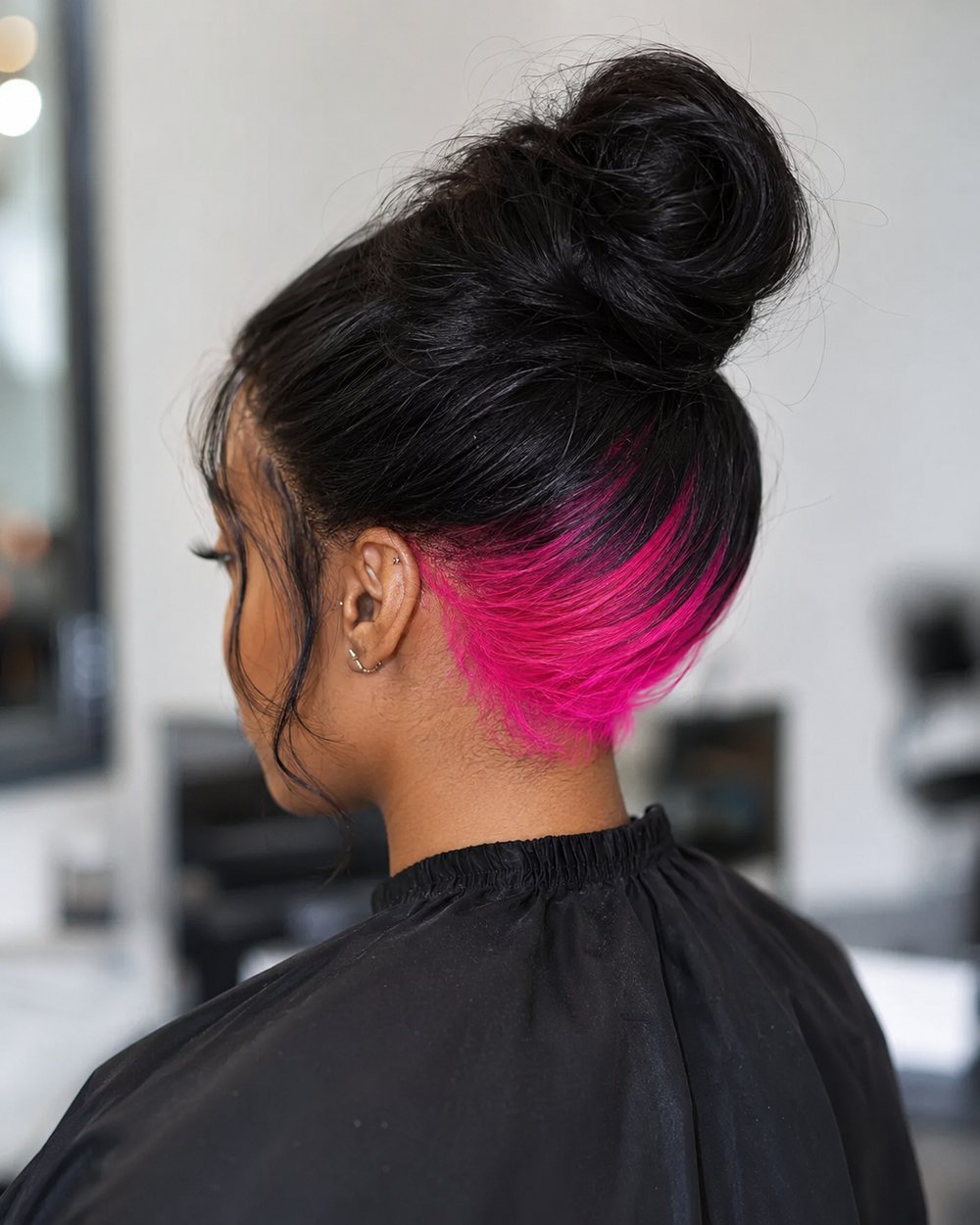
Concentrate the pink along the nape while leaving the crown and upper lengths black. The color appears when the hair is lifted into a bun, claw-clip twist or high ponytail.
This placement works on medium and long hair. Because the colored roots remain underneath the darker top layer, it makes regrowth virtually unnoticeable until your hair grows out more than two inches.
11. Pink Underlayer on a Black Bob
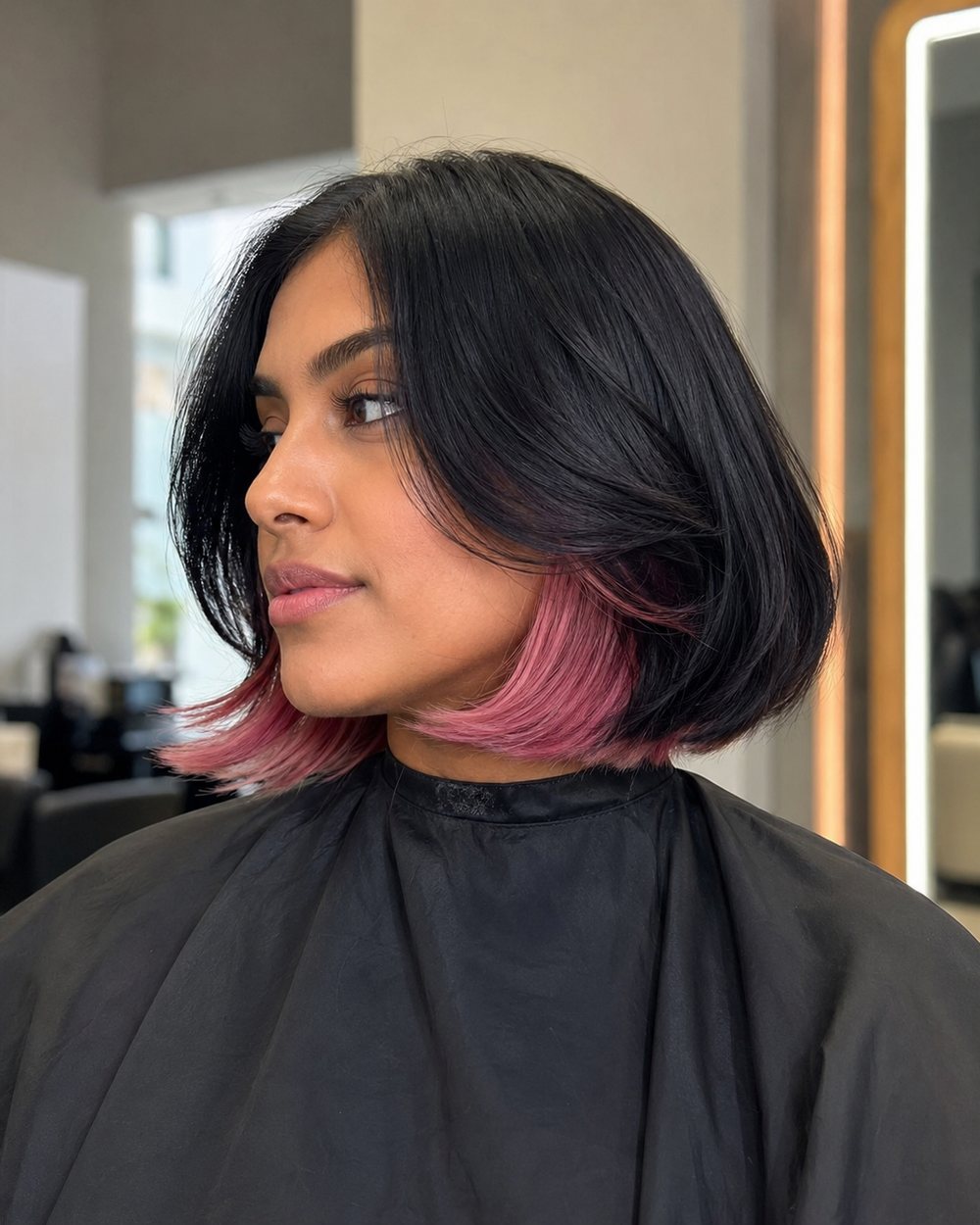
A black bob with a pink underlayer reveals color whenever the ends move or curve outward. Ask for the lower interior section to be lightened while preserving a solid black layer over the top.
A chin-length or shoulder-length bob creates enough movement to expose the hidden shade without completely covering it.
12. Black Hair With Pink Underneath and Bangs
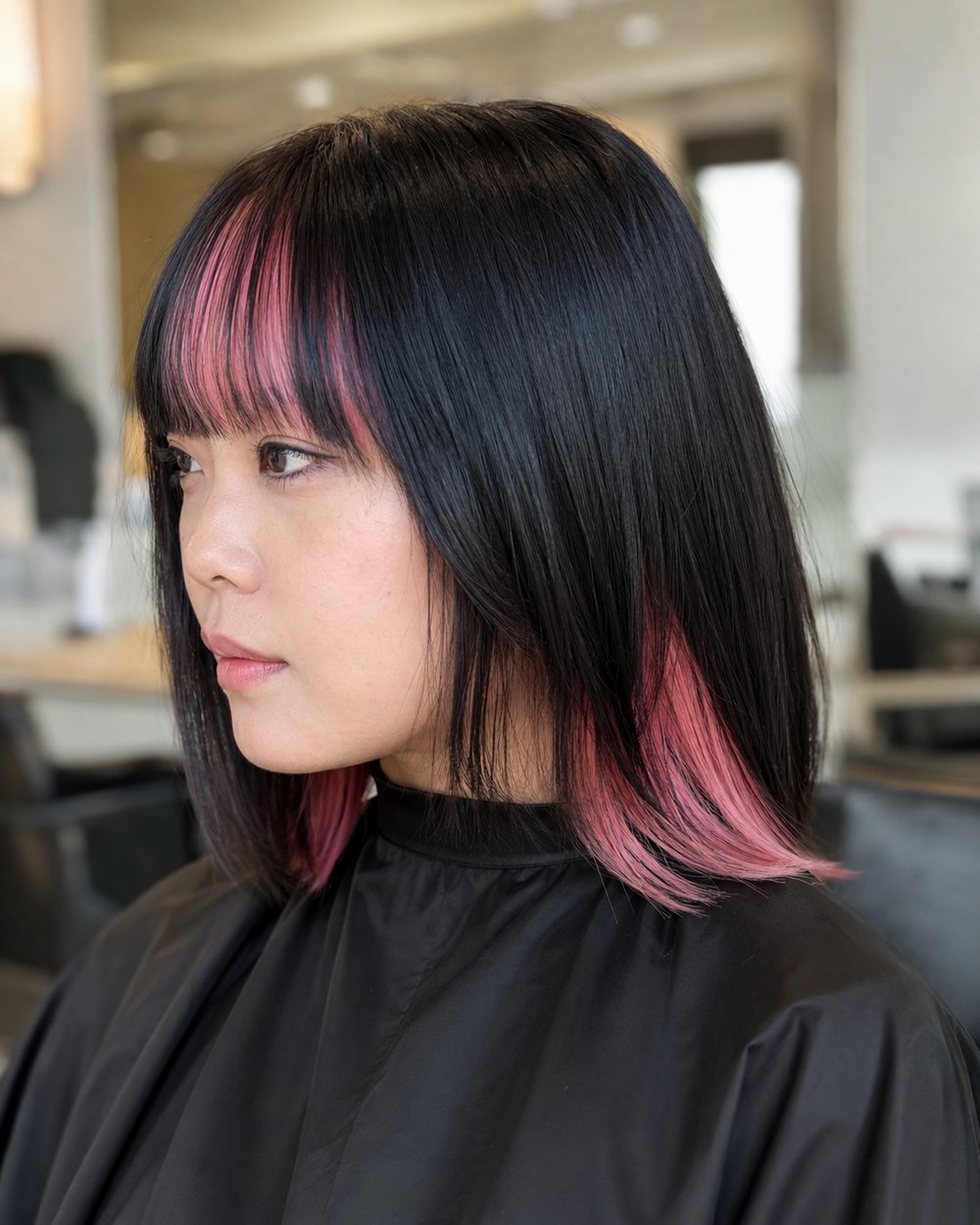
Combine a pink underlayer with a small section of pink beneath the bangs. This connects the hidden color to the front, creating a stylish look with pink bangs on black hair.
Choose thin, face-framing pink pieces for a subtle result, or a full under-fringe panel for stronger contrast. This approach suits curtain bangs, bottleneck bangs and straight fringes.
13. Pink Peekaboo Curls on Black Hair
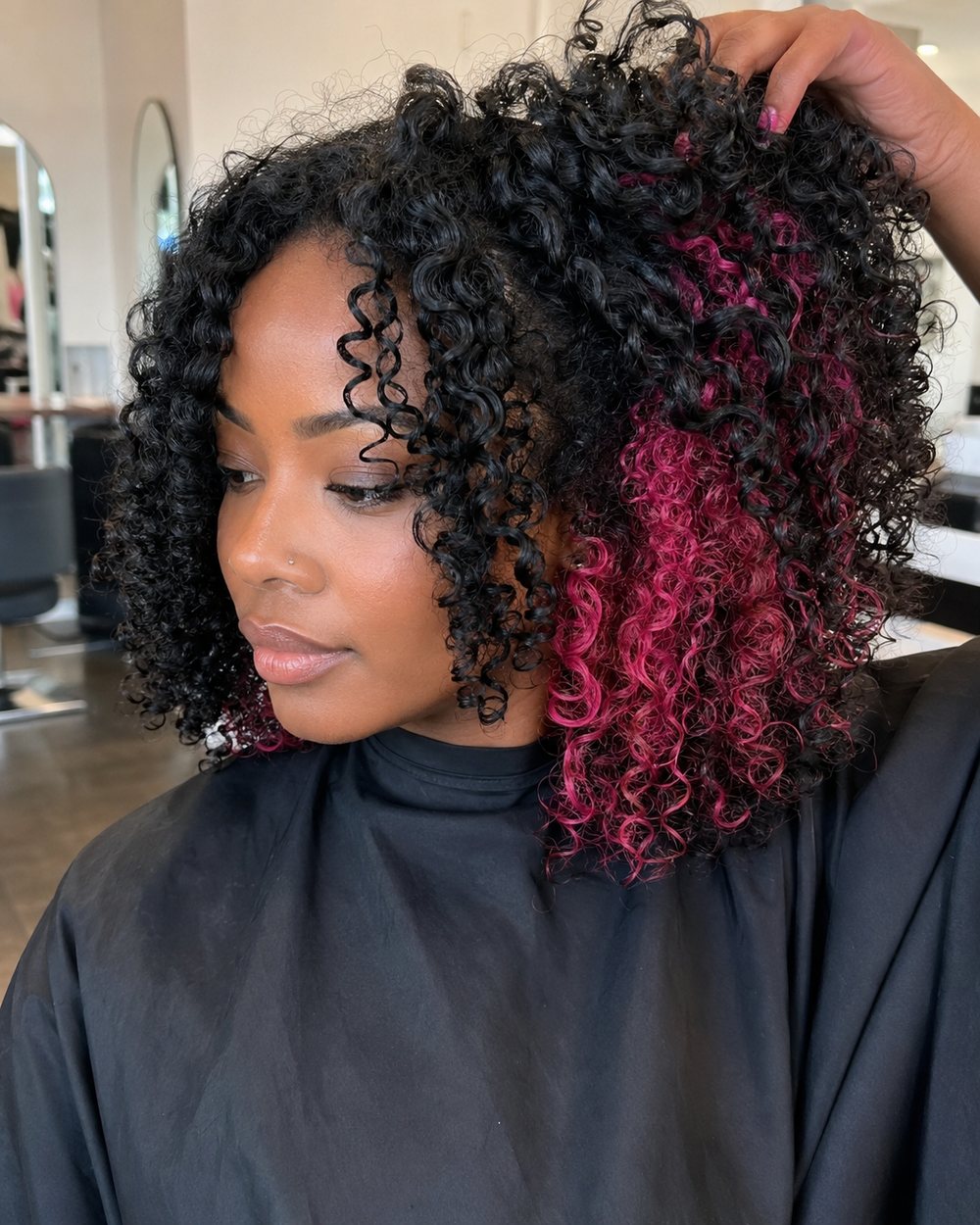
Place pink beneath the crown so that individual spirals reveal the color between black curls. The alternating shades make the curl pattern appear more dimensional.
Ask your colorist to plan the placement while your hair is in its natural, dry texture. A color pattern that looks balanced on straightened hair may fall completely differently once curls shrink and spring back up.
14. Hidden Pastel-Pink Underlayer on Black Hair
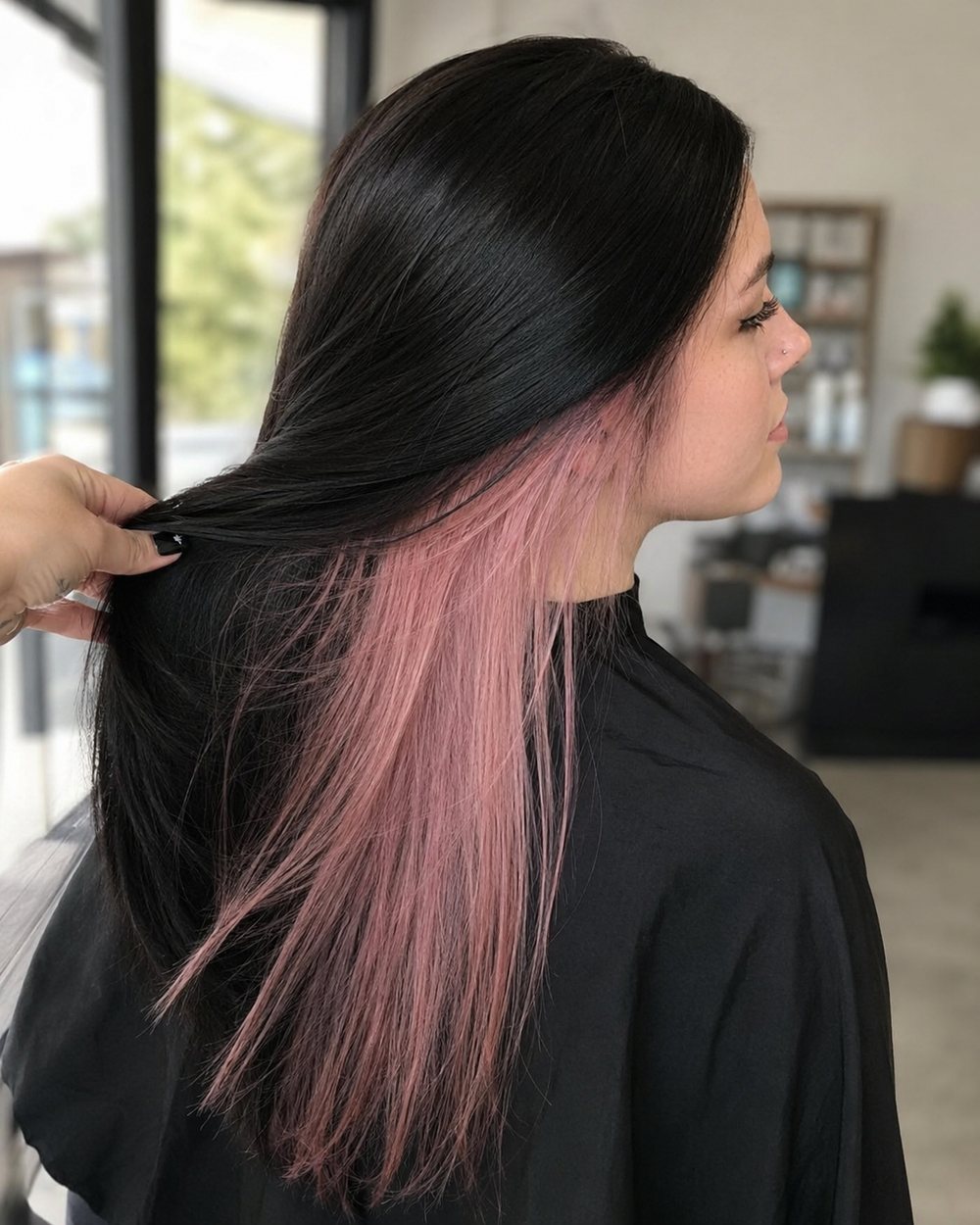
Use a soft blush or pastel pink beneath a solid black exterior. The difference between the dark top and pale interior creates dramatic contrast even when only a small amount of pink is visible.
Pale pink normally needs hair to be lightened to a very pale blonde to appear clean and recognizable. Applying it over darker hair will produce a muddy, muted rose rather than a true pastel.
Black and Pink Ombré Hair Ideas
15. Black-to-Hot-Pink Ombré
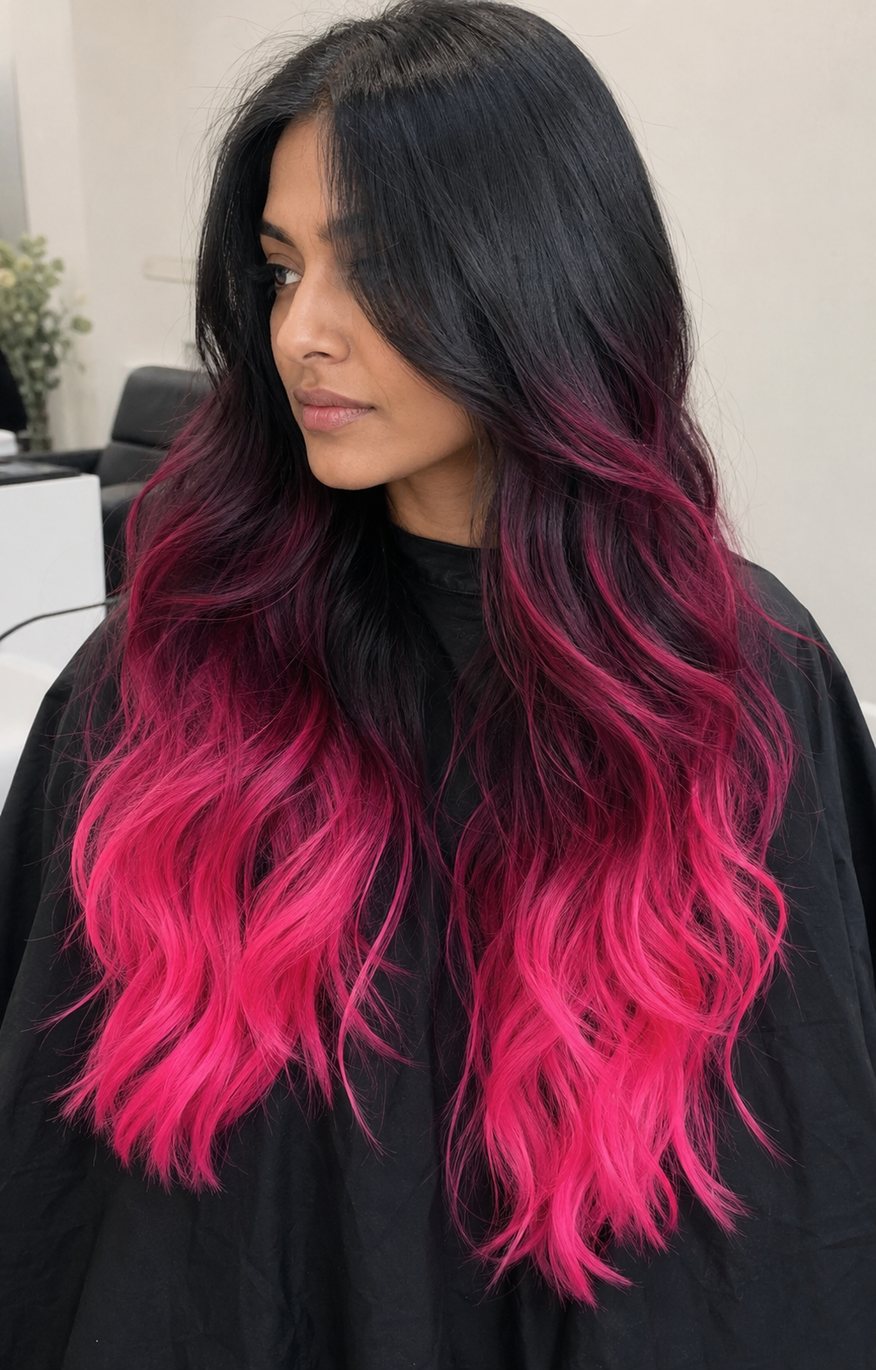
Keep the roots black before blending the mid-lengths into vivid hot-pink ends. The gradual transition connects the two colors without creating a hard horizontal line.
Start the pink at the collarbone or lower for easier grow-out, allowing you to wait 4 to 6 months between salon visits. Begin near the cheekbones if you want the color to become a major part of your everyday hairstyle.
16. Black-to-Pastel-Pink Ombré

This version moves from black roots through a smoky mauve transitional shade before reaching pale pink ends. The intermediate tone prevents the black and pastel sections from looking disconnected.
Because pastel pink needs a very light base, achieving this result on naturally dark hair can involve significant bleaching. A professional consultation is highly recommended if your lengths are already colored or fragile to prevent severe breakage.
17. Black Hair With Pink Dip-Dyed Ends
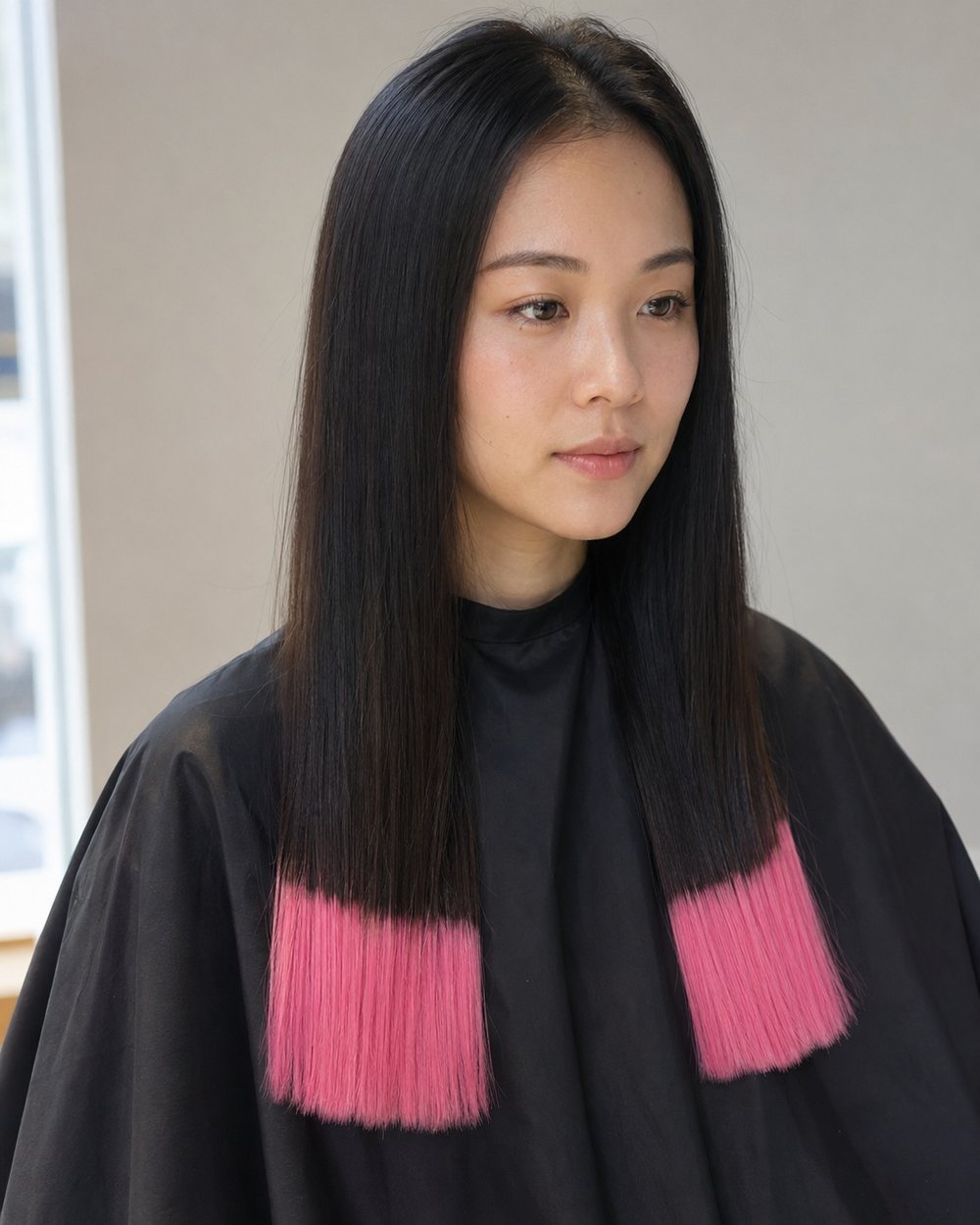
Dip-dyed hair keeps a visible, straight-across line between the black lengths and pink tips. If you want black hair with pink tips, this dip-dyed look is the perfect choice. Unlike ombré, the transition is deliberately abrupt.
It’s an easy way to add pink without changing the roots. It also allows the colored section to be trimmed away gradually when you are ready for a new look.
18. Black to Raspberry Pink Ombré
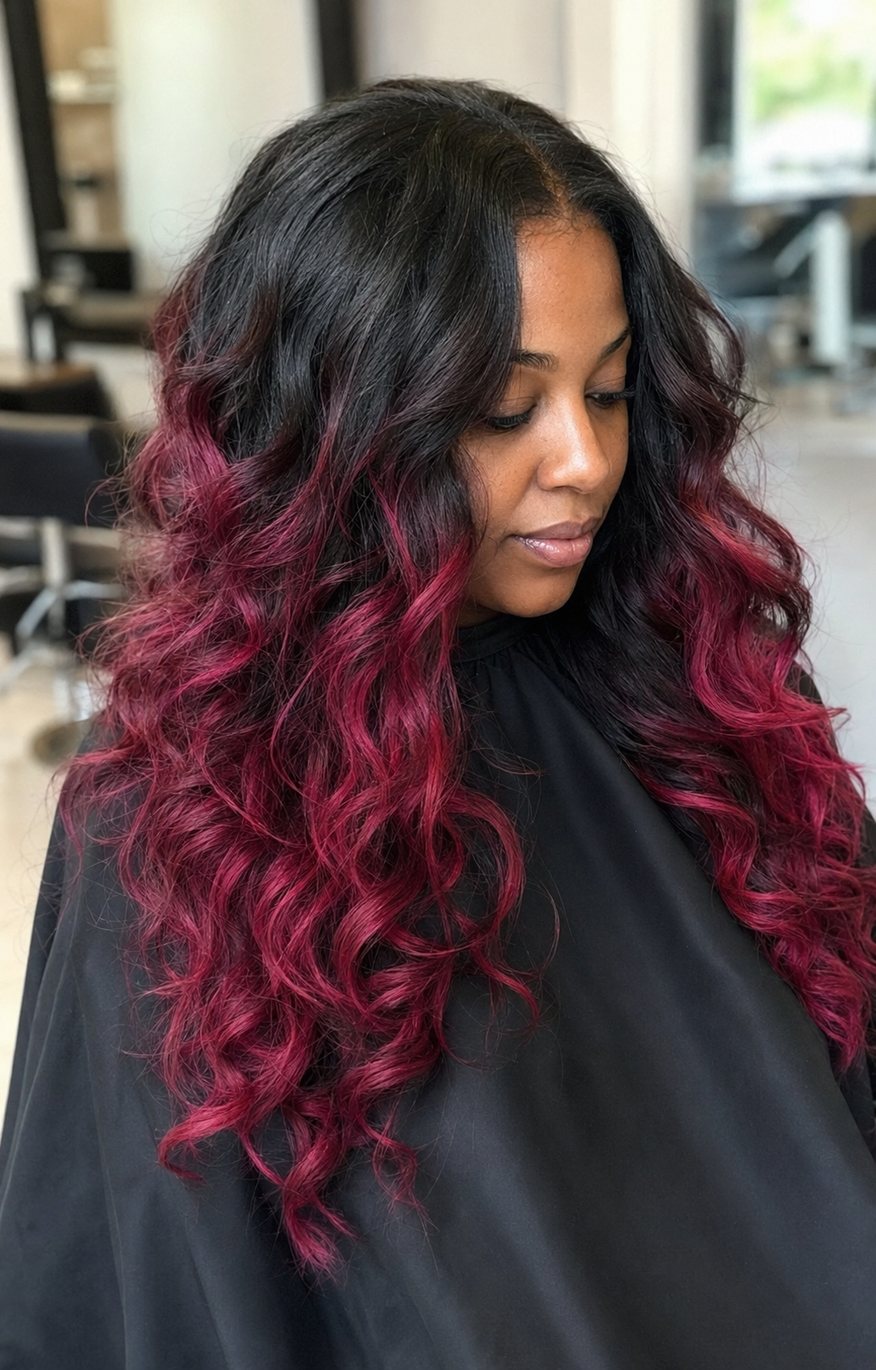
Raspberry pink sits between red, pink and magenta. It creates a rich transition from black without the stark contrast produced by pastel pink.
Use the shade from the middle of the hair through the ends. Loose waves help blend the transition and show the different tones within the raspberry color.
19. Black-to-Rose-Pink Gradient
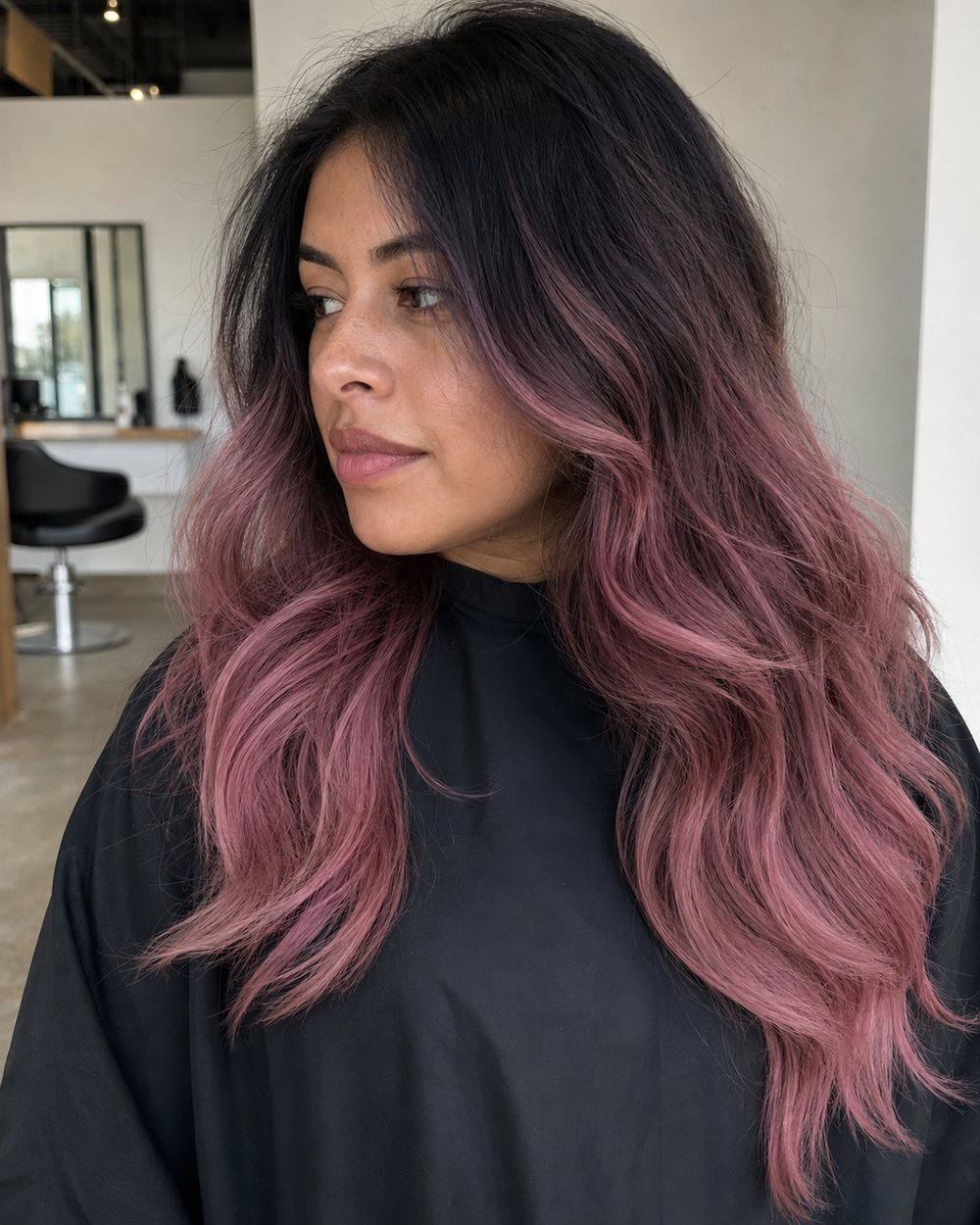
A muted rose-pink gradient creates a softer, more wearable interpretation of black hair with pink. Blend the dark roots through dusty mauve before finishing with rosy ends.
The muted palette suits people who like pink but do not want a neon result. It also pairs well with soft layers and brushed-out waves.
20. Reverse Pink-to-Black Ombré
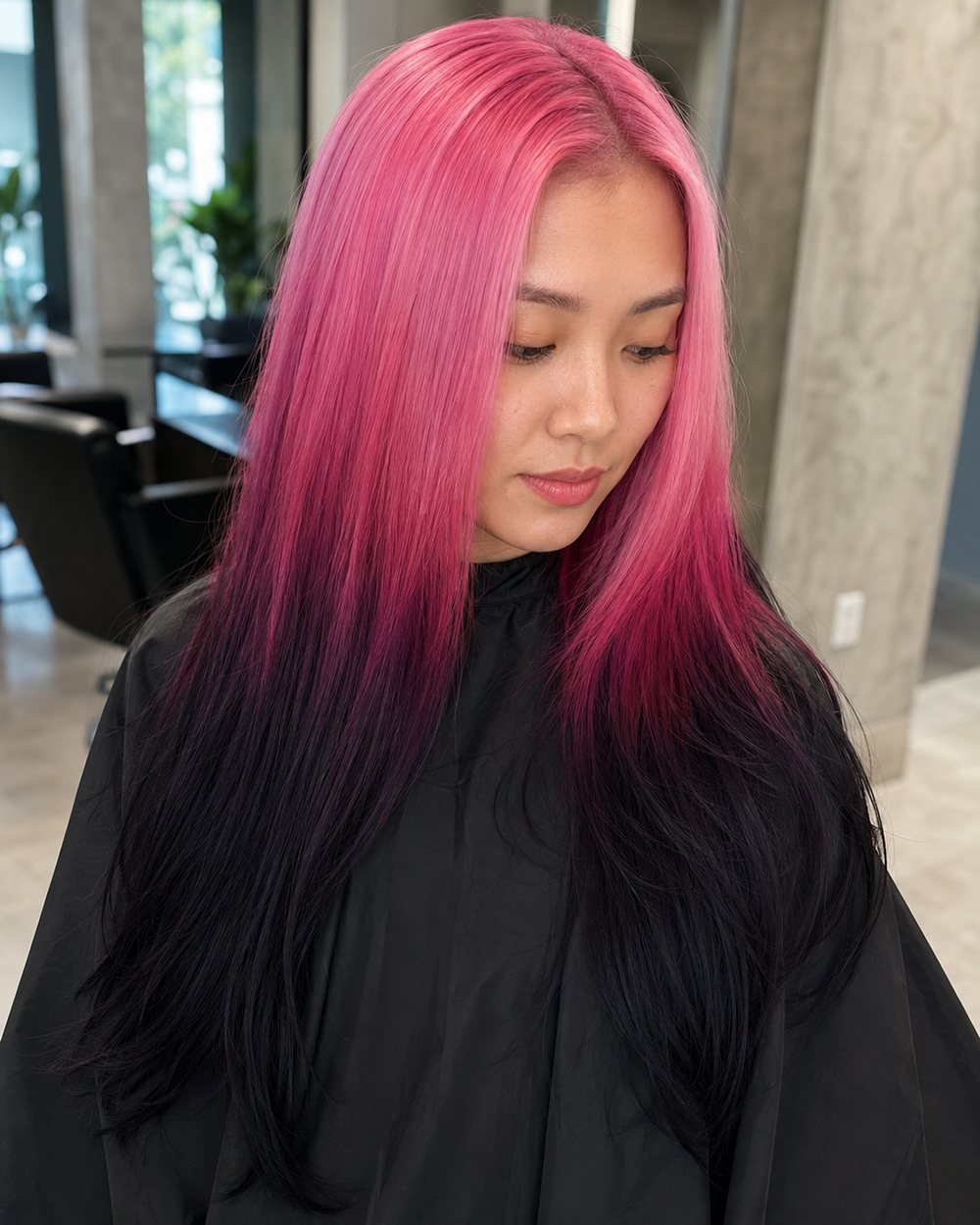
Reverse the traditional placement by wearing pink around the roots and upper lengths before fading into black ends. For those considering pink hair with black tips, this arrangement creates a striking effect.
Be prepared for more upkeep: because the pink begins close to the scalp, you will need root touch-ups every 4 to 6 weeks. However, the black ends create depth and make the style noticeably different from standard pink ombré hair.
Black and Pink Balayage Ideas
21. Pink Balayage on Black Hair
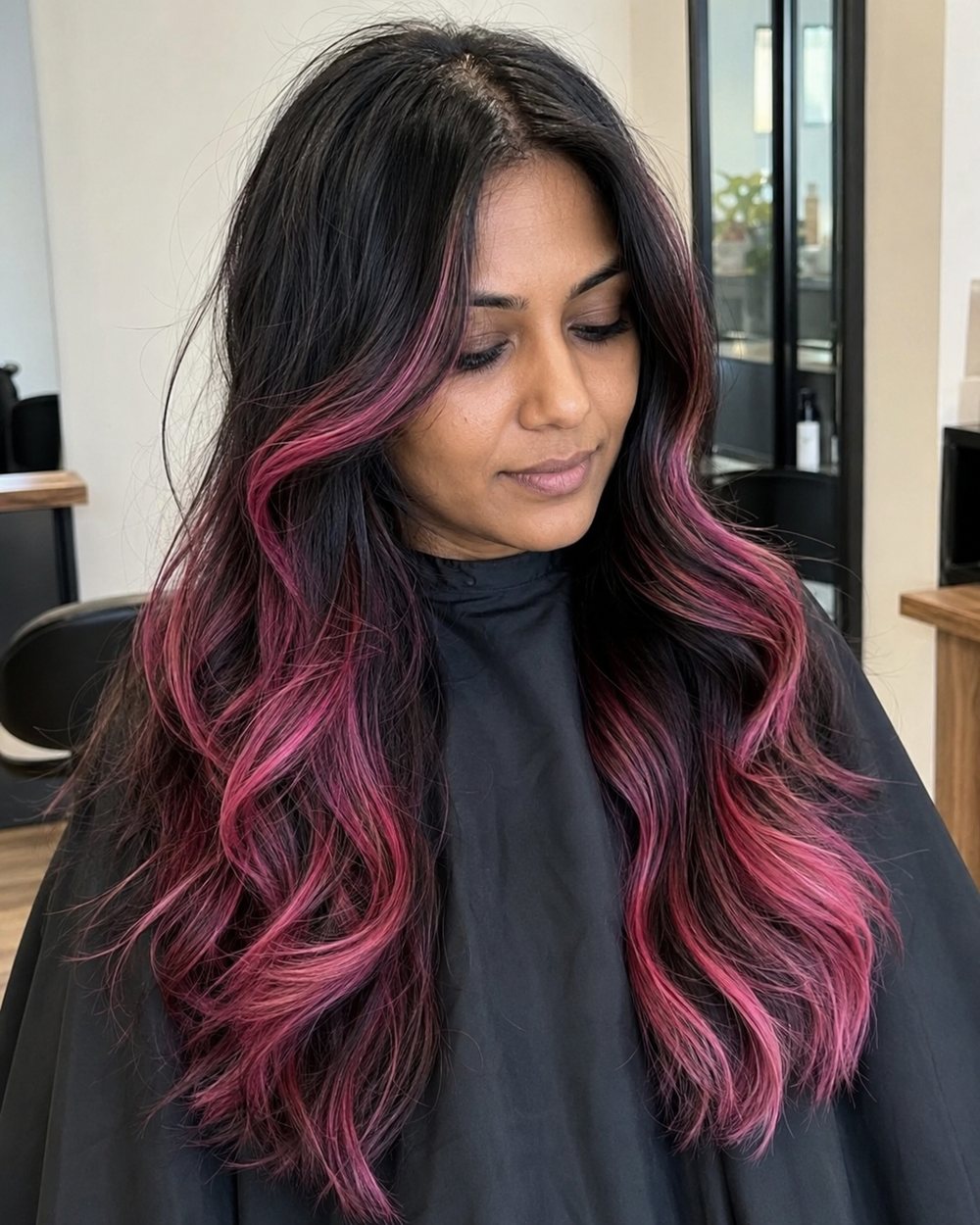
Pink balayage uses a free-hand painting technique to create an irregular, blended distribution of color. Instead of saturating every strand, the pink appears through selected mid-lengths and ends.
Lightening 20-30% of the hair creates a soft, natural effect, while painting 50% or more of your lengths makes a bold statement. Balayage is particularly effective on waves, layers and textured cuts because the painted pieces follow the hair’s natural movement.
22. Dusty-Pink Balayage With Black Roots
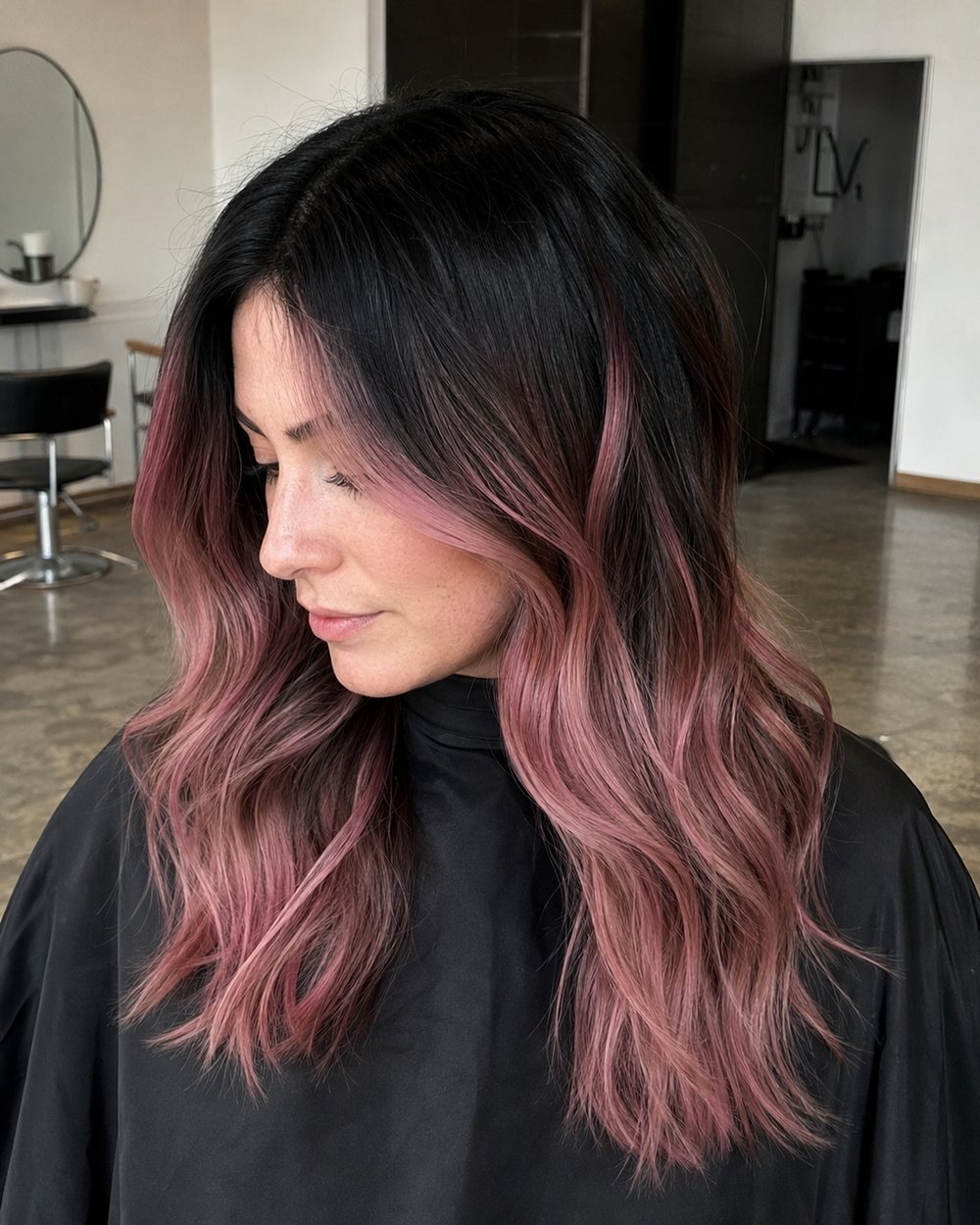
Combine natural-looking black roots with dusty-pink ribbons through the lower lengths. The muted shade reduces the visual difference between the dark base and colored sections.
Keep the root area intentionally shadowed and begin the pink at different heights—such as the chin on the left, and the collarbone on the right. This staggered placement prevents a single, solid line from forming as the hair grows out.
23. Hot-Pink Balayage on Long Black Hair
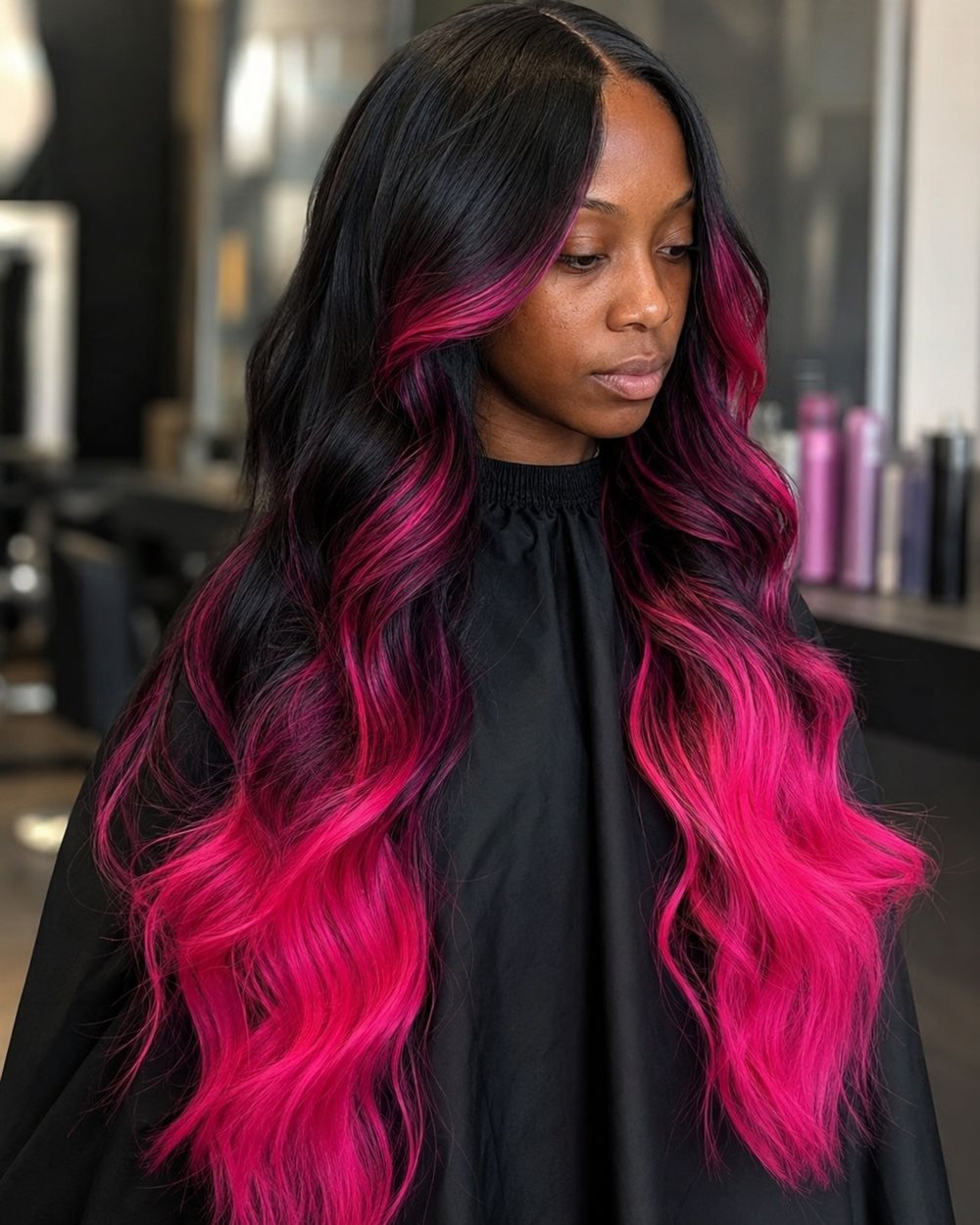
Long hair provides enough space to blend black, dark magenta and bright pink within the same design. Concentrate the vivid color around the front and through the ends.
Ask for several pink intensities rather than one flat shade. Placing darker berry tones near the transition point makes the brighter ends look more luminous and three-dimensional.
24. Pink Balayage on a Black Lob
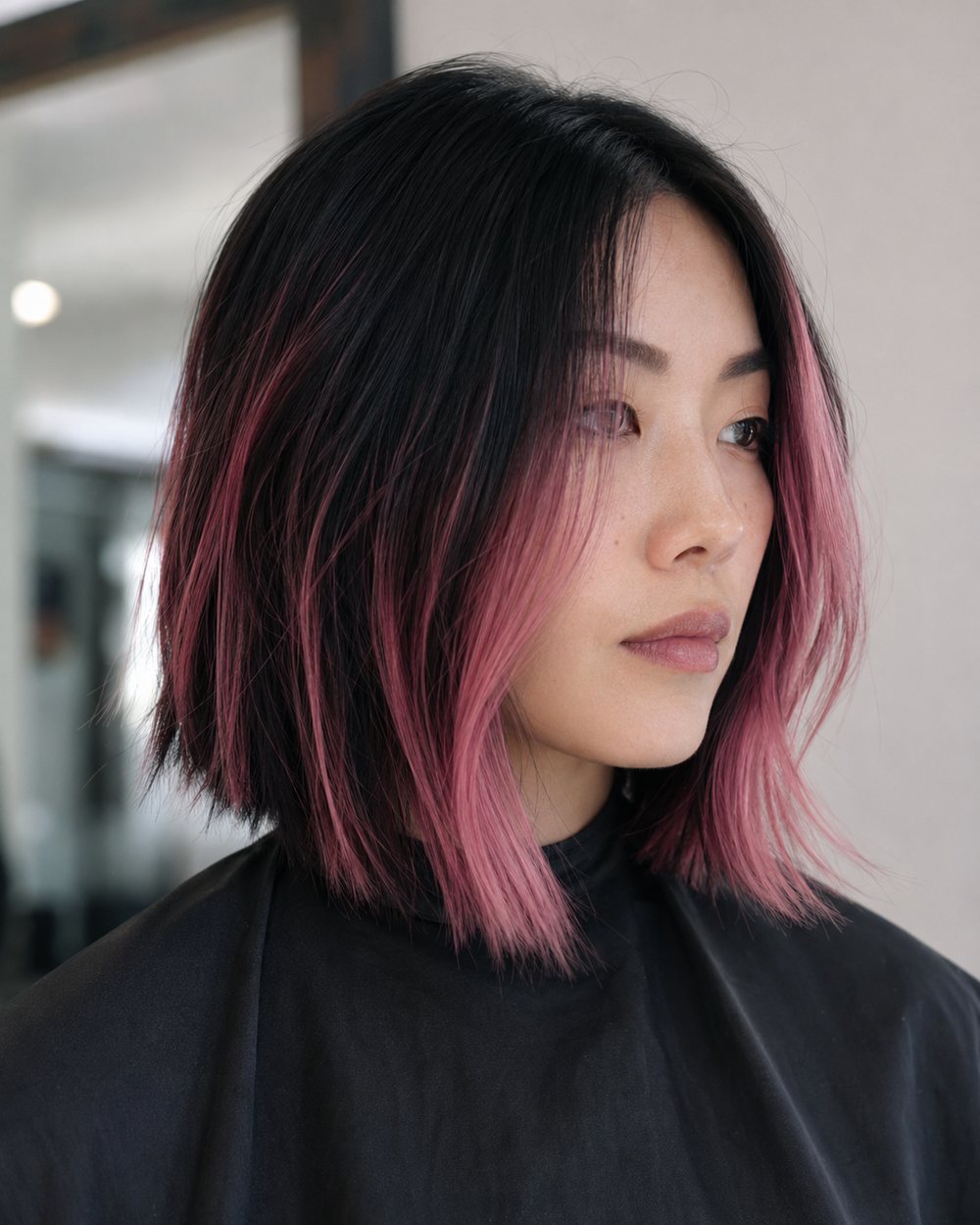
A long bob gives pink balayage a compact, modern shape. Place brighter pieces around the face and smaller sections through the back.
The color should follow the haircut: paint the pink right down to the ends of the perimeter to emphasize the outline of a blunt lob, while keeping finer pieces near the crown to complement a layered cut.
Half-Black, Half-Pink Split Dye Hair
25. Classic Half-Black, Half-Pink Split Dye
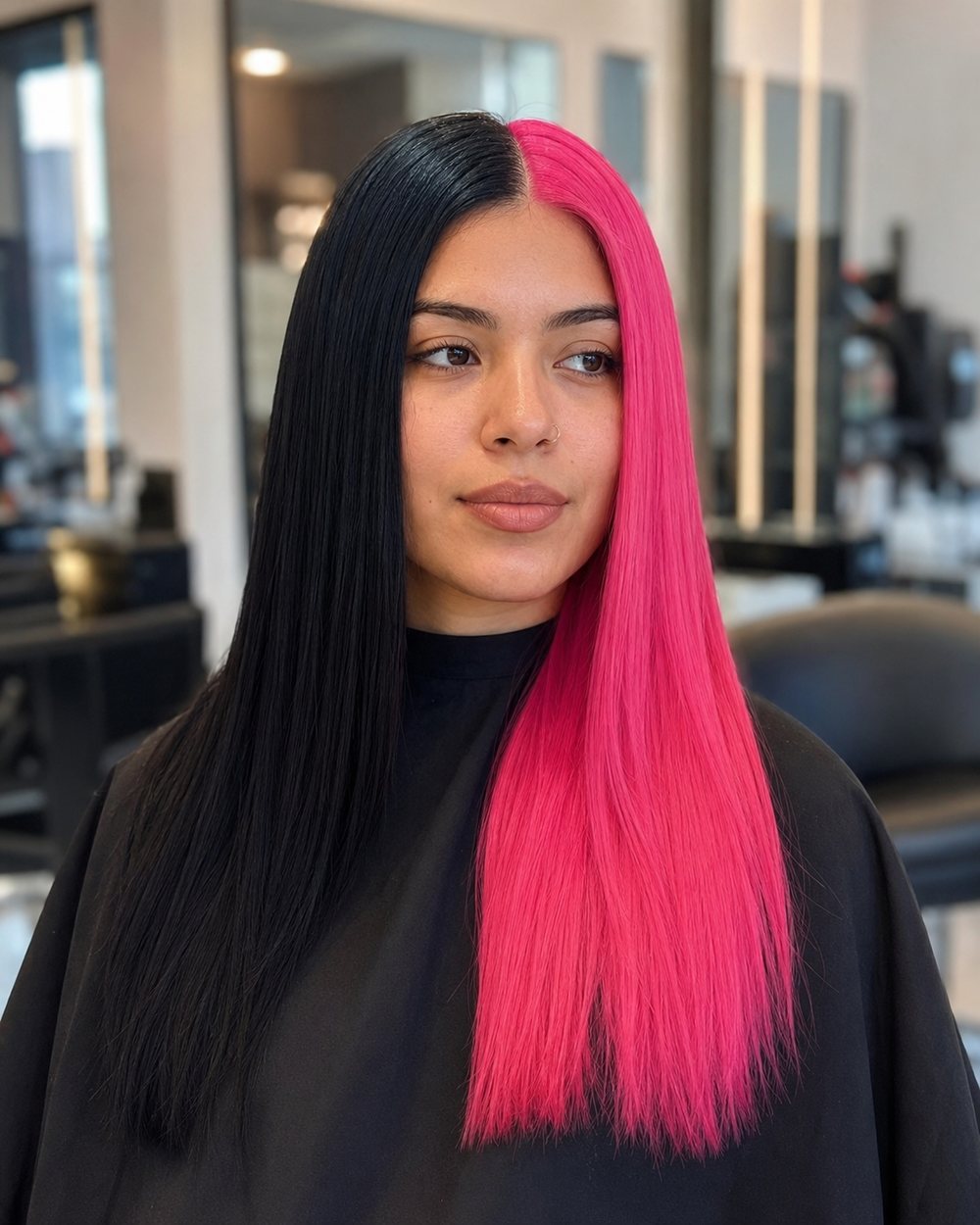
Divide the hair vertically straight down the middle, coloring one half black and the other pink. This creates the highest-contrast option in the collection.
A precise middle part is essential to make the split look intentional. Because the two sides require different color processes and maintenance, clip each side separately when washing to prevent the pink dye from bleeding into the black side.
26. Diagonal Black and Pink Split Dye
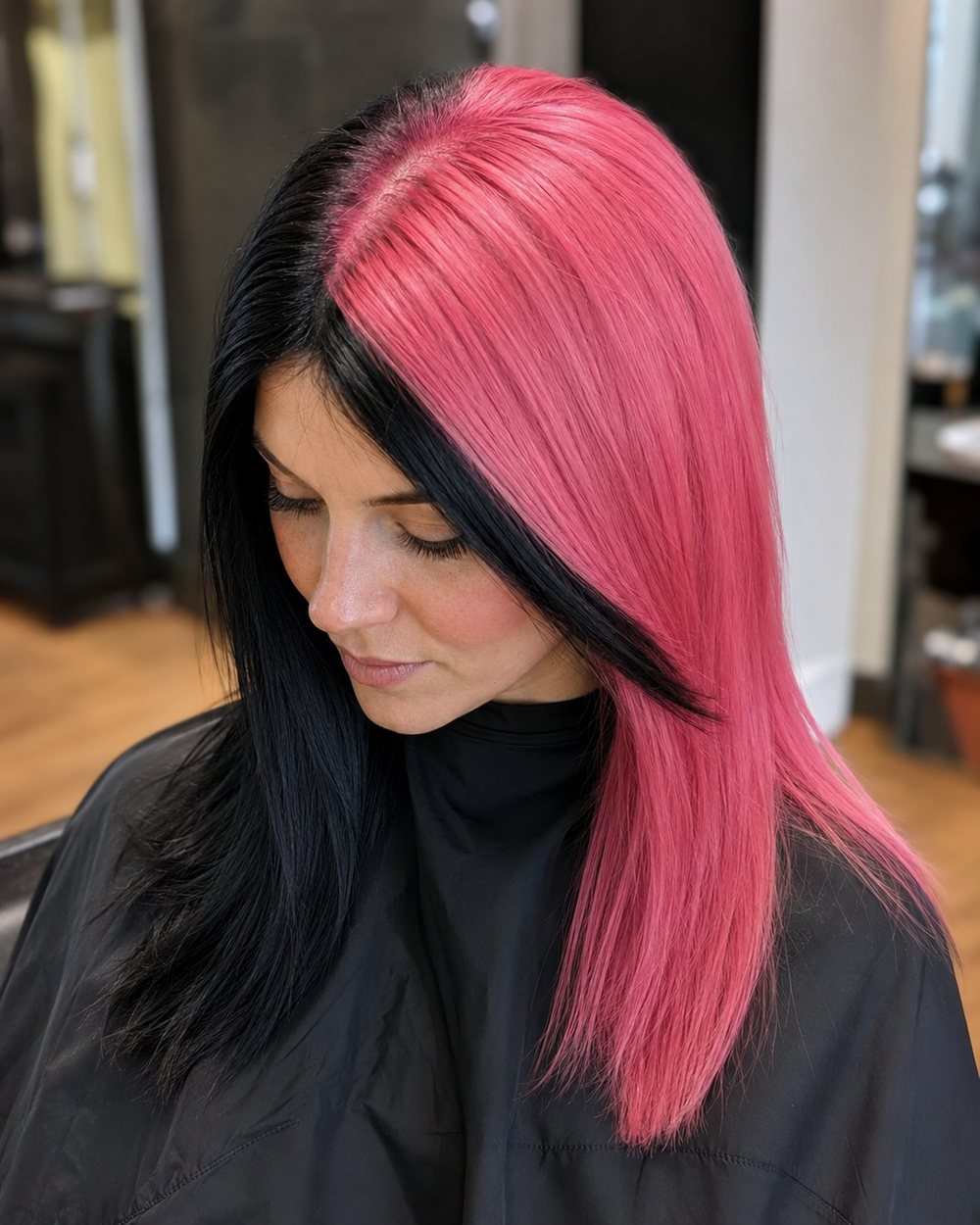
Instead of dividing the colors straight down the center, create a diagonal section that moves from one side of the hairline toward the opposite side of the nape.
The angled placement makes the two colors interact differently in ponytails and braids, showing both colors at once. It also creates a less predictable, edgier result than a standard vertical split.
27. Black Hair With a Pink Side Panel
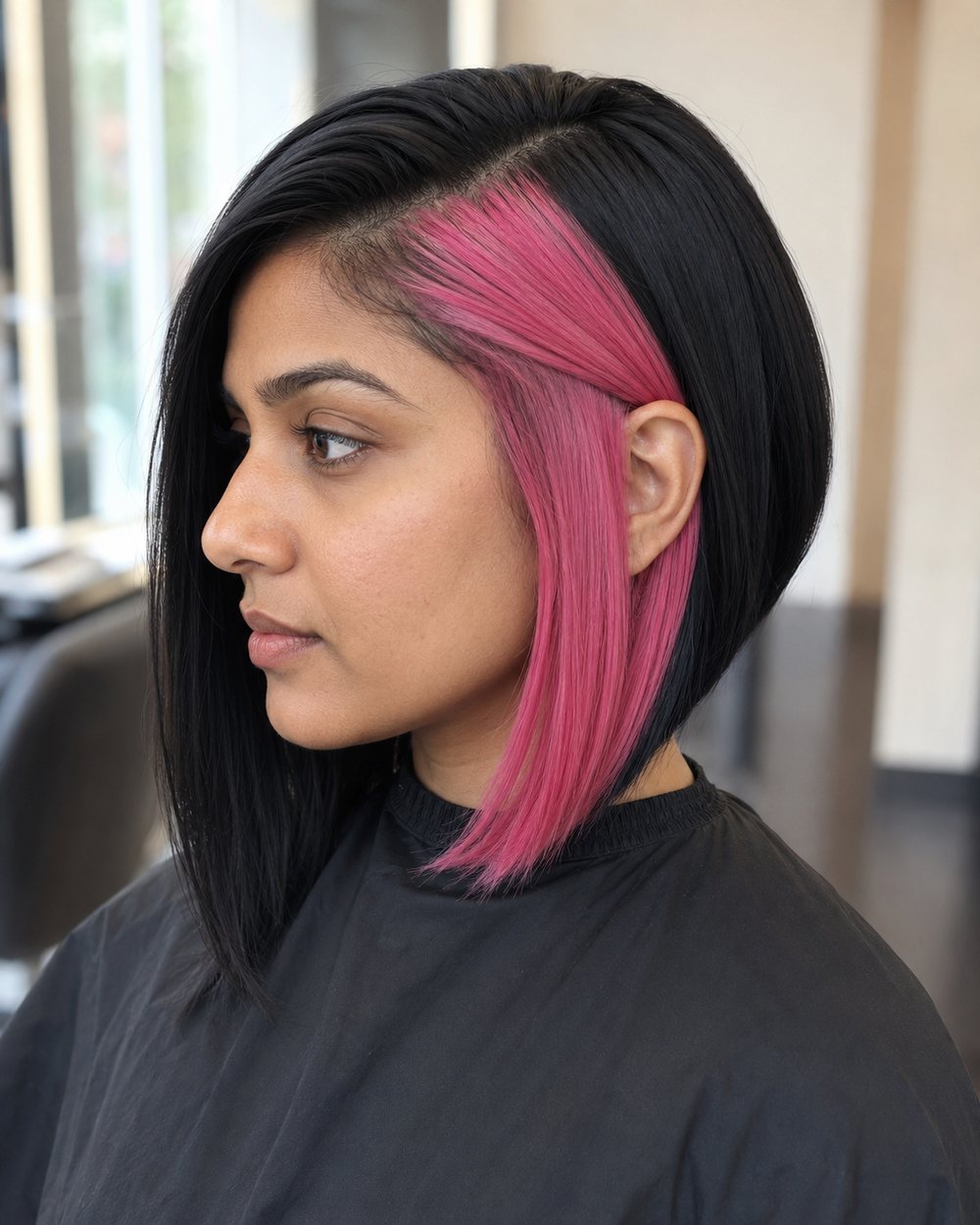
Color one side panel pink while leaving the roots, crown and opposite side black. The pink can run from the temple to the nape or occupy a smaller section just above the ear.
This design creates a split-dye effect without committing half of your entire head to pink. It works well with deep side parts and asymmetrical cuts.
28. Black and Pink Checkerboard Hair
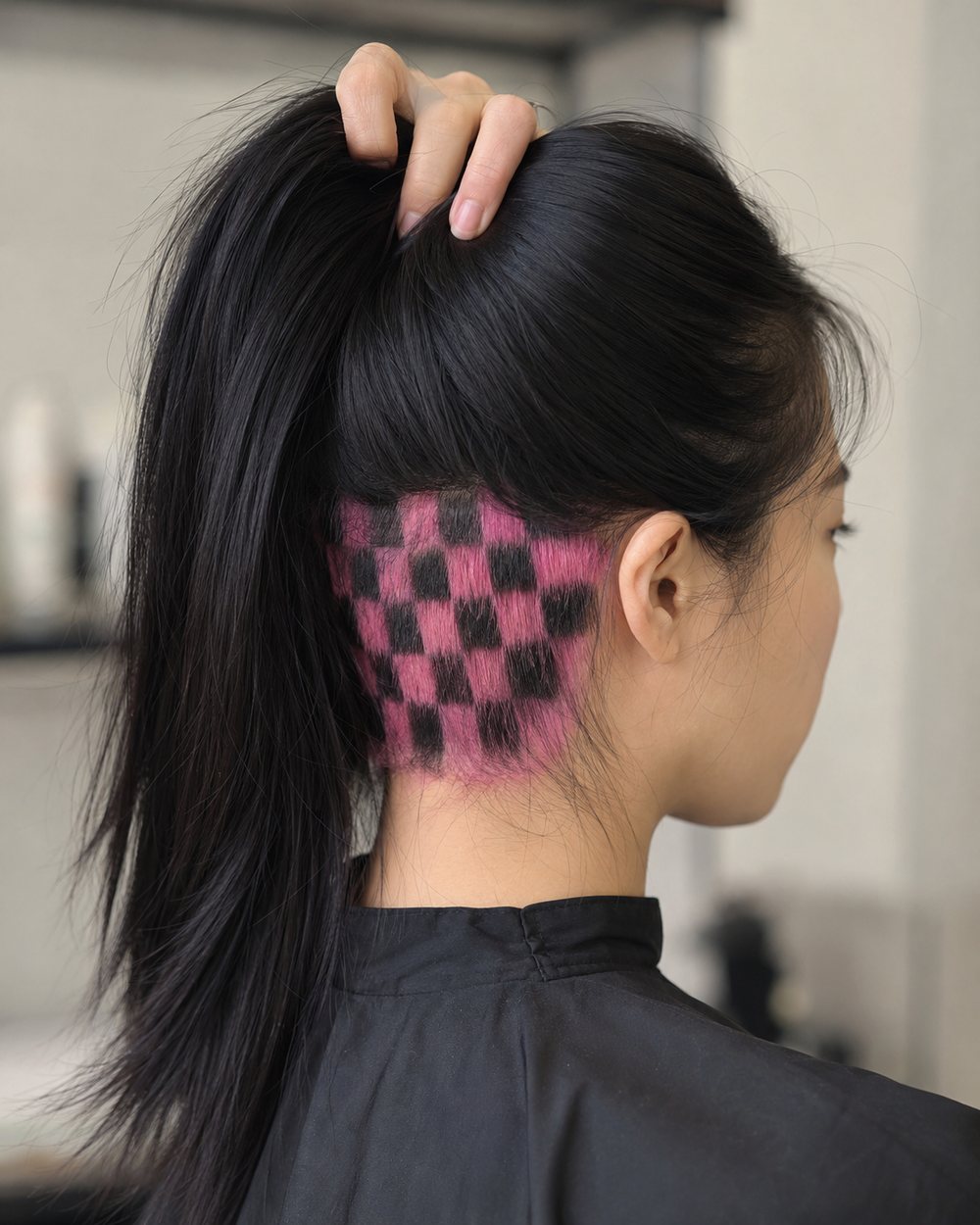
Checkerboard hair alternates square or rectangular sections of black and pink. The pattern is usually placed beneath the crown, around the nape or along one side.
This design appears most clearly in updos and sectioned styles. Accurate, precise parting is essential—ask your stylist to use foils to separate the squares, as free-hand painting will result in bleeding colors that ruin the pattern.
29. Black and Pink Halo Hair Color
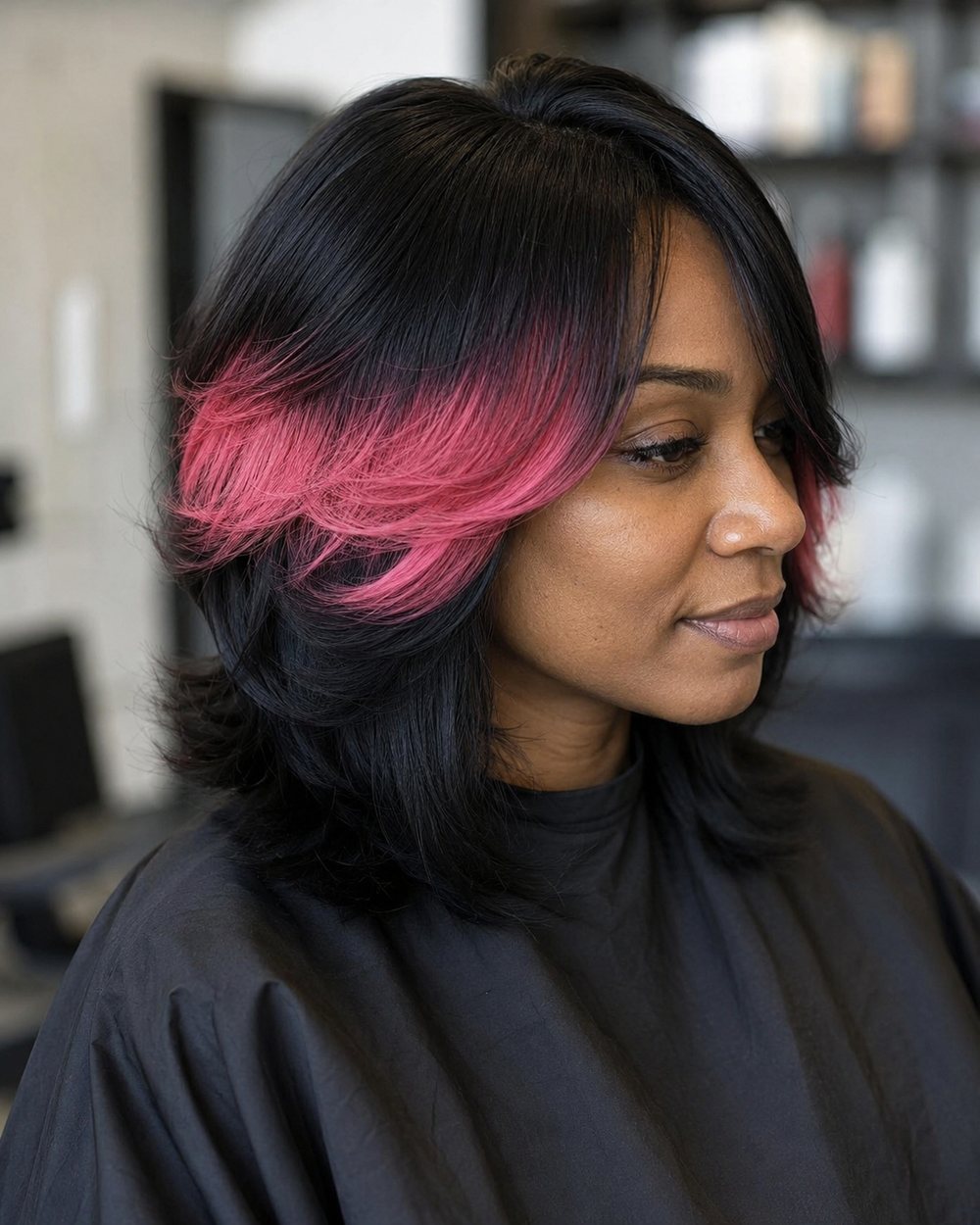
A pink halo creates a band of color around the head beneath a black crown. Unlike a full underlayer, the pink is concentrated through one defined horizontal section.
The band becomes visible around the sides and ends, especially on layered hair. A bright halo can also frame the face without coloring the entire fringe.
Black and Pink Hair for Different Cuts and Textures
30. Short Black Pixie Cut With Pink Tips
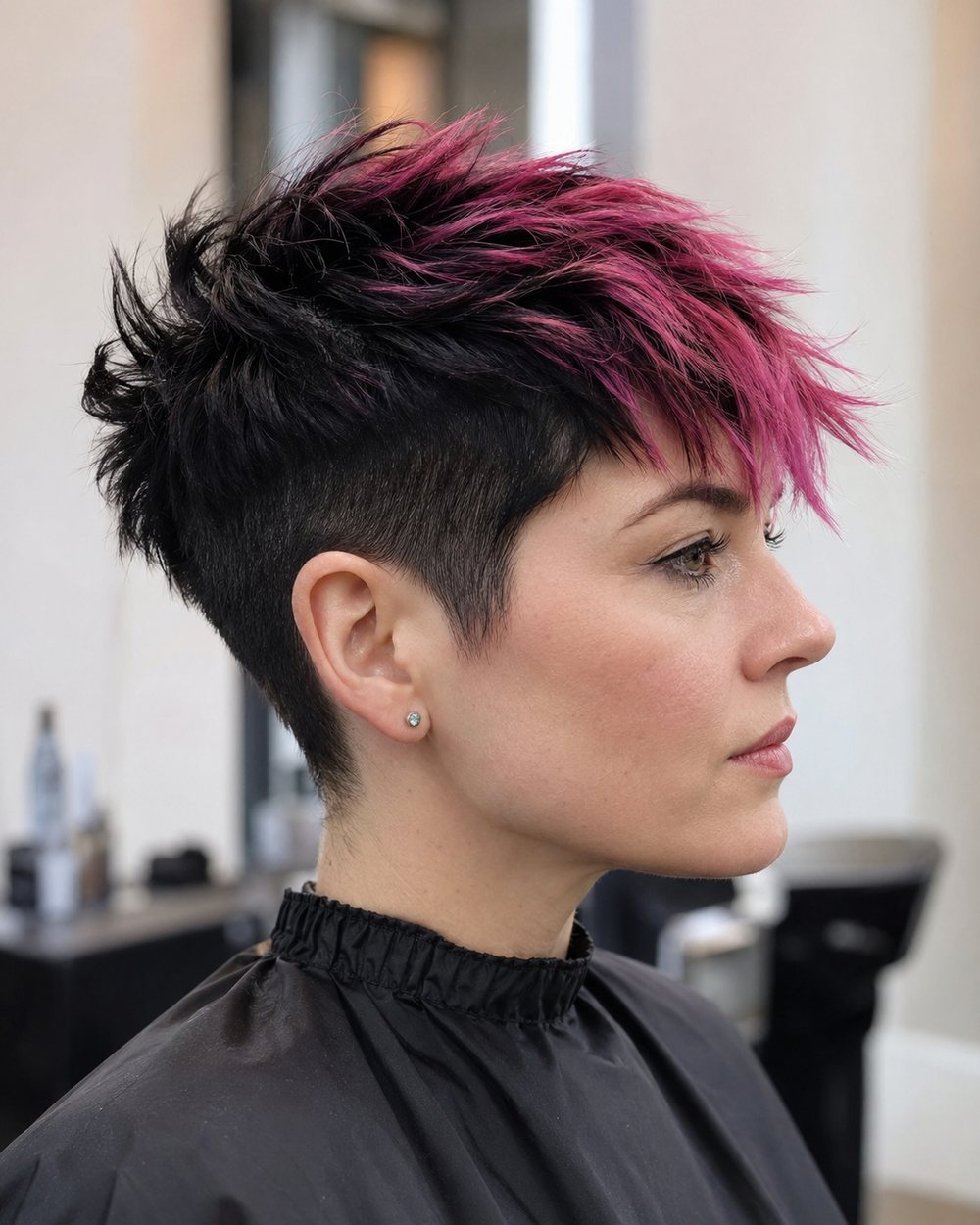
Keep the base of a short pixie black and apply pink only to the longer top, fringe or textured tips. The dark sides preserve the shape of the cut while the pink emphasizes movement.
If you’re exploring black and pink short hair, a vivid shade gives the pixie an edgy finish. Short black and pink hair is a fantastic way to make a bold statement, and combining pink hair and black bases creates an eye-catching contrast. Muted rose or dusty pink creates a softer look.
31. Black and Pink Bob With Blunt Bangs
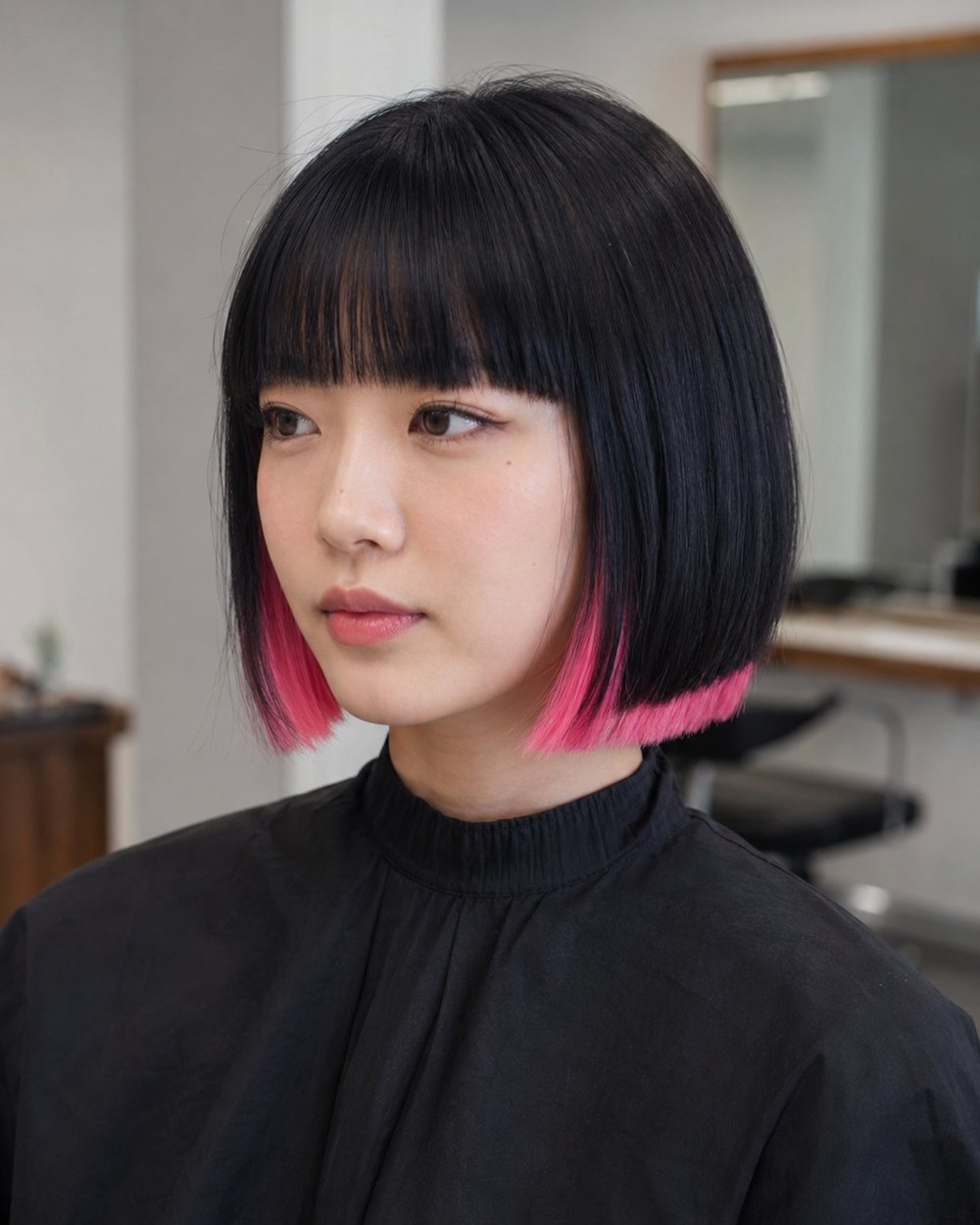
Pair a sleek black bob with pink panels beneath blunt bangs and around the ends. The straight outline gives the two colors a graphic, structured appearance.
Keep the sections clean and avoid excessive blending if you want a strong color-blocked effect. Apply a gloss treatment to make both the black and pink appear saturated and shiny.
32. Black and Pink Wolf Cut
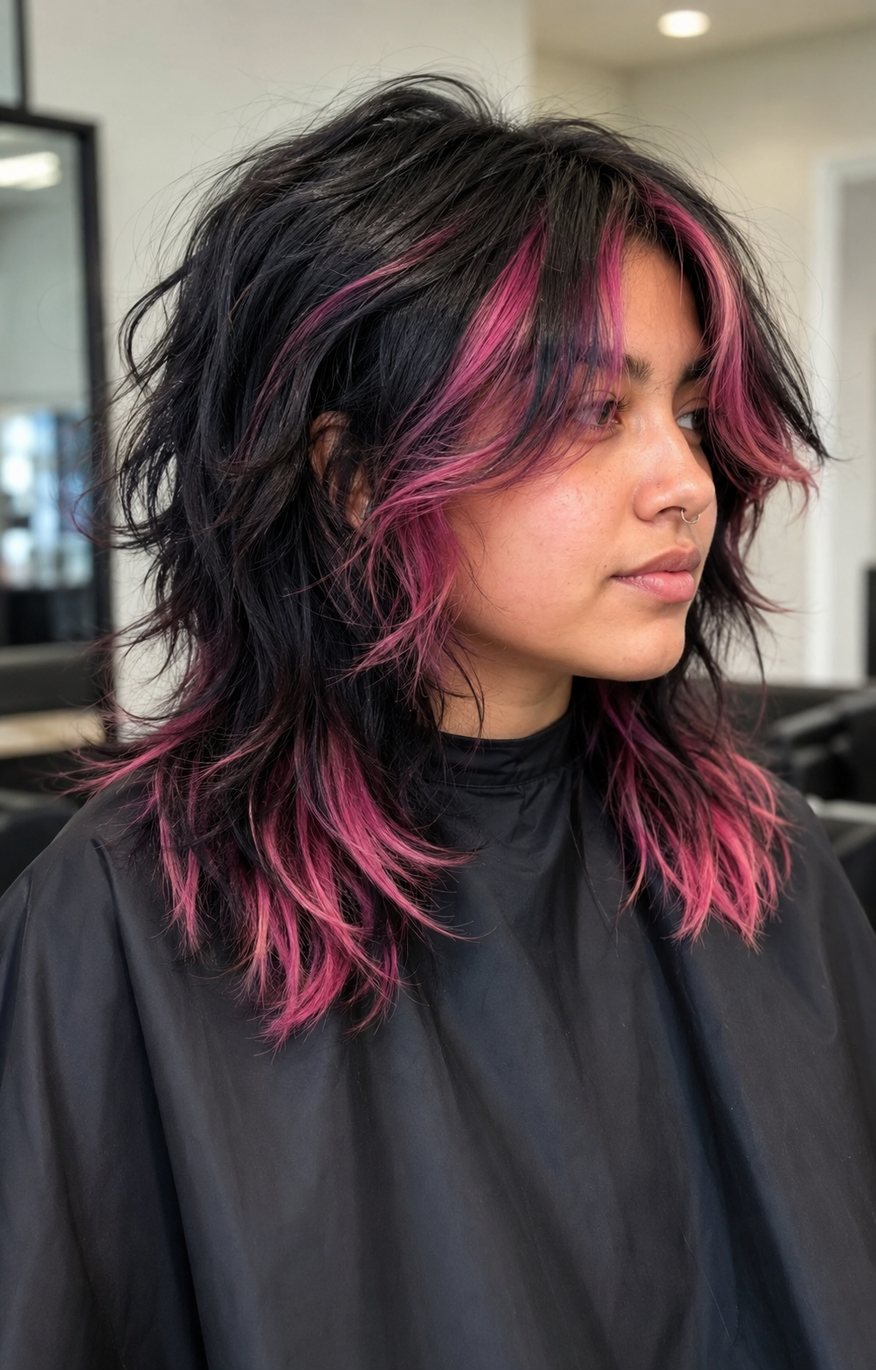
Use pink around the fringe, shorter crown layers and feathered ends of a black wolf cut. The uneven placement reinforces the deliberately undone shape.
Chunky streaks work better than very fine highlights when you want the pink to remain visible throughout the thick layers. Use a deeper shade near the roots and brighter pink toward the tips for added dimension.
33. Black and Pink Curly Hair
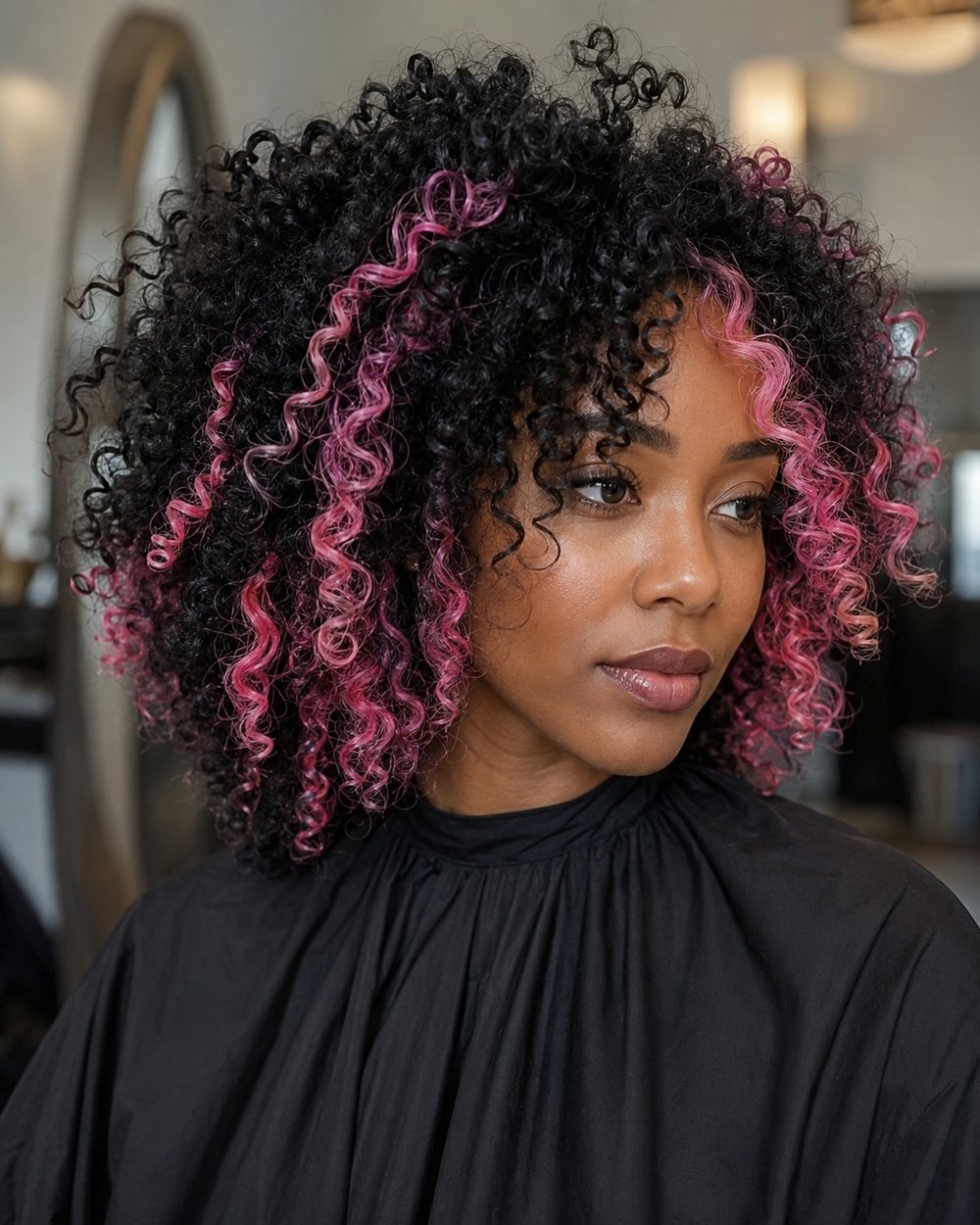
Place pink through selected curls rather than coloring a uniform horizontal section. This lets the black and pink spirals move independently while preserving depth at the roots.
Pink can be concentrated around the face, scattered throughout the hair or hidden beneath the crown. The placement should be designed specifically around your natural curl pattern.
34. Black and Pink Box Braids
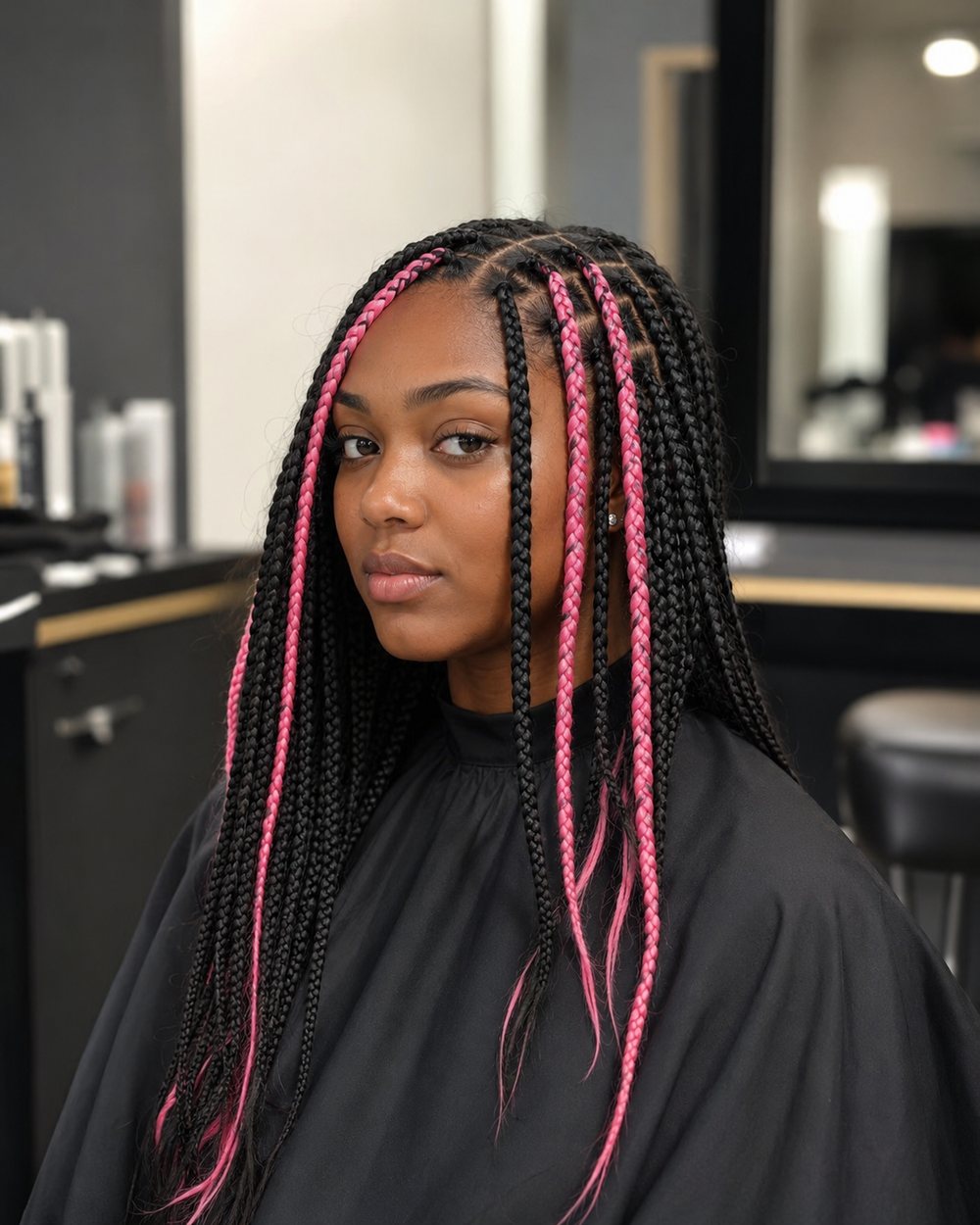
Mix black and pink braiding hair throughout box braids, knotless braids or feed-in braids. Use a few pink braids as accents, blend pink into the ends or divide the colors evenly.
Braiding hair offers a way to explore the color combination without lightening your natural hair. Adding pink ends also makes the braid pattern easier to see from a distance.
35. Black and Pink High Ponytail
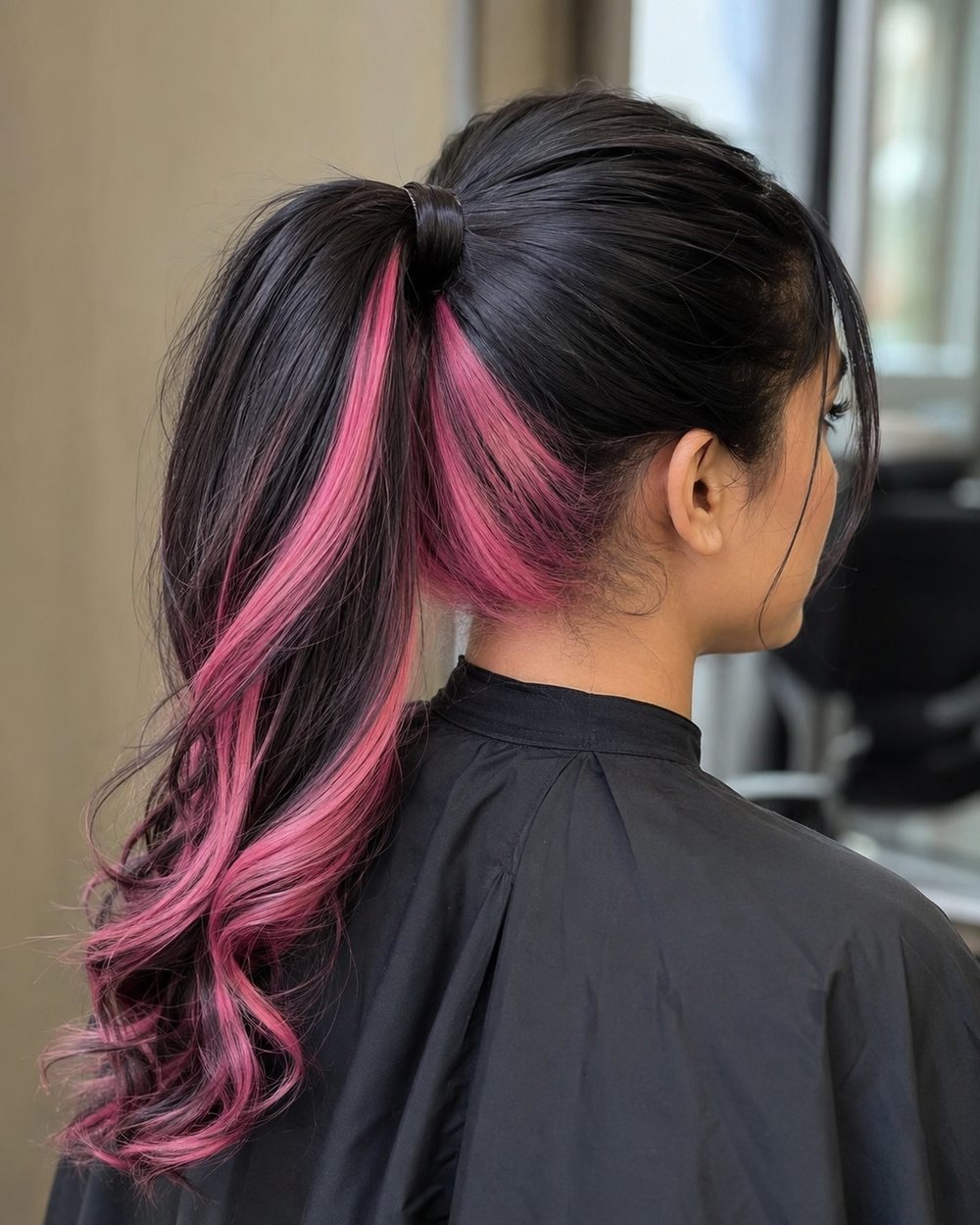
Keep the roots and exterior black while incorporating pink extensions, an underlayer or colored ends into a high ponytail.
The tied-up style exposes hidden pink sections that may be less visible when the hair is down. Wrap a black section of hair around the base for a polished finish, or use a pink piece to emphasize the contrast.
Which Pink Shade Looks Best With Black Hair?
The strongest pink shades for black hair include hot pink, fuchsia, magenta, raspberry and neon pink. Their saturation creates a clear contrast against the dark base.
Pastel pink, blush and rose can also look striking, but they usually require lifting your hair to a very light blonde first. Dusty rose and mauve pink create a softer result when you want less contrast.
Think about your skin tone and the vibe you want, rather than just picking a name. If you have warm or olive undertones, warmer pinks like coral or bubblegum will complement your complexion beautifully. If you have cool undertones, fuchsia and magenta will harmonize perfectly with your skin:
- Hot pink: Bright, playful and highly visible against dark bases.
- Fuchsia: Cool, saturated and dramatic; requires less lifting than pastel.
- Magenta: Deep pink with purple undertones; excellent for blending seamlessly into black.
- Raspberry: Rich pink with red undertones; looks natural on dark hair.
- Bubblegum pink: Bright but softer than neon; great for chunky highlights.
- Pastel pink: Pale, delicate and high contrast; requires heavily bleached hair.
- Dusty rose: Muted and easier to blend; ideal for low-maintenance babylights.
- Coral pink: Warmer, with peach or orange undertones; perfect for summer.
Can You Put Pink Dye Directly on Black Hair?
Pink dye applied directly to black hair is unlikely to produce a bright pastel or neon result. The darker the starting color, the less visible a light pink pigment will be.
Some deep magenta or raspberry products may leave a subtle tint on lighter natural black or dark-brown hair, particularly in strong sunlight. However, vivid pink sections usually need to be pre-lightened first.
Most vivid pink dyes are semi-permanent, meaning they stain the outside of the hair shaft and will naturally fade over 4 to 10 washes. Permanent pink dye exists, but because bleach opens the cuticle, even permanent color will shift and fade quickly without proper care.
What you can safely achieve in one session depends on your current hair health, past dye jobs, and the pink you want. Do not repeatedly bleach damaged hair simply to reach a reference-photo shade. Because lifting black hair is harsh, ask your stylist to mix a bond builder (like Olaplex or K18) into the lightener. This protects the internal bonds of your hair, preventing the bleached pink sections from snapping off. Take home a bond-building treatment to use weekly to keep the lightened hair strong.
How to Get Black and Pink Hair Without Bleach
You can create a black and pink appearance without bleaching all of your natural hair by using:
- Pink clip-in extensions
- Pink braiding hair
- A pink wig or half wig
- Temporary hair wax
- Colored hair spray
- Pink strands added to ponytails
- Pre-colored tape-in or sew-in extensions
A temporary or semi-permanent pink product may add a subtle tint to lighter unbleached sections, but it will not turn jet-black hair pastel pink. Always follow the box instructions and do a patch test 48 hours beforehand. Stop using the product immediately if you experience redness, swelling, burning or itching.
How to Maintain Black and Pink Hair
Pink fashion colors can lose intensity, while dyed black hair can become dull if the care routine is too harsh. A few habits can help both colors remain more vibrant.
Space Out Your Washes to Prevent Fading
Aim to wash your hair only 2 to 3 times a week, using dry shampoo to absorb excess oil on non-wash days. Repeated shampooing speeds up visible color loss.
Use a Sulfate-Free, Color-Safe Shampoo
Choose a gentle, sulfate-free shampoo formulated for colored hair. Avoid relying on frequent clarifying washes unless your stylist recommends them, because strong cleansing agents will strip the pink pigment more quickly.
Install a Shower Filter for Hard Water
Hard water leaves mineral buildup that can strip color and turn pink a rusty, dingy shade. If you live in an area with hard water, install a shower filter. It removes chlorine and heavy metals that cause your black and pink hair to oxidize and fade prematurely.
Rinse With Cool Water to Lock in Color
Very hot water opens the hair cuticle, leaving color-treated hair feeling dry and encouraging faster fading. Use lukewarm or cool water when rinsing the lengths to help seal the cuticle and lock the color inside.
Limit Heat and Avoid Alcohol-Based Products
Frequent high-temperature straightening, curling and blow-drying can place additional stress on lightened hair. The American Academy of Dermatology recommends limiting heat exposure, using low or medium settings, and always applying a heat protectant spray before styling. Also, beware of styling products: high-alcohol hairsprays and heavy silicones can strip color or pull pigment from your ends. Keep heavy styling creams and oils away from the pink sections.
How to Fix Faded or Brassy Pink Hair
Pink rarely fades to a clear blonde; it often turns brassy yellow, peach, or muddy. If your pink starts looking yellow, use a purple shampoo on the pink sections to neutralize the brassiness. If the pink just looks dull, mixing a small amount of semi-permanent pink dye into your conditioner can instantly re-deposit lost color.
Keep Black and Pink Sections Separate When Washing
Fresh black and pink pigments can transfer into lighter sections. Your colorist may recommend washing with cool water, reducing unnecessary shampooing, and physically separating the black and pink sections with clips during the first few washes after your appointment.
What to Ask Your Colorist at the Salon
Bring two or three reference photos that show the exact placement you want. A photo of “pink hair” is not enough because a money piece, underlayer, balayage and split dye require completely different sectioning techniques.
It also helps to understand the time and cost involved. Lifting black hair takes time. A partial highlight or money piece might take 2 to 3 hours, while a full balayage or ombré can take 5 to 8 hours. Expect to pay more for this look than a standard single-color dye because it requires a lightening session, toning, and the fashion color application. A hidden underlayer is generally the most budget-friendly option, while a full split-dye or complex balayage will be the most expensive.
Tell your colorist:
- Whether your black hair is natural or dyed
- Which box dyes or henna products have previously been used
- How much pink you want visible when your hair is worn down
- Whether you normally wear your hair straight, curly or tied up
- How often you can realistically return for color maintenance
- Whether you prefer hot pink, magenta, rose or pastel
- Whether preserving darker roots is important to you
- Whether you are willing to lighten the selected sections
The best black and pink hair isn’t always the most complex. Choose a placement that works with your usual hairstyle, maintenance budget and comfort with visible regrowth.
A small money piece or hidden underlayer offers an easier starting point. Pink balayage and ombré create more color while preserving dark roots. A half-black, half-pink split delivers the greatest impact, but it also requires the most commitment.