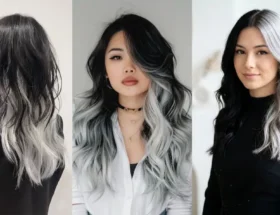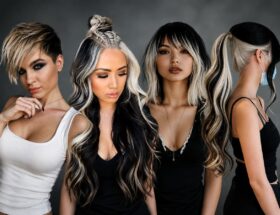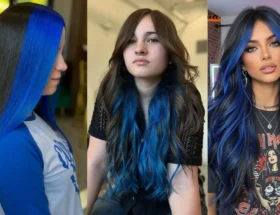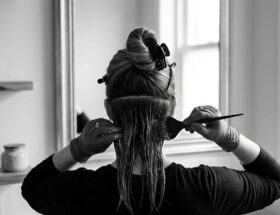

Face-framing highlights are a beautiful way to brighten the eyes, define the cheekbones, and illuminate the jaw without coloring the entire head. The result can feel softly radiant and naturally blended like balayage or striking and fashion-forward like a high-contrast money piece.
Redken artist Celene Dupuis describes the technique as “almost like contouring for your hair” because thoughtful placement can beautifully draw attention to your favorite facial features. The most flattering result reflects your starting color, undertone, hair condition, preferred contrast, and ideal maintenance routine.
Brunettes can create rich, glowing dimension with caramel, honey, beige, copper, or bronde. Blondes can look fresh and luminous with champagne, pearl, platinum, or reverse lowlights. Black and dark-brown hair can gain elegant depth with mocha and chestnut or make a bold, unforgettable statement with blonde and silver when the hair can safely tolerate the required lift.
Face-Framing Highlights at a Glance
| Question | Practical Answer |
|---|---|
| Best subtle option | Highlights one or two levels lighter than the base |
| Best for brunettes | Caramel, honey, toffee, beige, and bronde |
| Best for black hair | Mocha, chestnut, caramel, copper, or carefully lifted blonde |
| Best for blondes | Champagne, pearl, beige, honey, or platinum |
| Lowest-maintenance placement | Rooted balayage with diffused hairline pieces |
| Boldest option | A money piece three or more levels lighter than the base |
| Best for curly hair | Hand-painted ribbons that follow the natural curl pattern |
| Best for short hair | Narrow temple highlights or a softly brightened fringe |
Time and Cost Expectations for Face-Framing Highlights
A face-framing service usually takes 1.5 to 3 hours, making it a relatively focused way to achieve a noticeable, confidence-boosting transformation. Hair density, previous color, the number of levels being lifted, and toner processing all affect the appointment length.
Prices commonly range from $100 to $300+, depending on location, salon level, and color correction needs. Planning for future glosses, toners, and nourishing home-care products helps you protect the beautiful color and enjoy a polished result for longer.
Face-Framing Highlights Versus a Money Piece
Face-framing highlights use several fine or beautifully blended pieces around the temples, fringe, and front layers. They may begin below the root and flow gracefully into balayage, creating a soft, seamless, and naturally radiant transition.
A money piece concentrates the contrast into one or two eye-catching sections near the parting. Colorist Natalia Romaniuc has explained that dramatic versions may sit three to four shades above the base, while softer versions use finer sections and less lift for a delicate, flattering glow.
Choose a blended face frame for natural radiance, soft dimension, and gentler grow-out. Choose a defined money piece when you want the front color to become a bold, stylish focal point. For hidden color instead, review these common peekaboo highlight mistakes before booking.
1. Soft Caramel Highlights on Medium-Brown Hair

Caramel brings a warm, glossy richness to medium-brown hair without creating a harsh dark-to-light break. Starting near the cheekbones keeps the root refined, while loose waves reveal glowing caramel tones through the front layers. This is a gorgeous first choice for brunettes who want visible brightness, elegant dimension, and an effortlessly flattering finish without becoming blonde.
Salon brief: Fine caramel balayage around the hairline with a diffused natural root.
2. Honey-Blonde Face Frame on Dark-Brown Hair

Honey blonde creates radiant brightness while retaining enough golden warmth to blend beautifully beside a dark-brown base. It looks especially flattering on warm, neutral, and olive undertones. A golden-beige toner usually creates a smoother, more luxurious finish than pale platinum and helps the color look luminous rather than striped.
Salon brief: Honey-blonde front sections connected to golden-beige mids and ends.
3. Beige-Blonde Highlights on Cool Brunette Hair
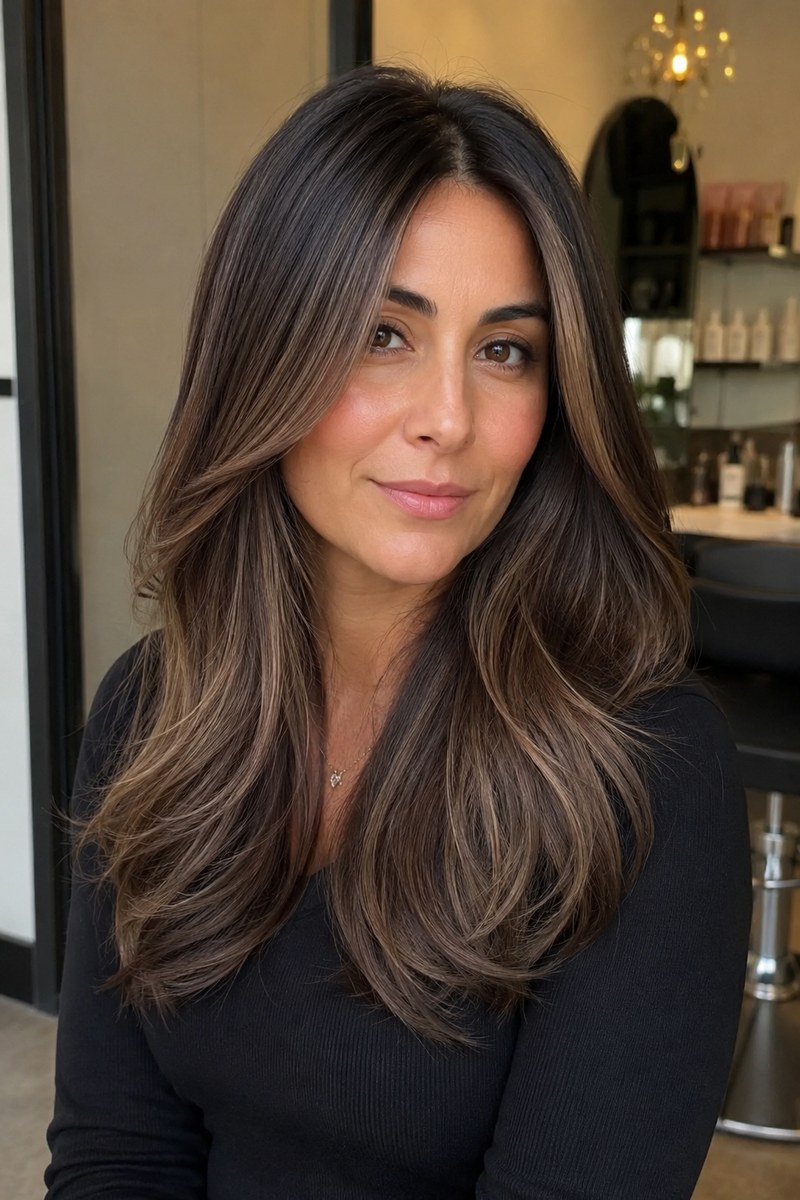
Beige blonde blends muted gold with cool ash for a sophisticated, balanced finish when yellow blonde feels too warm and silver feels too cold. Slim sections near the scalp that broaden through the lower lengths create a graceful transition, allowing the contrast to look polished, dimensional, and beautifully intentional.
Salon brief: Neutral beige highlights with a soft shadow root and restrained gold.
4. Toffee Face-Framing Balayage

Toffee blends golden brown, caramel, and amber into a rich, delicious-looking shade that sits beautifully between subtle brunette dimension and obvious blonde. Placing the brightest point around the middle of the face draws flattering attention to the cheekbones, while deeper toffee through the ends preserves warmth, shine, and luxurious depth.
Salon brief: Toffee balayage with concentrated brightness around the cheekbones.
5. Bronde Highlights With a Bright Front Ribbon

Bronde keeps most of the color between medium brown and dark blonde, then adds a brighter front ribbon for a fresh, sunlit lift. Because the surrounding tones already bridge brunette and blonde, the face frame looks seamless and naturally expensive rather than added on. It is a wonderful choice for brunettes who want a brighter, more radiant overall impression without full blonde maintenance.
Salon brief: Dimensional bronde balayage with a slightly brighter front ribbon.
6. Mushroom-Brown Face-Framing Highlights
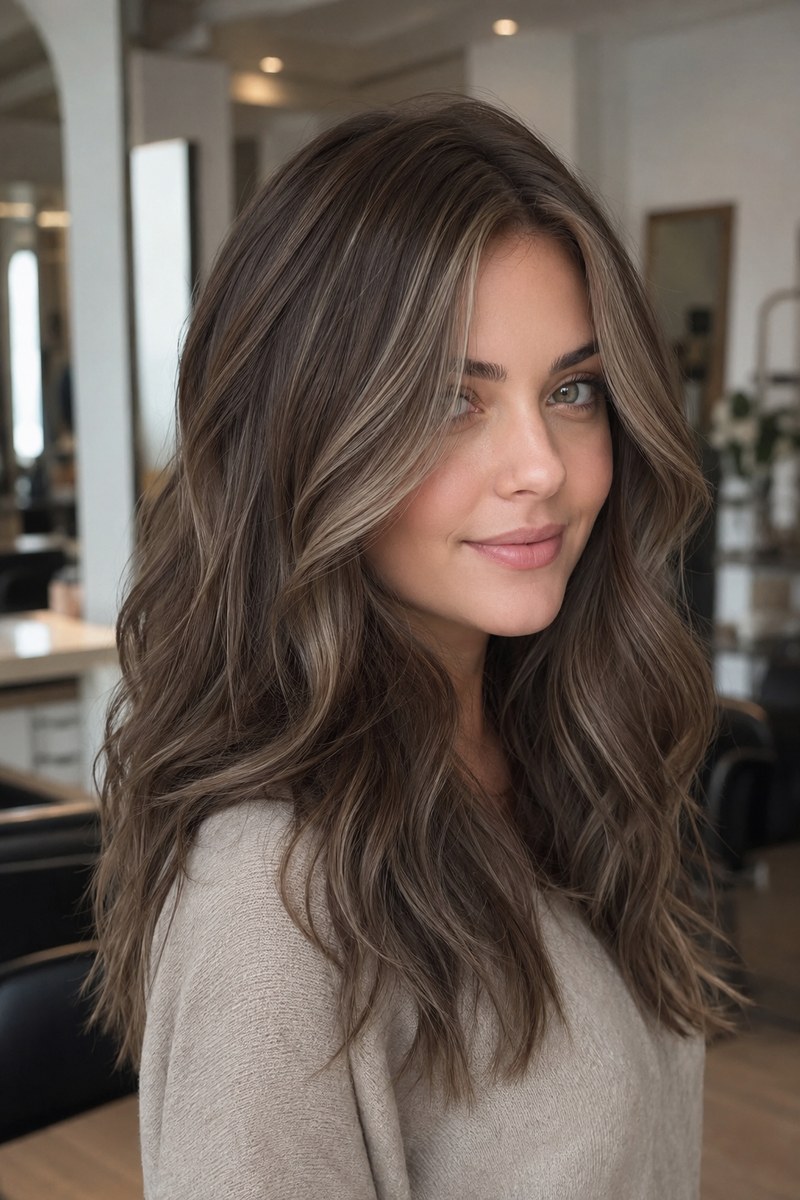
Mushroom brown blends taupe, ash brown, and muted beige for a chic, cool-toned finish without obvious gold or orange. Keeping the highlight moderately lighter than the base preserves richness and prevents the result from looking flat or overly gray. This elegant palette looks especially polished with neutral brunette roots and smooth styling.
Salon brief: Mushroom-brown babylights with a smoky beige face frame.
7. Espresso Hair With Mocha Highlights
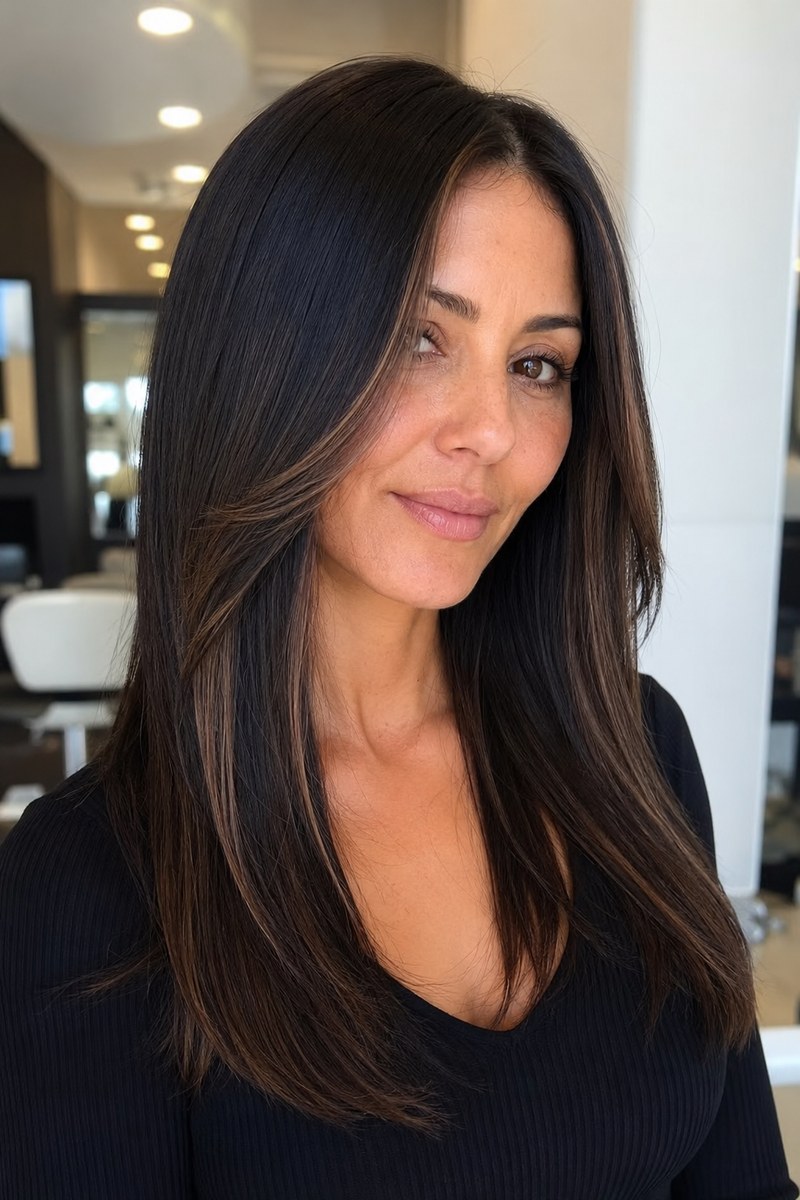
Mocha sits close to espresso, so it adds graceful movement and glossy dimension without looking like a dramatic color change. Small ribbons at the temples, beneath the front layers, and near the ends remain beautifully visible on straight hair, where very subtle dimension can otherwise disappear. The low contrast also creates a soft, refined grow-out.
Salon brief: Low-contrast mocha ribbons over an espresso base.
8. Walnut-Brown Babylights

Walnut brown carries a neutral base with a gentle golden glow. Ultra-fine babylights near the hairline imitate natural sun-lightening and create a delicate, flattering brightness that suits first-time color clients, conservative workplaces, and anyone who prefers an elegant grow-out. The finished effect should sparkle subtly in movement rather than appear as separate stripes.
Salon brief: Ultra-fine walnut babylights concentrated around the front hairline.
9. Chestnut Highlights on Chocolate-Brown Hair
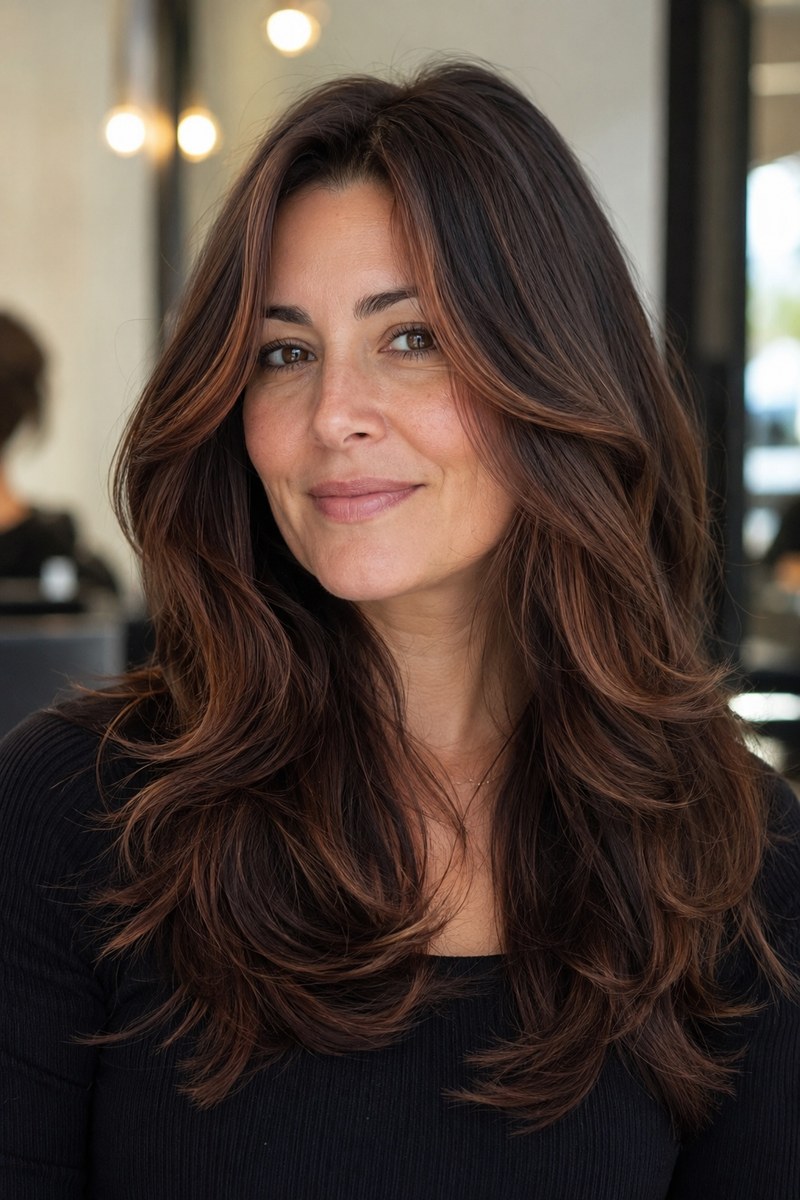
Chestnut adds rich red-brown warmth that glows beautifully in daylight without reading as bright copper. Repeating a few fine chestnut pieces through the lengths keeps the front color connected and dimensional. This placement gives chocolate-brown hair a warm, luxurious seasonal refresh while remaining polished and highly wearable.
Salon brief: Chestnut face-framing ribbons echoed lightly through a chocolate base.
10. Cinnamon Face-Framing Highlights
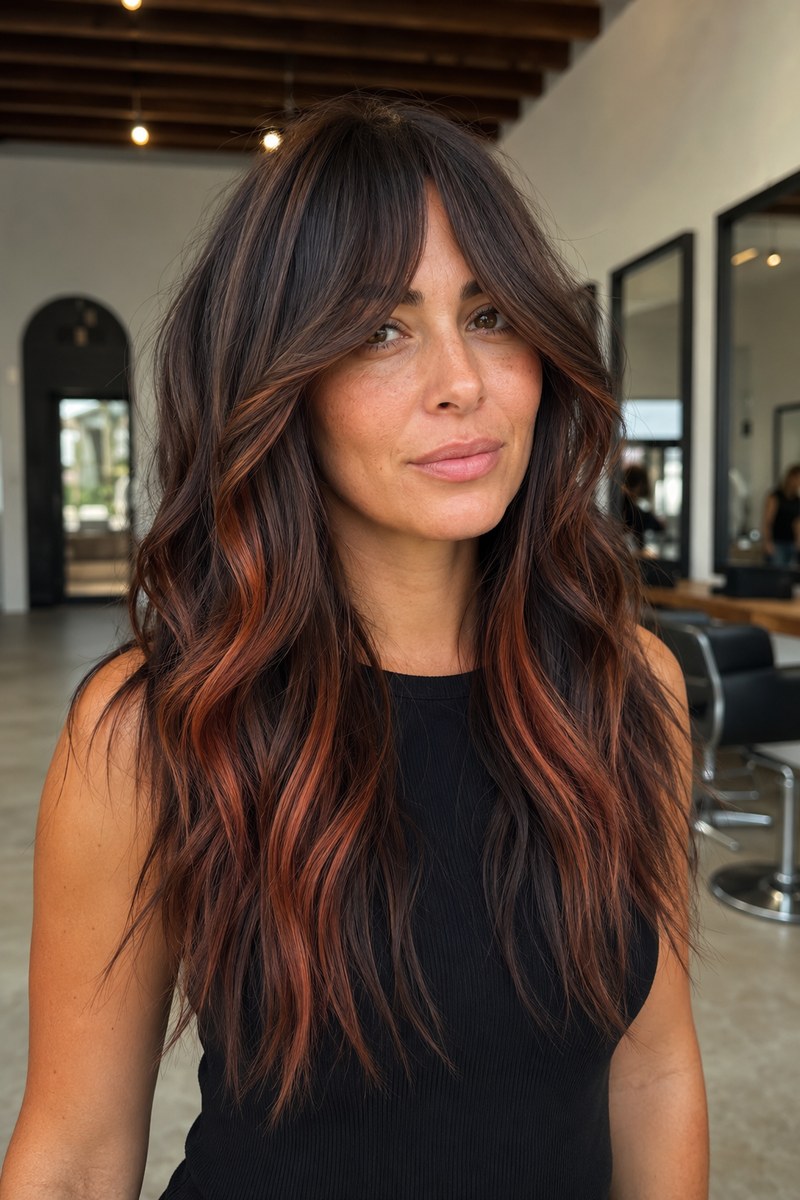
Cinnamon blends warm brown, muted copper, and red-gold into a vibrant yet sophisticated brunette update without lifting the hair to pale blonde. It looks especially beautiful on curtain bangs, long layers, and natural waves, where the warm tone catches the light from different angles. Smaller pieces near the parting and richer color through the lower layers create a glowing, multidimensional finish.
Salon brief: Soft cinnamon balayage with brighter lower face-framing ribbons.
11. Ash-Brown Hair Contouring

Ash-beige highlights can beautifully contour the cheekbones and jaw while preserving a cool, sophisticated brunette finish. The goal is to neutralize excess warmth without pushing the hair into a dull gray tone. A balanced neutral-ash formula keeps movement visible and creates a soft, polished result that photographs naturally.
Salon brief: Neutral-ash contouring placed around the cheekbones and jaw.
12. Chocolate-Cherry Front Highlights

Chocolate cherry adds a rich burgundy or dark-red glow to brunette hair without the brightness and upkeep of blonde. Limiting the shade to selected front ribbons creates alluring dimension and keeps future color changes more flexible than an all-over red application. The effect looks elegant indoors and becomes beautifully vivid in direct light.
Salon brief: Deep cherry-red front ribbons over a chocolate-brown base.
13. Buttery-Blonde Face-Framing Layers

Buttery blonde blends cream, soft gold, and pale yellow into a warm, luminous shade that looks especially flattering on naturally blonde or light-brown hair. A slightly deeper root preserves contrast and richness, while brighter front layers give the complexion a fresh, cheerful, sunlit glow.
Salon brief: Rooted buttery blonde with concentrated brightness through the front layers.
14. Champagne-Blonde Highlights

Champagne blonde combines pale beige and soft gold for a refined, luminous alternative to icy platinum. Delicate hairline brightness can instantly refresh a neutral or lightly warm blonde without introducing strong yellow tones. Repeating only a few fine pieces through the crown keeps the face frame beautifully dominant while preserving healthy-looking depth.
Salon brief: Champagne babylights around the hairline with sparse crown connection.
15. Pearl-Blonde Face Frame
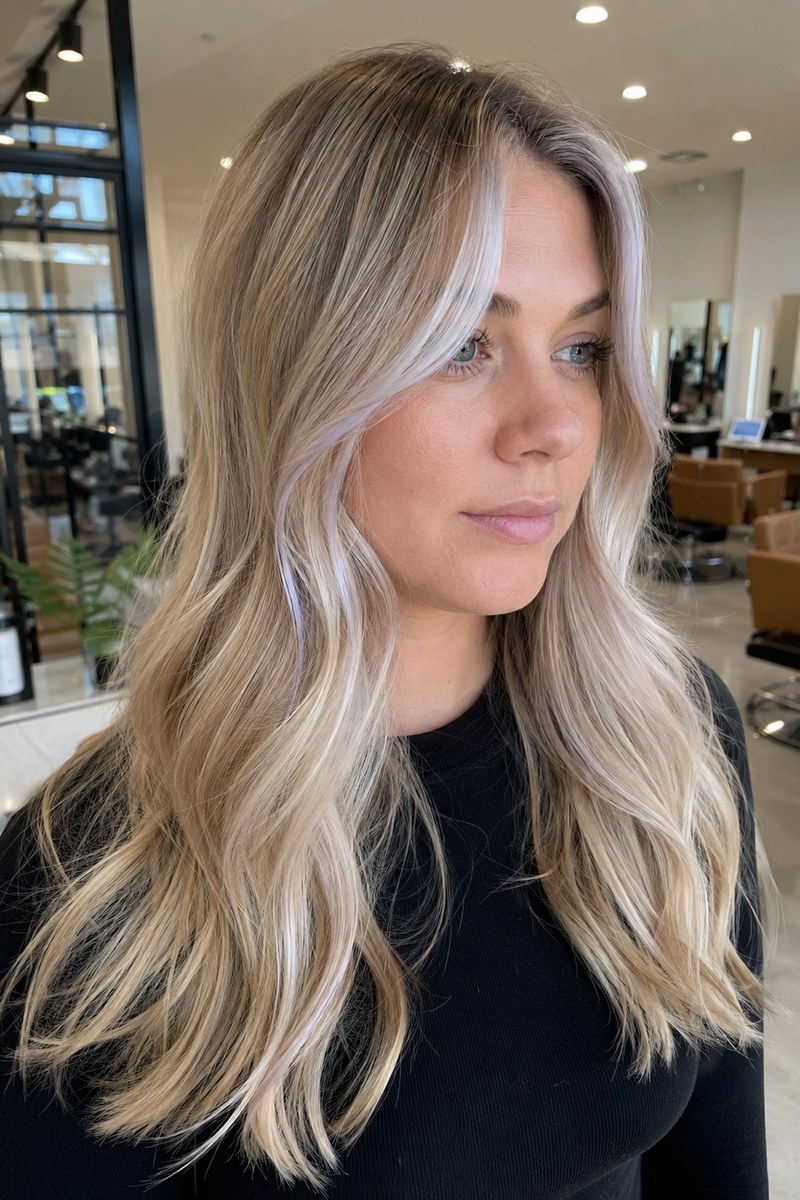
Pearl blonde combines cool beige, violet, and silvery reflect for a clean, radiant, almost luminous finish. It looks most beautiful on hair that is already light because dark bases may need several careful lifting stages before they can accept a true pearl toner. Prioritizing hair condition helps the final shade look glossy, elegant, and healthy rather than simply pale.
Salon brief: Pearl-blonde front sections with a soft neutral root.
16. Sandy-Blonde Highlights
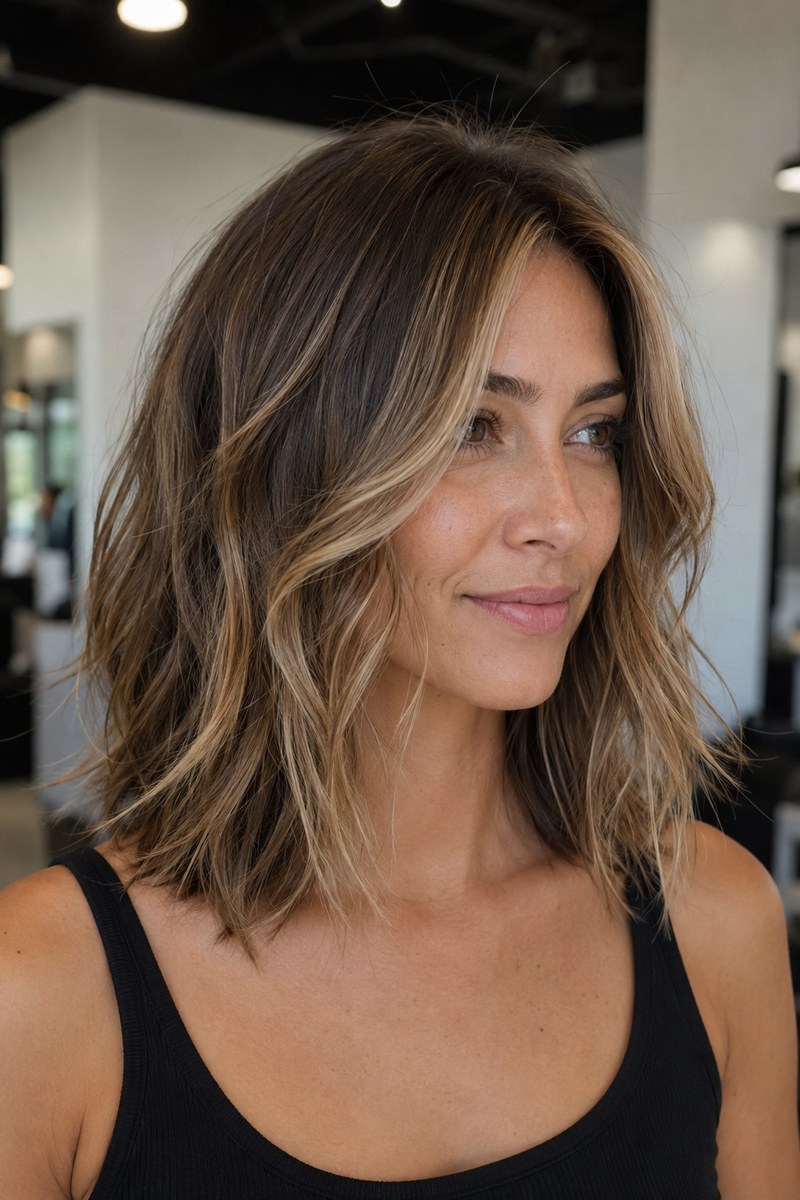
Sandy blonde blends beige, light brown, and muted gold into a naturally beautiful middle ground between ash and honey. It melts easily into darker blonde roots and looks effortlessly chic with tousled lobs, beachy waves, and textured layers. The balanced tone creates flattering brightness without appearing strongly cool or overly golden.
Salon brief: Sandy-beige highlights blended into natural root depth.
17. Platinum Money Piece on Dark-Blonde Hair

Platinum creates a crisp, glamorous focal point on dark-blonde or light-brown hair without requiring the full head to be lightened. Two controlled panels can look especially flattering on fine hair, giving the front a bright, modern lift without overwhelming the style. The lighter starting level also makes this bold transformation more achievable, although regular toning is still necessary.
Salon brief: Narrow platinum money pieces with a lightly shadowed root.
18. Golden-Blonde Face Frame

Golden blonde gives dark blonde, bronde, and light brunette hair a warm, radiant, sun-kissed effect. Fine ribbons near the root can widen around the cheekbones, creating a graceful change in intensity rather than uniform stripes. This glowing tone is an excellent choice when the goal is warmth, brightness, and a visibly cheerful finish.
Salon brief: Golden-blonde balayage with extra brightness at cheekbone level.
19. Strawberry-Blonde Front Pieces
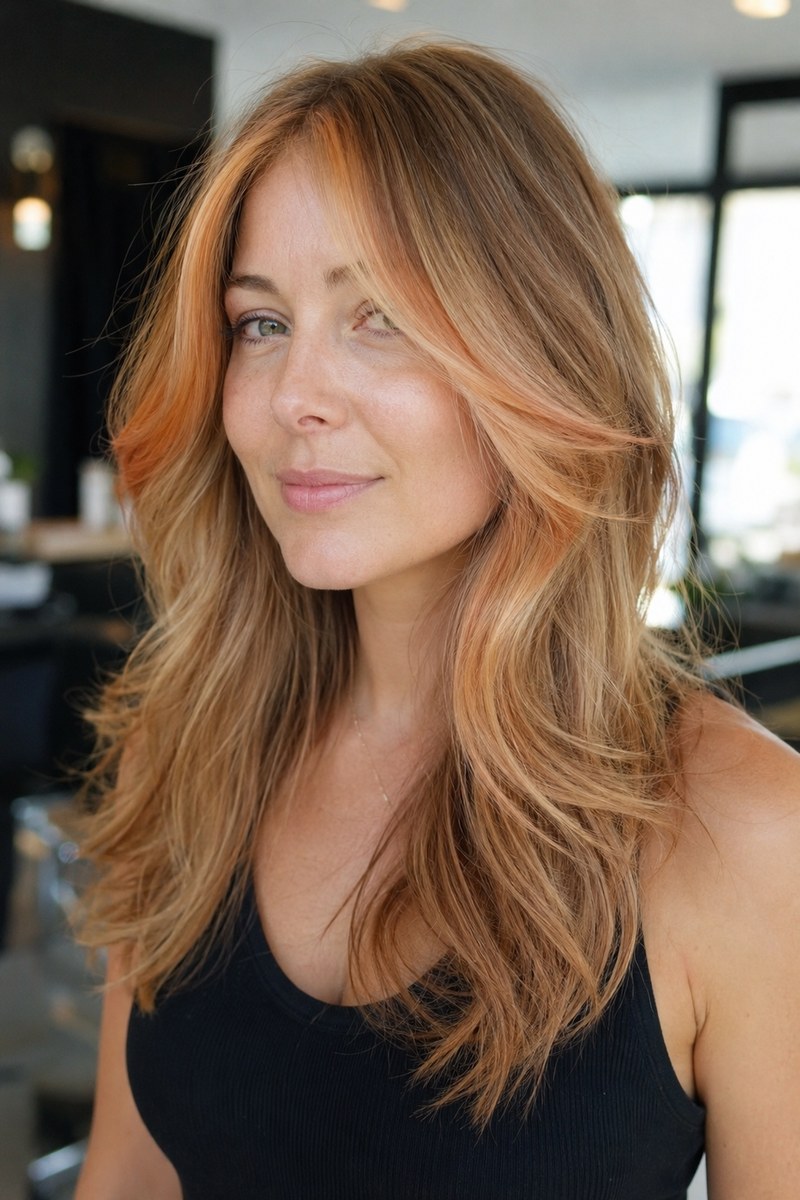
Strawberry blonde blends copper, gold, and blonde into a charming, luminous shade that brings warmth to an existing blonde or light-brown base. A delicate copper influence looks soft and natural, while brighter pieces near the fringe create a playful, fashion-forward finish. Peachy-gold ends can connect the front sections beautifully to the rest of the color.
Salon brief: Strawberry-blonde front pieces with soft golden-copper toning.
20. Rooted Blonde With Bright Hairline Highlights

This placement preserves beautiful natural depth at the scalp while concentrating the cleanest, brightest blonde around the face. Hairline babylights look softer and more refined than thick root-to-tip blocks, while a neutral or beige root melt makes regrowth feel graceful and intentional. It is a gorgeous choice for blondes who want fresh radiance without losing all their root dimension.
Salon brief: A lived-in root melt with bright, fine hairline babylights.
21. Reverse Balayage With a Bright Face Frame
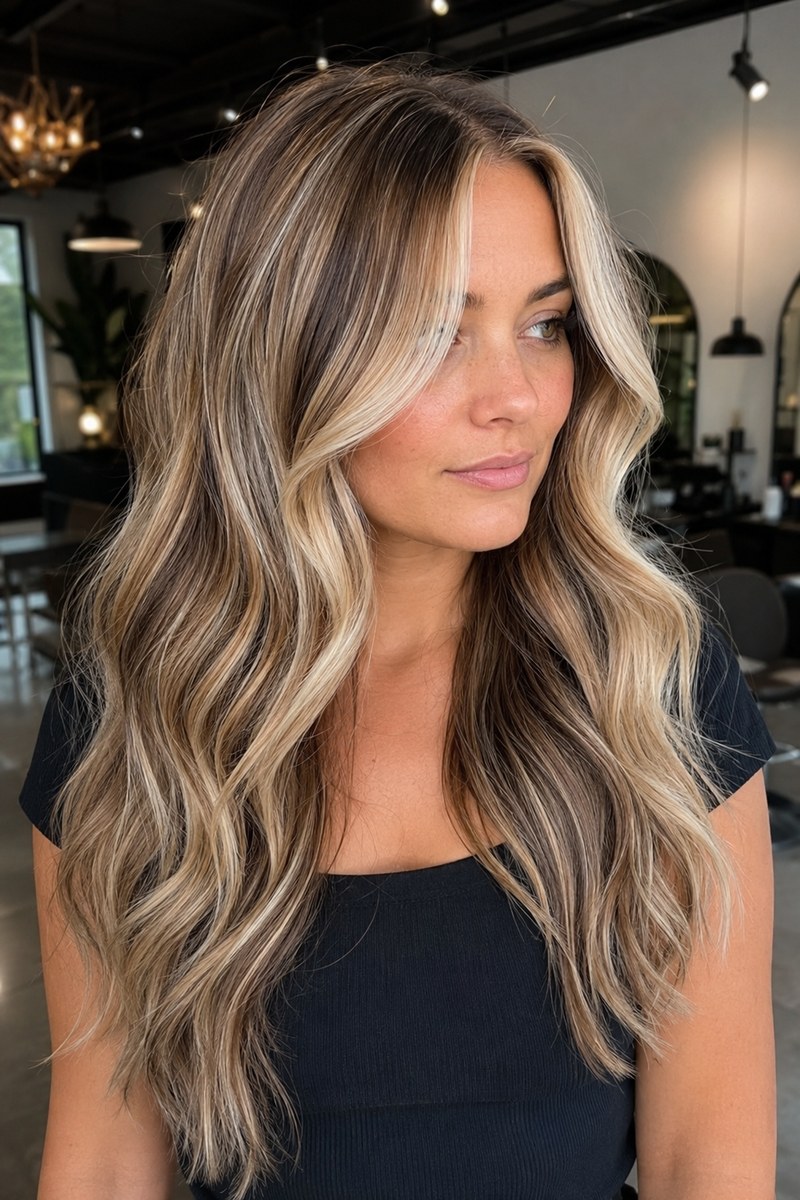
Reverse balayage restores rich brunette lowlights to over-lightened hair while preserving selected blonde around the face. It creates luxurious depth, revives contrast, and makes the overall color look more intentional and expensive. For concealed contrast instead, explore these underneath hair color ideas.
Salon brief: Brunette lowlights through the lengths while preserving a bright blonde face frame.
22. Black Hair With Caramel Face-Framing Highlights

Caramel creates a warm, glowing contrast against black hair without demanding the extreme lift needed for platinum. A deep-brown transition near the root can melt seamlessly into golden caramel through the ends, making the lighter sections look rich and beautifully integrated. This is one of the most flattering high-visibility options for naturally dark hair.
Salon brief: Melted caramel face framing with a deep brown shadow root.
23. Jet-Black Hair With an Icy-Blonde Money Piece

Icy blonde against jet black creates a dramatic, editorial contrast that feels bold, modern, and unforgettable. Reaching a clean pale base may require several careful sessions, especially when permanent dark dye is present, so elasticity and color history should be assessed first. A gradual approach helps protect the hair while building toward a crisp, show-stopping finish. For related inspiration, see these black and blonde hair combinations.
Salon brief: A narrow icy money piece developed gradually with a clean toner.
24. Dark Hair With Honey-Brown Ribbons

Honey brown is brighter than chocolate but softer than blonde, giving dark hair a warm, believable glow indoors and in sunlight. Carrying the shade through the front layers and selected ends creates beautiful continuity without lightening the entire head. It is a lovely choice when caramel feels too golden or blonde feels too dramatic.
Salon brief: Honey-brown balayage through the front layers and ends.
25. Espresso Curls With Bronze Highlights
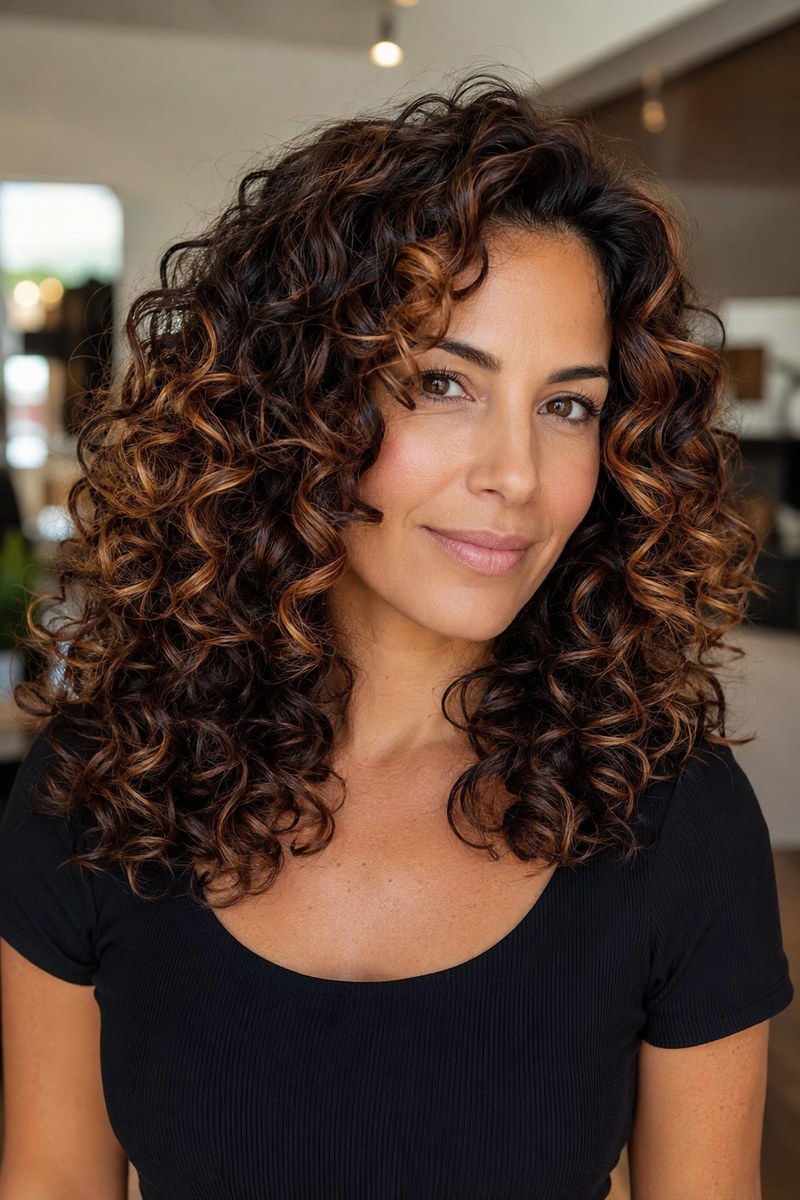
Bronze blends brown, gold, and a touch of copper to create rich, glowing depth on espresso curls without turning them yellow. Mapping color on dry, naturally arranged curls helps the brightest sections land exactly where the hair falls, allowing every curl to look defined, dimensional, and beautifully illuminated.
Salon brief: Hand-painted bronze highlights following the natural curl map.
26. Dark Curls With Caramel-Tipped Face Pieces
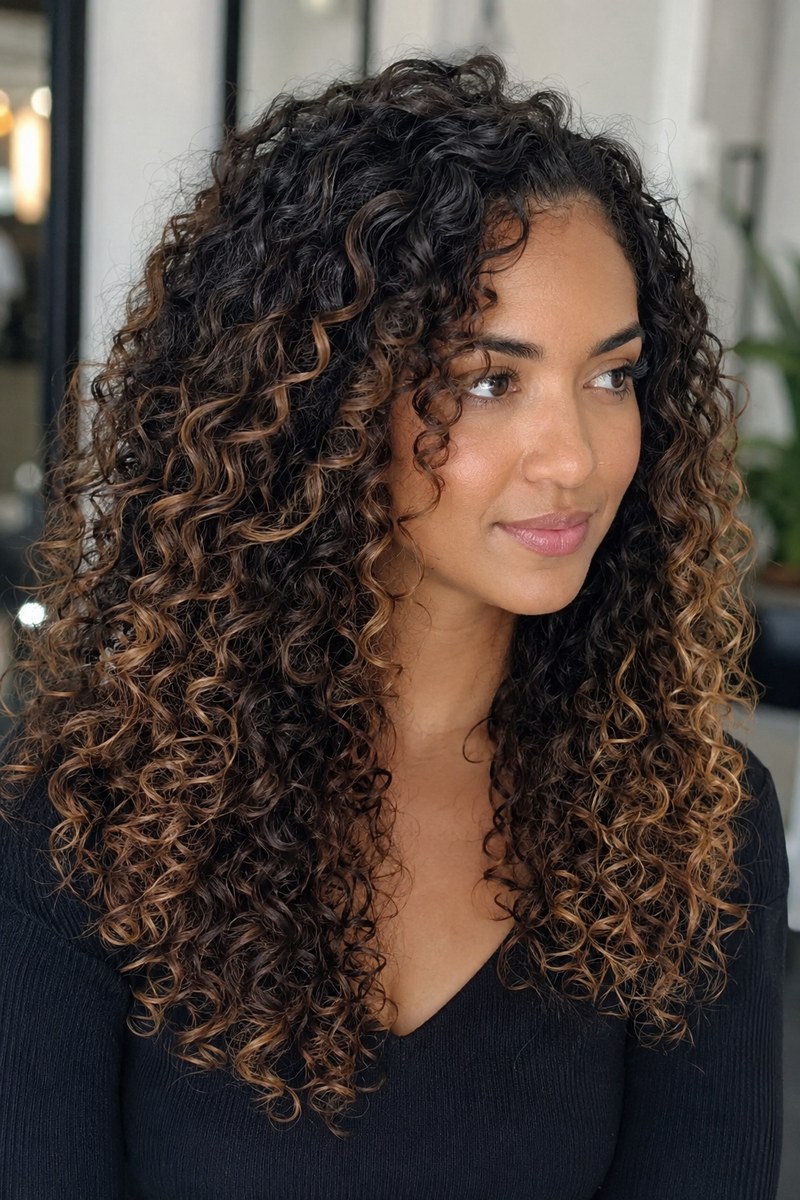
Keeping the roots dark and introducing caramel from the mid-lengths creates a soft, graceful result on curls. The lighter tips outline the curl pattern, add joyful movement, and brighten the face without overwhelming the natural texture. Placement should be planned on dry hair because shrinkage changes where each highlight appears.
Salon brief: Caramel-tipped front curls with dark, diffused upper sections.
27. Black Bob With Copper Front Highlights
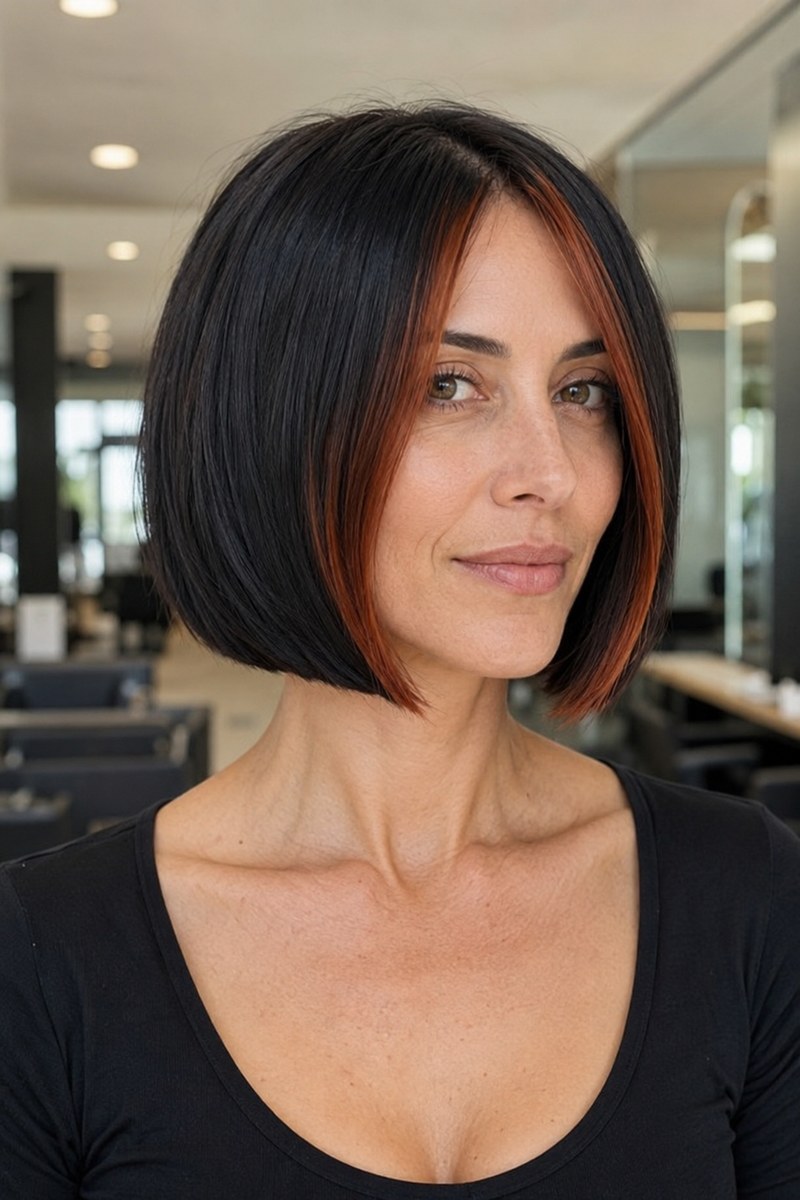
A black bob concentrates color near the face, allowing narrow copper sections to make a bold, stylish impact. Muted auburn-copper looks refined and luxurious, while brighter orange-copper creates a vivid, fashion-led finish. Slim panels usually feel more proportional on a short shape and give the cut a sharp, confident identity.
Salon brief: Slim copper panels around the fringe and temples.
28. Burgundy Face Frame on Dark Hair
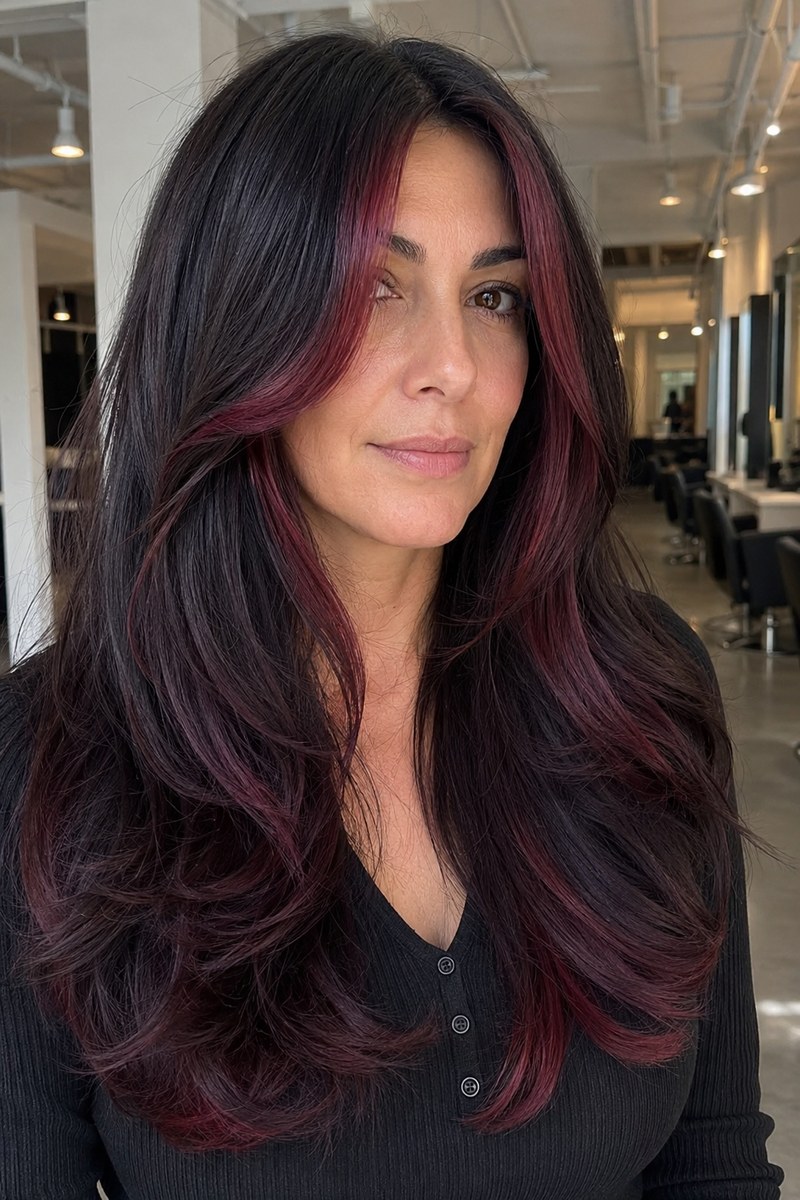
Burgundy gives black, espresso, and dark-chocolate hair a rich red-violet glow that looks elegant indoors and beautifully vivid under direct light. Adding a few matching ribbons beneath the surface connects the front color to the rest of the style, creating depth and drama without committing to an all-over red look.
Salon brief: Burgundy face-framing pieces with hidden matching ribbons underneath.
29. Silver-Gray Money Piece on Black Hair

Silver-gray creates a dramatic, high-fashion contrast that can make black hair look striking and unforgettable. The front sections normally need to be lifted very pale first, while a charcoal transition at the root softens regrowth and elegantly connects silver to black. Regular toning, heat protection, and careful conditioning help preserve the cool, glossy finish.
Salon brief: Silver face pieces with a smoky charcoal root melt.
30. Rose-Gold Highlights on Dark-Brown Hair
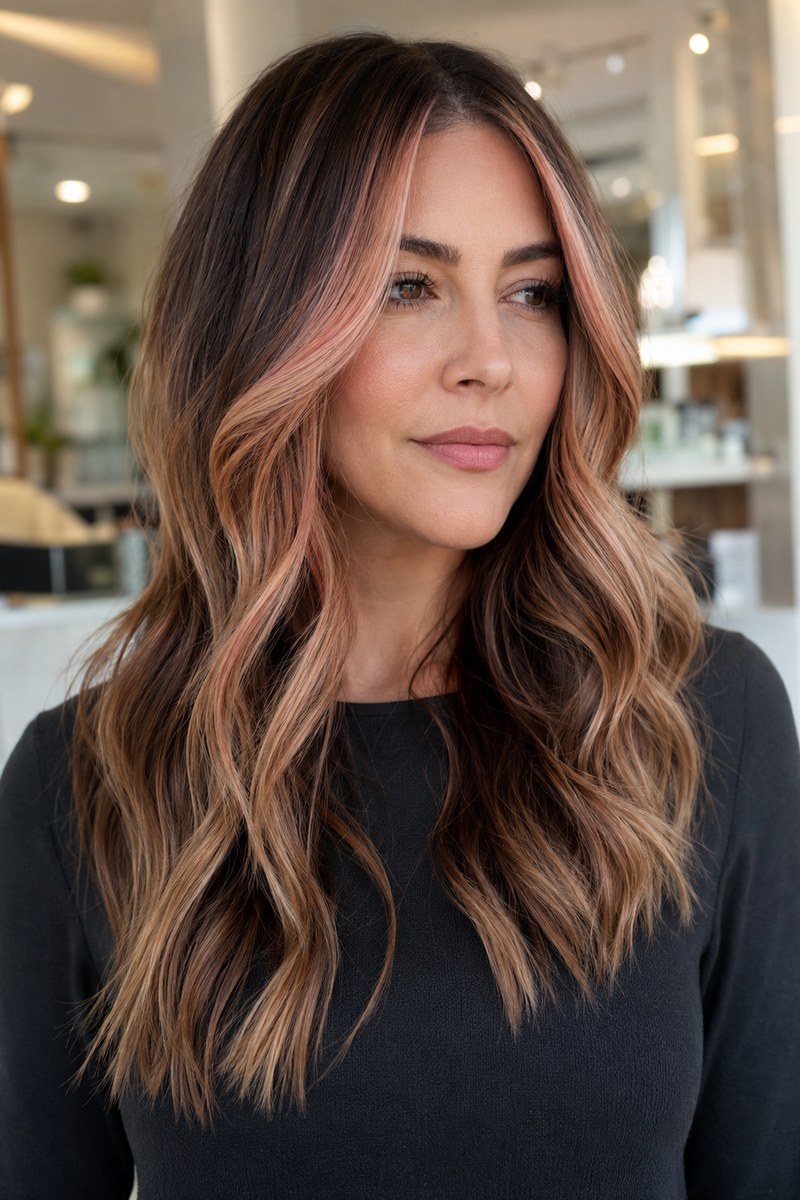
Rose gold blends pink, peach, and warm blonde into a soft, romantic, and creative alternative to vivid pink. The selected front sections must first reach a warm blonde base, while surrounding caramel or warm-brown balayage helps the new tone look beautifully intentional. Porous areas may hold the pink longer than the darker base, adding even more dimensional variation.
Salon brief: Muted rose-gold front highlights connected to warm caramel dimension.
31. Face-Framing Highlights With Curtain Bangs

Curtain bangs naturally separate around the face, creating a beautiful guide for controlled brightness. Highlighting the outer edges and adding only a few fine pieces through the center preserves depth while giving the fringe a fresh, luminous lift. This thoughtful placement keeps the result soft, flattering, and full of movement.
Salon brief: Fine highlights following the split and outer curve of the curtain bangs.
32. Face-Framing Highlights on a Bob
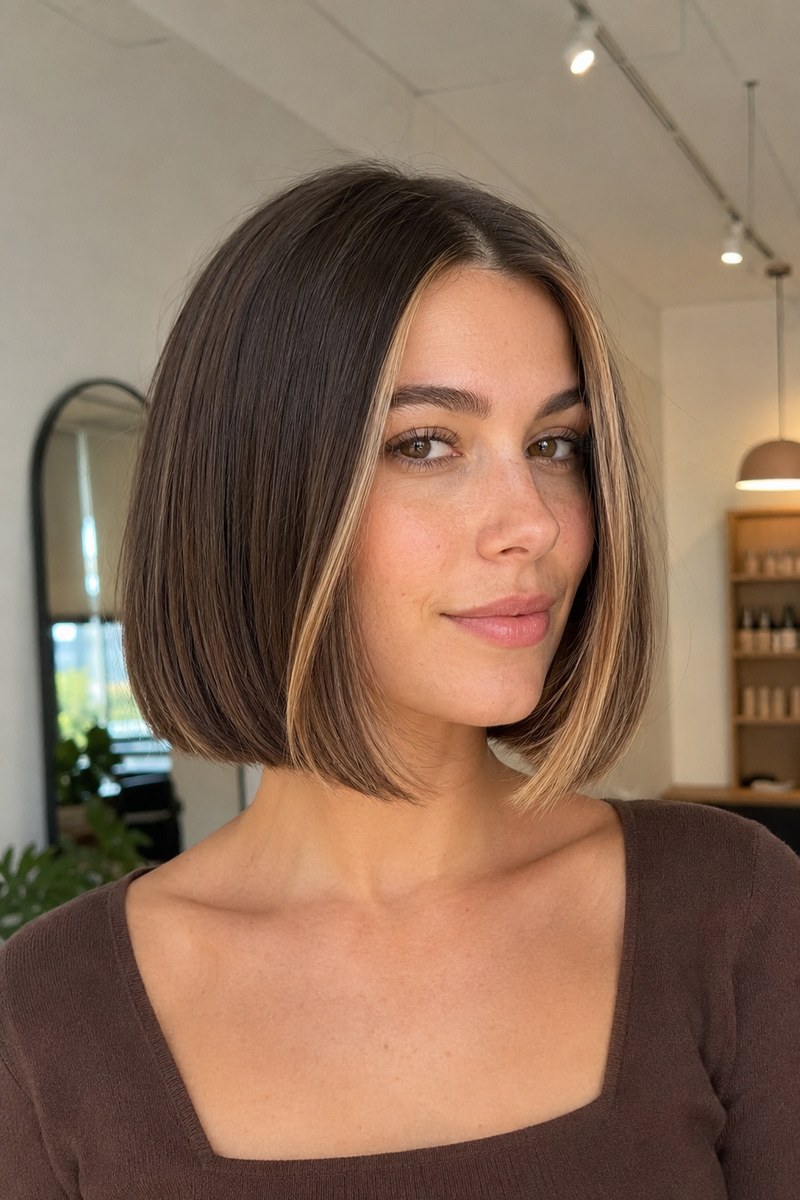
A bob offers limited length for a gradual blend, so precise placement creates the most polished result. Narrow temple ribbons and softly brightened front ends tend to look balanced, elegant, and flattering. Brunette or bronde shades create subtle sophistication, while blonde or copper can turn the placement into a confident signature feature.
Salon brief: Narrow ribbons connected to the front perimeter of the bob.
33. Face-Framing Highlights on a Lob
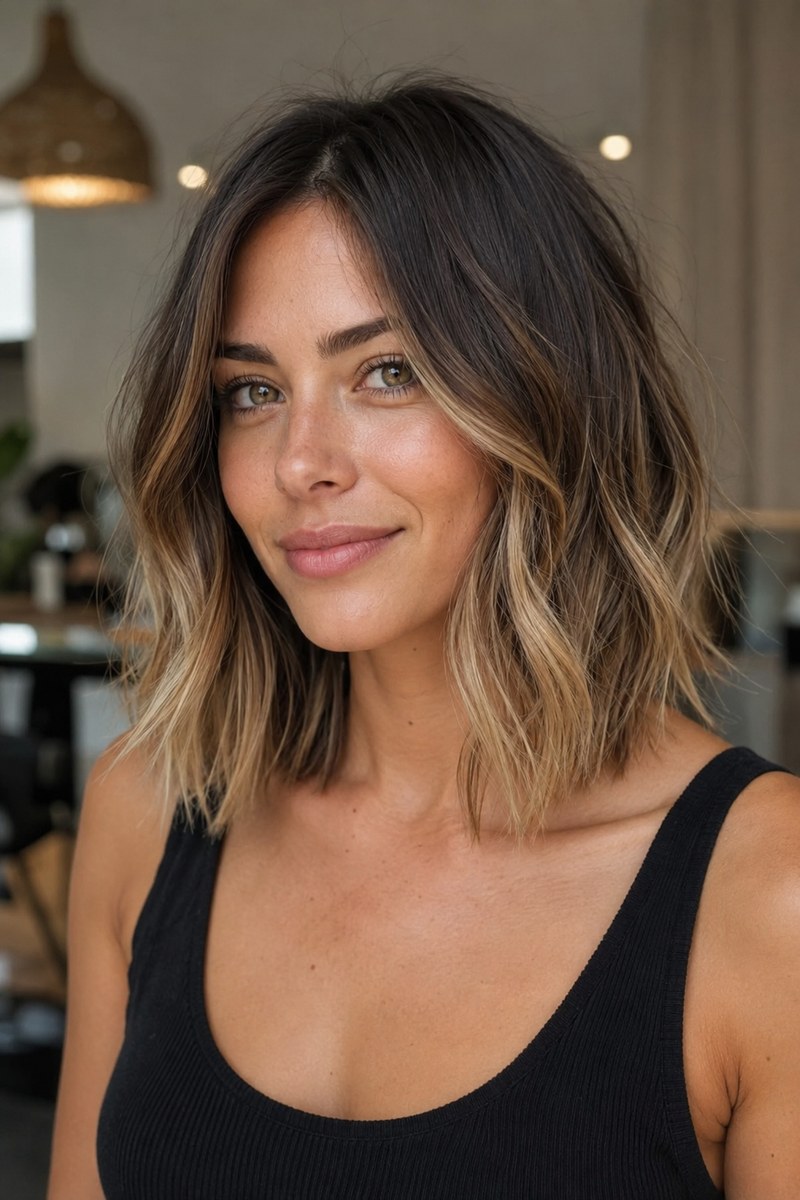
A collarbone-length lob provides the perfect space for a visible gradient from fine roots to brighter ends. The placement looks beautiful with straight styling, loose bends, or textured waves, and the lightened sections can be removed gradually through future trims. This makes a lob an exciting and flexible canvas for experimenting with brightness.
Salon brief: A softly rooted face frame that brightens toward the collarbone.
34. Face-Framing Highlights on Long Layers
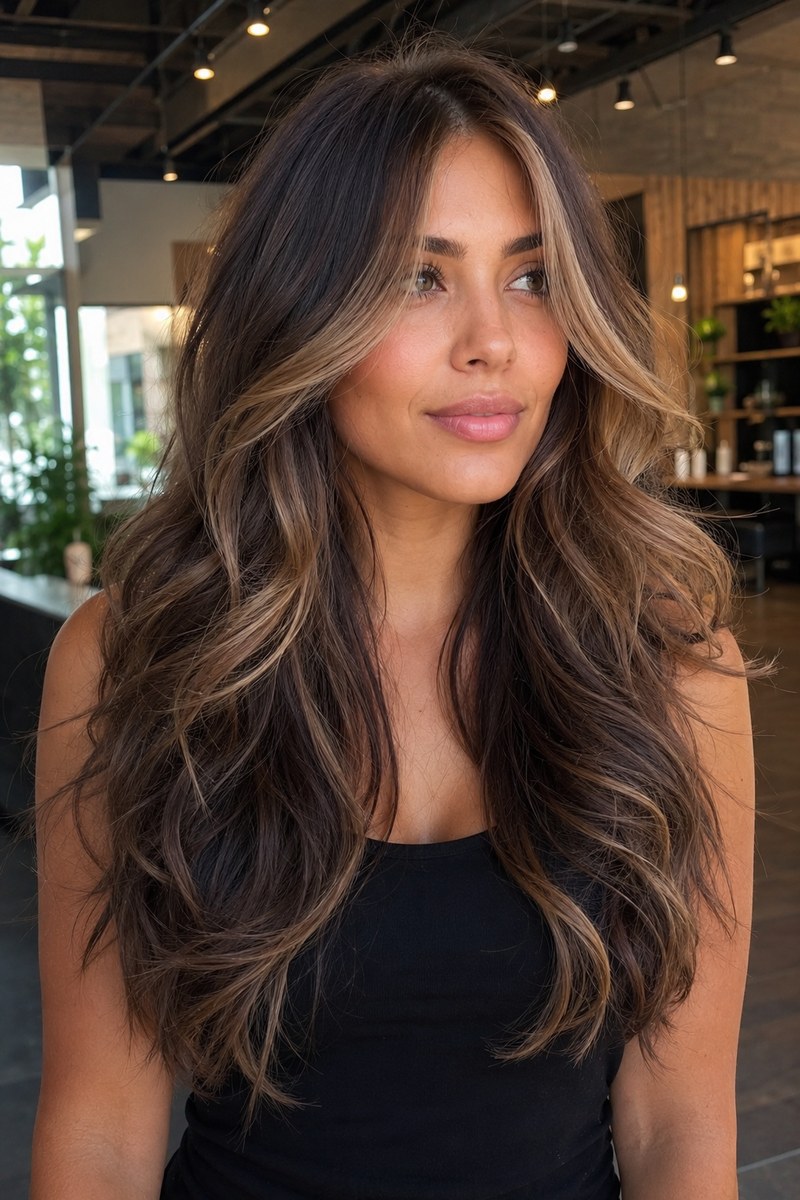
Long layers expose several beautiful surfaces for color, so the shortest front pieces can carry the strongest brightness. Repeating the tone more softly through selected longer layers creates flowing depth without competing with the face frame. The result feels radiant, dimensional, and full of movement rather than overly uniform.
Salon brief: Bright shortest layers with softer ribbons through the remaining lengths.
35. Subtle Highlights on Short or Pixie Hair
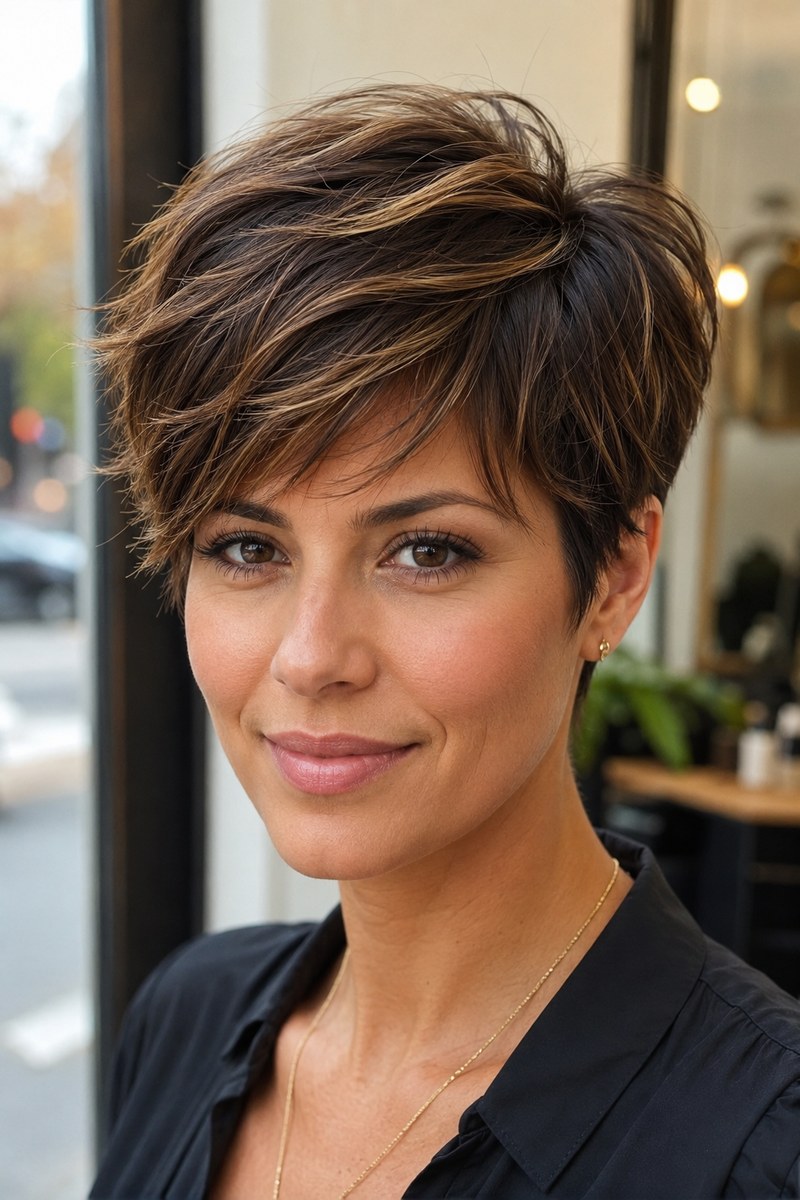
A pixie or short crop needs only a few strategic pieces around the fringe, temples, or side part to create a striking transformation. Staying close to the natural base adds chic texture and subtle radiance, while platinum, copper, or vivid shades can turn the placement into a bold, artistic statement.
Salon brief: Micro-highlights around the fringe and parting that follow the haircut.
How to Choose the Right Face-Framing Highlight Color
Start With Your Natural Base
A shade close to your natural level usually requires less lifting, preserves more of the hair’s natural richness, and creates a softer, more graceful grow-out.
| Natural base | Subtle choice | Medium contrast | Bold choice |
|---|---|---|---|
| Black | Espresso or mocha | Caramel or copper | Icy blonde or silver |
| Dark brown | Chestnut or toffee | Honey or bronde | Platinum money piece |
| Medium brown | Walnut or caramel | Beige or golden blonde | Bright champagne |
| Light brown | Dark blonde or bronde | Honey or sandy blonde | Platinum |
| Dark blonde | Beige or champagne | Pearl or buttery blonde | Icy platinum |
| Light blonde | Champagne babylights | Pearl or platinum | Reverse lowlights with a bright frame |
| Red or auburn | Cinnamon or copper | Strawberry blonde | Pale gold or vivid copper |
Consider Undertone, but Do Not Treat It as a Strict Rule
Warm gold, caramel, honey, and copper can bring a radiant glow to many warm or neutral complexions. Ash, mushroom, pearl, and beige can create an equally beautiful, sophisticated finish when cooler tones feel more flattering.
Professional hair color guidance can provide a helpful starting point. Colorist Malcolm Cuthbert recommends ash, sand, beige, and platinum blondes for many cool undertones because these shades avoid strong yellow tones. Other colorists note that warm complexions often glow beautifully beside gold, copper, and honey. Personal preference, eye color, existing base, and the shade that makes you feel most confident still matter more than following a rigid chart.
Decide How Much Contrast You Want
Low contrast: One or two levels lighter than the base. Best for delicate brightness, a naturally flattering glow, and soft-looking grow-out.
Medium contrast: Two or three levels lighter. The front pieces look clearly luminous while still blending beautifully with the overall color.
High contrast: Three or more levels lighter. This creates a bold, defined money piece with an eye-catching, fashion-forward finish, although regrowth becomes more noticeable.
Face-Framing Placement for Different Face Shapes
Face-shape recommendations are flexible visual guides, not strict rules. Your haircut, parting, styling habits, and favorite features can inspire a placement that feels flattering, expressive, and uniquely yours.
Round Faces
Longer ribbons beginning near or below the cheekbones can create an elegant vertical line and a beautifully lengthened effect. Keeping the brightness diffused rather than placing it in one wide horizontal block usually creates a softer, more flattering finish.
Square Faces
Diffused highlights around the temples and jaw can gently soften the outline of a structured haircut. Curved curtain bangs and blended waves enhance the effect, creating a graceful and harmonious frame.
Heart-Shaped Faces
Brightness around the cheekbones and lower front layers can beautifully balance a wider forehead and narrower chin. Keeping the upper hairline connected to the brighter ends creates a harmonious result unless you intentionally want to emphasize the forehead.
Long Faces
Highlights around the cheekbones and outward-styled layers can add flattering visual width and lively movement. A curtain fringe can also break up facial length while creating a soft, stylish frame.
Oval Faces
Oval faces work beautifully with most placements. Choose the option that best complements your haircut and celebrates the feature you most want to emphasize.
When to Avoid Face-Framing Highlights
Face-framing color can be a beautiful, confidence-boosting change, but protecting hair and scalp health should always come first. Bleach and permanent dyes alter the hair’s structure, so postponing the service is the safest and most positive choice if:
- Your hair is severely damaged from previous chemical relaxers, perms, or multiple rounds of box dye.
- Your hair fails a strand test. A responsible stylist will always perform a test on a small, hidden section of hair to check for breakage before applying bleach to the visible front hairline.
- You have an active scalp condition, sunburn, or open abrasions on your scalp, as chemical lighteners can cause severe irritation.
When hair is not ready for bleach, you can still enjoy a gorgeous face-framing effect with gentler alternatives such as temporary color-depositing glosses or clip-in face-framing extensions.
What Research and Experts Say About Hair Lightening
1. Greater Lift Usually Means More Stress
The American Academy of Dermatology notes that lightening hair by more than three shades generally requires stronger peroxide, which can increase damage. Choosing a gradual lifting plan helps protect strength and gives pale blonde or silver a better chance of looking smooth, glossy, and beautiful on a dark starting base.
Source: American Academy of Dermatology
2. Bleach Can Affect the Cuticle, Cortex, and Pigment
Microscopy and proteomics research found peroxide-related changes in both the cuticle and cortex, with greater protein loss as bleaching became more severe. The same study also observed substantial melanin-granule degradation even after its mildest treatment. These findings support a careful, condition-first approach that prioritizes a healthy-looking final result.
Source: PubMed
3. Repeated Processing Can Reduce Moisture and Weaken the Surface
A 2024 laboratory study reported an approximately 40% reduction in hair-fiber water content after the first dyeing procedure, followed by further decline with repeat processing. Another analysis found rough, brittle, and torn cuticle scales in excessively bleached samples. Thoughtful spacing, conditioning, and professional monitoring can therefore play an important role in preserving softness, shine, and resilience.
Sources: National Library of Medicine moisture study and National Library of Medicine cuticle study
4. Patch and Strand Tests Serve Different Purposes
The FDA recommends completing the instructed 48-hour skin patch test every time hair dye is used, even with a familiar product. A separate strand test helps a stylist evaluate lift, tone, elasticity, and breakage before treating the visible hairline, giving you greater confidence in a safe and beautiful result.
Source: U.S. Food and Drug Administration
5. Sun Exposure Can Increase Dryness and Fading
The American Academy of Dermatology warns that sunlight can leave dyed or bleached hair weaker, drier, rougher, and more faded. Covering the hair or using a suitable UV-protective product helps preserve softness, strength, and vibrant color.
Source: American Academy of Dermatology
6. Localized, Fine Placement Limits the Amount of Hair Being Lightened
Colorist Natalia Romaniuc describes the money piece as a lower-effort update because it concentrates color in selected front sections. Colorist Jenna Perry has also used very fine balayage to create soft, luminous brunette brightness instead of heavy blocks. These techniques can deliver a noticeable, flattering refresh while limiting the amount of hair being lightened.
Sources: Allure on money pieces and Allure on fine balayage
7. The Formula Must Match the Starting Base
Professional color guidance consistently adapts tone and lightener strength to the natural level, undertone, previous dye, and current condition. A personalized formula gives each client the best opportunity to achieve a flattering tone, even lift, and glossy finish because the same formula cannot produce an equivalent result on virgin blonde hair and previously dyed black hair.
Source: Byrdie
Products for Maintaining Face-Framing Highlights
Redken Acidic Color Gloss Sulfate-Free Shampoo
Redken Acidic Color Gloss Sulfate-Free Shampoo is formulated for color-treated hair and is intended to help retain beautiful vibrancy and shine. Pair it with the matching conditioner when the lightened front pieces need extra softness and a smoother, glossier finish.
Pureology Hydrate Shampoo
Pureology Hydrate Shampoo is a sulfate-free option designed to bring moisture and softness to dry, color-treated hair. It is especially well suited to normal-to-thick hair that benefits from richer hydration. Fine hair that becomes easily weighed down may enjoy the lighter Pureology Hydrate Sheer Shampoo.
L’Oréal Paris EverPure Purple Shampoo
Use L’Oréal Paris EverPure Purple Shampoo when blonde sections begin developing unwanted yellow tones. The brand recommends using it one to three times per week rather than at every wash. Thoughtful use can help blonde highlights stay fresh, bright, and polished, while overuse on beige, honey, or golden highlights may make their warmth look duller than intended.
Note: Purple shampoo will not remove strong orange tones from dark brunette hair lifted to a warm level. A salon toner formulated for the actual underlying pigment is more likely to create the balanced, beautiful tone you want.
K18 Leave-In Molecular Repair Hair Mask
K18 Leave-In Molecular Repair Hair Mask is intended for damage associated with bleach, color, heat, and chemical services. The official instructions recommend applying it to clean, towel-dried hair and waiting four minutes. The brand recommends using it for four to six consecutive washes after a salon service before moving to occasional use. These are manufacturer claims, not independent clinical treatment advice, but the routine may help processed hair feel smoother and more cared for.
Olaplex No.3 Hair Perfector
Olaplex No.3 Hair Perfector is a pre-shampoo treatment designed for weekly home use. The brand states that it may be used more frequently on heavily processed hair to support a stronger, smoother, and healthier-looking finish.
Kérastase Chroma Absolu Serum Chroma Thermique
Use a dedicated heat protectant before repeatedly styling lightened front sections. Kérastase Chroma Absolu Serum Chroma Thermique is designed as a heat-protecting leave-in product for color-treated hair. Concentrate it through the mids and ends rather than saturating the scalp to help the highlighted pieces stay smooth, glossy, and beautifully polished.
dpHUE Gloss+
dpHUE Gloss+ is a semi-permanent, color-depositing conditioner that can refresh richness and shine by adding pigment to the outside of the hair shaft. It does not lighten hair. The brand offers several brunette, copper, red, and blonde shades, making it useful for reviving a favorite tone between salon visits. Use caution on porous blonde face pieces because they may absorb more pigment than the darker base. Perform the instructed strand and allergy tests before applying any depositing color.
How to Ask Your Stylist for Face-Framing Highlights
Bring two or three inspiring reference images that show a similar natural base, density, texture, and haircut. Closely matched photos help your stylist understand the brightness, softness, and contrast you love while setting realistic expectations for a beautiful result on your own hair.
Use this consultation script for a soft, natural look:
“I want soft face-framing highlights rather than two thick stripes. Please keep my natural root, use finer sections near the parting, and blend the brightness into my front layers. I prefer a caramel, honey, beige, ash, or copper tone with low, medium, or high contrast.”
For a bolder result, say:
“I want a defined money piece that is visibly brighter than my base. Please show me how wide the sections will be before applying the lightener.”
Also tell the colorist:
- Whether your hair contains permanent box dye, henna, or previous bleach
- How often you are willing to return for toning
- Whether you normally wear your hair straight, curly, or tied back
- Which tones you dislike, such as gold, orange, gray, or violet
- How much contrast you want when the hair is not styled
Frequently Asked Questions
Are Face-Framing Highlights Still Popular?
Yes. Face-framing highlights remain incredibly versatile and stylish. The trend now includes delicate balayage, glowing hairline babylights, rich caramel ribbons, softly rooted blonde, and bold money pieces, so almost anyone can find a version that feels fresh and flattering.
Are Face-Framing Highlights Low Maintenance?
Rooted, low-contrast placement can be wonderfully manageable because it grows out softly and naturally. Bright sections applied from the scalp create a more dramatic, luminous effect but may need regular toning to keep the color looking fresh and beautifully balanced.
Can Face-Framing Highlights Make Hair Look Thicker?
Yes. Fine light-and-dark ribbons can create beautiful visual depth, especially around layers, making the hair appear fuller and more dimensional. Keeping the placement refined usually flatters fine hair more than one wide, solid panel, which can make the color look flatter.
Can I Create Face-Framing Highlights at Home?
Home lightening can lead to uneven lift, overlapping bleach, chemical irritation, breakage, and orange bands in the most visible part of the hairstyle. Professional application gives dark, damaged, or previously colored hair a better chance of achieving a smooth, flattering, and healthy-looking result. Always follow the product’s allergy-test instructions. For a less exposed DIY placement, review this guide to coloring the underneath of your hair.
Final Takeaway
The most beautiful face-framing highlights balance three empowering decisions: how much contrast makes you feel confident, where the brightness best celebrates your features, and how safely your current hair can reach the target shade.
Caramel, toffee, honey, mocha, and bronze create rich, wearable dimension on brunette and black hair. Beige, champagne, pearl, and platinum deliver radiant blonde effects that can feel fresh, polished, and transformative, although they may require more lifting and toning. Bring reference photos that match your starting color and texture, disclose previous dye or bleach, and agree on section width and root placement before the service so you can enjoy a result that feels flattering, intentional, and completely personal.
Explore more beautiful hair-color inspiration and practical care guides at StagedBeauty.