
Author’s Note: As someone who has spent over a decade experimenting with DIY hair color on stubborn level-3 dark hair, I have personally tested the high-lift and henna methods outlined below. The product recommendations and timelines are based on real-world results.
You can absolutely dye dark hair red without bleach, and you don’t need to fry your strands to get there. If you want a rich, vibrant mane without the damage of harsh lighteners, you just need the right technique.
This guide breaks down exactly how to dye dark hair red without bleach, covering high-lift dyes, semi-permanent color, and natural henna.
Achieving Red Hair Without Bleaching: What to Expect
Going bleach-free doesn’t mean you’re skipping chemistry entirely. Bleach strips your natural pigment, which is brutal on your hair. Instead, a no-bleach approach uses developer to gently lift your hair 1–4 levels while dropping in red pigment.
Semi-permanent dyes gently coat the surface, while henna binds to your hair’s proteins for a sheer wash of color.
Here is the reality check: on jet-black or very dark hair, no-bleach methods will not give you a bright “Ariel” copper. They will give you rich mahogany, deep cherry, or burgundy tones.

True bright reds require underlying hair that is already light. However, achieving red hair without bleaching is highly effective for deep, warm tones.
How to Color Dark Hair Red Without Bleach: Preparation & Strand Tests
Before you start coloring hair red without bleach, take a moment to assess your hair’s health. A little prep now saves you from a disaster later.
Assess Your Starting Hair Color Level
Hair color levels run from 1 (black) to 10 (lightest blonde). On levels 3–5 (dark to medium brown), high-lift reds will show up as visible warm tones. On level 1–2 (black), expect a subtle red sheen or deep burgundy unless you commit to multiple applications.
Choosing the Best Red Hair Dye for Brown Hair Without Bleaching
Not all reds are created equal. To make the color flatter your complexion, consider the underlying base of the dye. Warm or copper reds are best for olive, yellow, or golden skin undertones.
Cool or cherry reds (blue-based) suit fair, pink, or cool-toned skin. Burgundy or mahogany reds (purple-based) are universally flattering but especially striking on deeper skin tones.
If your hair is jet black, lean toward burgundy or mahogany, as copper tones may not show up without pre-lightening.
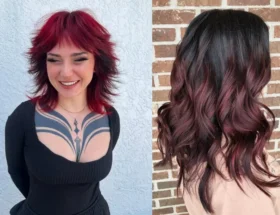
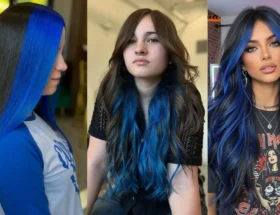
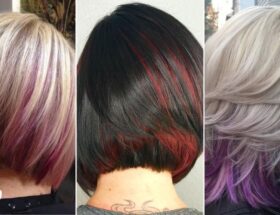
If you need some visual inspiration before buying your dye, check out these stunning black and red hair color ideas to see how different burgundy and cherry shades look on dark bases.
How Gray Hair Reacts to No-Bleach Red Dye
Grays are notoriously stubborn. Because they are highly porous, they can suddenly turn bright copper or hot pink when exposed to red dye. High-lift permanent dyes usually blend them seamlessly.
Henna, on the other hand, will turn grays bright copper rather than blending them. If you have significant grays, skip the henna and stick to a high-lift permanent dye.
Testing Hair Porosity Before Coloring Hair Red Without Bleach
Porosity dictates how well your hair grabs and holds color. Drop a clean strand of shed hair into a glass of water. If it floats, porosity is low, meaning color will take longer and fade faster.
If it sinks quickly, your hair has high porosity. It will absorb color rapidly, but it will also lose the color quickly and may end up looking uneven.
Damaged, heat-styled, or previously colored hair tends to be high-porosity and will absorb red pigment intensely—sometimes unevenly.
The Importance of the Strand Test
Never skip the strand test. Mix a tiny bit of dye, apply it to a hidden section of hair, and let it process. This is your sneak peek—you will know exactly what shade you are getting before you commit.
Apply a little to the inside of your elbow, too, to make sure you won’t have an allergic reaction to PPD or other dye ingredients.

Prepping Your Workspace to Dye Red Hair Without Bleach
Let’s get your space ready. Skip the shampoo for 24 to 48 hours before dyeing; your natural scalp oils are your best defense against skin irritation.
Also, buy more dye than you think you need. Running out of dye halfway through is a DIY nightmare. One box is for short hair, two for shoulder-length, and three or more for thick, long hair.
Gather your supplies: a non-metal mixing bowl, applicator brush, gloves, non-metal hair clips, a measuring cup, a wide-toothed comb, Vaseline, and a deep conditioner.
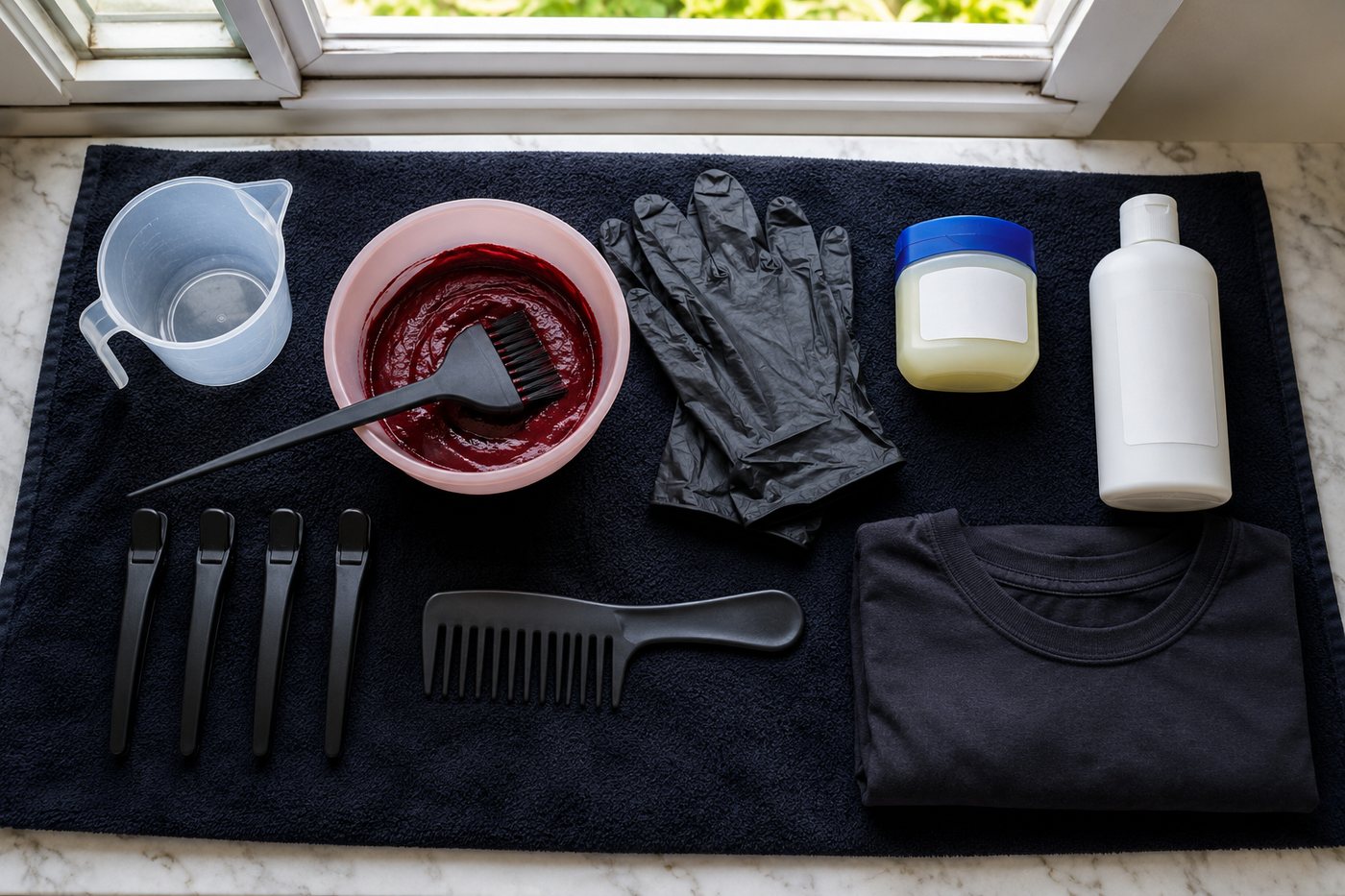
Wear an old shirt, lay down dark towels, and open a window. Permanent dye fumes can be irritating in an unventilated bathroom.
Clean up any spills immediately. Red dye stains everything, so wipe splatters on counters or tile grout with rubbing alcohol before they set.
Method 1: The Best Red Hair Dye for Dark Hair Without Bleaching (High-Lift)
Ready for the strongest no-bleach option? High-lift dyes like L’Oréal Excellence HiColor are game-changers. They use a special formula to lift your hair 3–4 levels and deposit red pigment in just 30 minutes.
It’s no wonder many consider this the best red hair dye for dark hair without bleaching.
Choosing the Right Developer Volume for Dark Hair
Developer (hydrogen peroxide) comes in volumes that dictate how much lift you get. Use 30 volume for dark brown hair and 40 volume only if your hair is very dark and in good condition.
If hair is relaxed or permed, drop to 20 volume to avoid breakage. If you are researching how to dye black hair red without bleach, you will likely need 40 volume developer to see any visible red tones.
|
Developer Volume
|
Lift
|
Best For
|
|---|---|---|
| 10 Vol | Little to no lift | Refreshing existing red, deposit-only |
| 20 Vol | 1–2 levels | Grey coverage, subtle shift on medium brown |
| 30 Vol | 2–3 levels | Dark brown to visible red |
| 40 Vol | 3–4 levels | Very dark brown/black to vivid red |
Exact Product Recommendations
For dark brown hair, look for L’Oréal Excellence HiColor Reds in H8 (True Red) or H10 (Red Copper). For very dark or black hair, HiColor HiLights in Red is specifically formulated to show on the darkest bases.
Step-by-Step: Dying Dark Hair Red Without Bleach
1. Section the hair: Divide dry, unwashed hair into four quadrants using the center part to the nape and an ear-to-ear parting. ‘Go from the center of your forehead to the back middle nape,’ advises color director AJ Lordett. Leave the bottom-back section down.
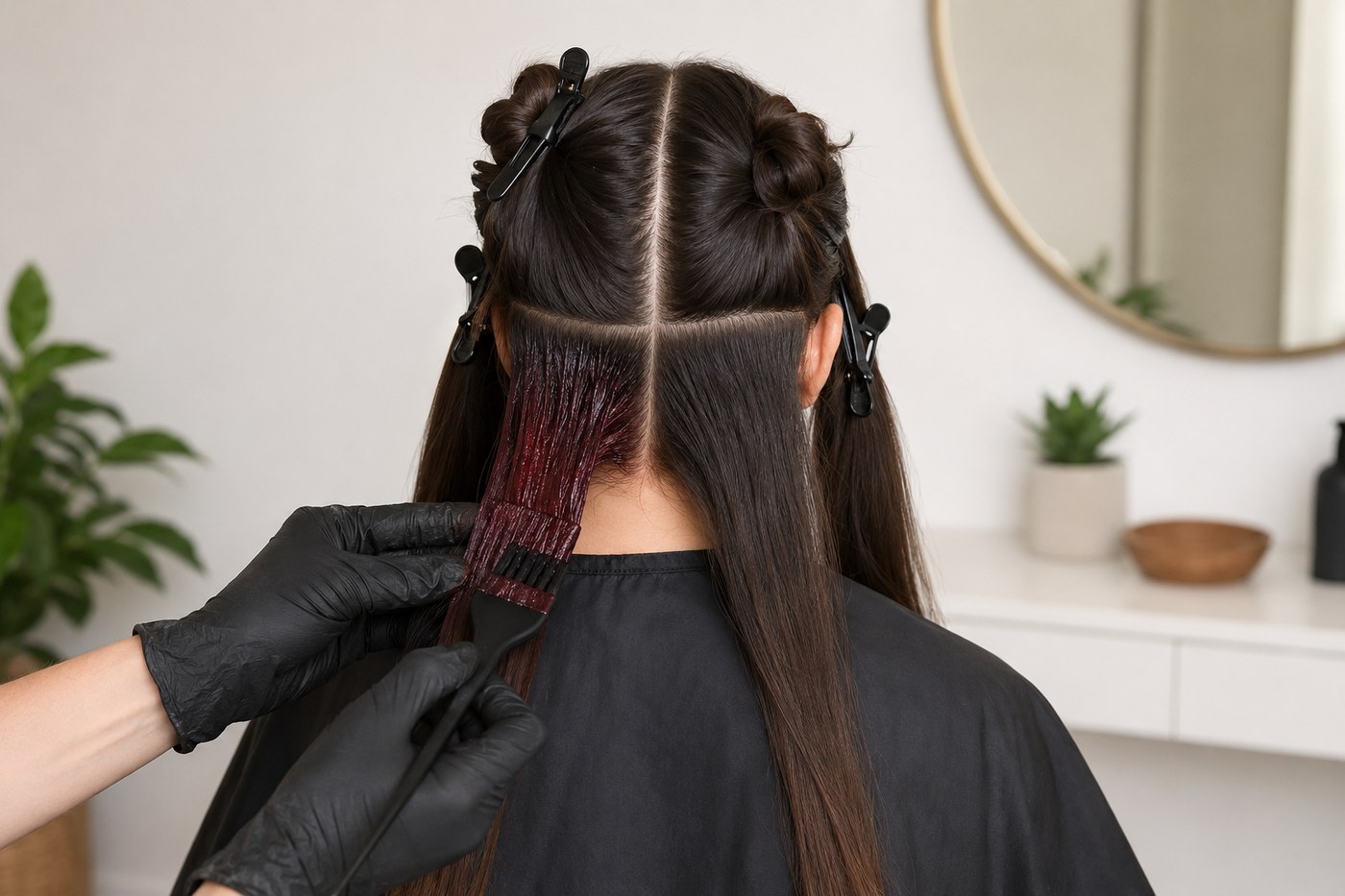
2. Protect the hairline: Rub a thin layer of Vaseline (or lip balm) around the face, ears, and neck to prevent skin staining.
3. Mix the dye: In a non-metal bowl, mix the full tube of dye with the recommended amount of developer (usually about 2.4 fl oz per tube).
4. Apply root to ends: Grab your brush and start at the roots of your first bottom section, pulling the color down to the ends. Don’t oversaturate the tips! As celebrity colorist Nikki Lee explains, ‘Always start at the root and pull down. Because natural ends are lighter, this prevents them from grabbing too much pigment and looking unnaturally dark.’
5. Process: Set a timer for 30 minutes (or per your specific dye’s instructions) to prevent over-processing and damage.
6. Rinse: Hop in a warm (not hot) shower and rinse until the water runs mostly clear—this can take 5–10 minutes. Skip the shampoo. Apply a deep conditioner for 3–4 minutes, then rinse.
7. Wait to wash: Wait 48 hours before your next shampoo so the cuticle can close and lock in the red molecules.
What to Expect Visual Results
On natural level 3 dark brown hair, L’Oréal HiColor in Red typically yields a deep, visible cherry cola sheen in direct sunlight, and a subtle burgundy tint indoors. Expect a noticeable, rich shift rather than a subtle tint.

Using a high-lift red hair dye for dark hair without bleaching is the most reliable way to achieve visible red hair color without bleach on stubborn dark bases.
Method 2: Semi-Permanent Red Hair Dye Without Bleach (Low-Damage)
Want to dye your hair red without bleach but avoid chemicals entirely? Semi-permanent direct dyes are your best friends. Brands like Arctic Fox, Manic Panic, and Splat Midnight for Brunettes skip the peroxide and ammonia.
They just stain the cuticle, causing zero damage. However, they cannot lift dark hair. On unbleached dark brown hair, expect a tint, a sheen, or a deep berry glow rather than a true bright red.
Arctic Fox curates a “Best Colors for Unbleached Hair” collection, recommending warmer red-orange shades that show up better on darker bases than cool reds do.
For a simple red hair dye with no bleach required, these are incredibly user-friendly. When applying red dye on brown hair, no bleach is needed for these formulas, but they will yield a subtle sheen rather than a vivid transformation.
Exact Shade Recommendations: For dark hair, Arctic Fox in Wrath (deep cherry) or Poison (dark red) show up beautifully. Manic Panic’s Vampire Red is also a reliable choice for a subtle berry tint.
Application: Apply to clean, dry hair (clarify first to remove buildup), saturate fully, process 30–60 minutes under a shower cap, then rinse with cool water. Semi-permanents fade within 4–8 weeks, so plan for monthly top-ups. This is an ideal red hair dye without bleach for those wanting a low-commitment color change.
Method 3: Using Henna for Dying Brown Hair Red Without Bleach
Looking for a completely natural route to dying dark hair red without bleach? Pure henna is unmatched. This plant powder binds directly to your hair’s keratin, adding a sheer red-orange layer without lifting your natural color.
On dark hair, it creates a stunning, deep auburn or burgundy that also conditions and adds incredible shine.
If you are dying brown hair red without bleach, henna is a fantastic choice that produces rich, warm tones. It is a completely chemical-free way to color hair red without bleaching while simultaneously improving hair health.
Critical Henna Safety Rules for Red Hair No Bleach
The most critical safety rule is to never bleach over henna. Bleach opens the hair cuticle and forces the henna pigment deeper into the hair shaft. This can cause severe damage, turning the hair green, uneven, or completely unpredictable. If you want to bleach later, wait for visible fading and do a strand test first.
You must also avoid “compound” or “black henna” containing metallic salts. Cheap boxed henna mixes sometimes contain metallic salts that react violently with oxidative dyes and bleach, producing heat damage, green or black discoloration, and even chemical burns. Always buy 100% pure henna powder from a reputable supplier.
Furthermore, coloring over henna with permanent or demi-permanent dye is difficult because the dye struggles to penetrate the sealed cuticle.
If you must, wait at least one month and ideally until the henna has recognizably faded. Only choose shades at the same depth or darker than your hennaed hair.
While you can apply henna directly over synthetic dye after a strand test, you cannot easily apply synthetic dye over henna.
How to Apply Henna to Color Hair Red Without Bleaching
Mix henna powder with just-boiled water (or an acidic liquid like lemon juice or tea) into a creamy paste. Apply to clean, dry hair, and wrap tightly in plastic wrap.

To deepen the stain and intensify the red—especially on dark hair—wrap a warm towel over the plastic cap or use a hooded dryer on a low heat setting for the last hour of processing. Leave the mixture on for 2–4 hours.
Rinse thoroughly with water (do not use shampoo for 24 hours). Color continues to oxidize and deepen for 48 hours post-application.
Method 4: Using Color Remover for Red Hair Color No Bleach
If your dark hair is dark because of previous box dye rather than natural pigment, a bleach-free, ammonia-free color remover like Color Oops shrinks the old dye molecules so they wash out. This lets you apply red over a cleaner base the same day.
Using a color remover is a crucial step if you want to achieve red hair color with no bleach on previously dyed hair. It prepares the canvas so you can successfully dye your hair red without bleach the same day.
Aftercare: Maintaining Red Hair Color Without Bleach
Whether you used a red hair dye for brown hair without bleaching or a high-lift formula, you need to know one thing: red is the fastest color to fade. Those large dye molecules just don’t hold onto the cuticle forever.
To fight the fade, wait 48 hours after dyeing before your first shampoo. Switch to a sulfate-free, color-safe shampoo and wash a maximum of three times per week with lukewarm or cool water.
To refresh pigment between dye jobs, use a color-depositing conditioner like Evilhair’s Intense Color Conditioner. Deep condition weekly to keeps the cuticle smooth, as porous, dry hair releases color quickly.
Expect to touch up roots and refresh the length every three to six weeks for permanent dye, or every four to eight weeks for semi-permanent.
Finally, avoid white sheets, towels, and shirts for the first few days, as residual pigment will bleed. Maintaining red hair without bleach requires a strict routine to keep the color from fading quickly.
The Red Hair Fading Timeline: What to Expect
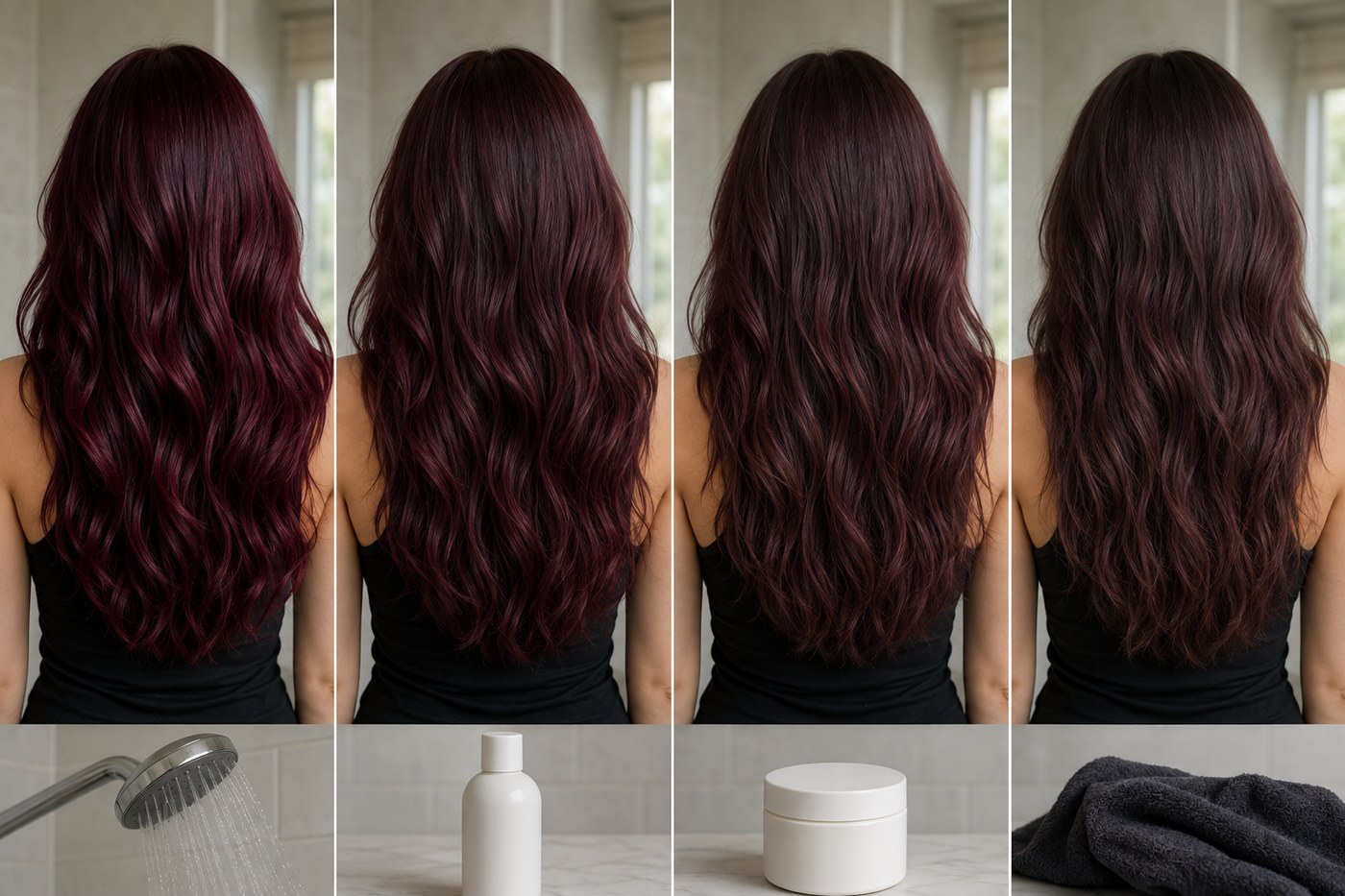
Day 1: Your color will be dark and rich. Do not be alarmed if the water runs pink in the shower; this is just excess dye molecules washing away.
Day 7: The initial “shock” color will fade slightly to reveal your true shade. This is the real color you will be working with.
Day 14: Noticeable fading begins. This is the perfect time to incorporate your color-depositing conditioner to refresh the pigment.
Day 30: The vibrancy will have significantly decreased. You are now ready for a root touch-up or a semi-permanent gloss to refresh the lengths.
How to Transition Out of Red Hair Without Bleach
Red is the hardest color to remove and the hardest to dye over. If you eventually want to go back to brown, do not simply slap a brown box dye over it. The warm undertones in the remaining red will mix with the brown and can result in a muddy, greenish, or flat hue.
Instead, use a bleach-free color remover (like Color Oops). These products shrink the dye molecules inside your hair so they can be washed away.
Use this first to remove as much of the red pigment as possible, then apply your desired brown shade. If you used henna, you must wait for it to grow out or fade significantly, as chemical dyes and color removers cannot easily remove plant-based pigments.
Common Mistakes When You Dye Dark Hair Red Without Bleach
Skipping the strand test is a major mistake that leads to surprise outcomes like green-tinged ends on previously dyed hair or contact dermatitis from PPD.
It is also a mistake to expect a bright fire-engine red on jet-black hair without any lift. When it comes to red hair, no bleach is a great approach, but you must have realistic expectations; these methods will only deliver deep burgundy or mahogany at that level.
Using too high a developer on already-damaged, relaxed, or permed hair causes breakage, so drop to 20 volume in those cases. Shampooing immediately after dyeing strips up to 30% of fresh color down the drain.
Applying chemical dye over compound henna containing metallic salts can produce dangerous heat reactions and discoloration, so always confirm henna purity first.
Do not ignore ventilation, as oxidative dye fumes are caustic in enclosed spaces. Protect your hairline to avoid stubborn red stains on your forehead, ears, and neck for days.
Finally, underestimating product needs leads to patchy, uneven color because you ran out of dye halfway through the application.
Choosing a No Bleach Red Hair Dye for Dark Hair
Understanding your options is key to dying hair red without bleach safely. If you have very dark hair and want a true vivid red, the reality is that some form of lift is unavoidable.
However, a high-lift dye with developer is dramatically gentler than powder bleach. Finding the right no bleach red hair dye for dark hair allows you to achieve beautiful, rich color while keeping your hair healthy.
|
Starting Hair
|
Goal
|
Safest Method
|
|---|---|---|
| Medium brown, healthy | Visible red/auburn | High-lift permanent + 30 vol |
| Very dark brown/black, healthy | Deep mahogany/burgundy | High-lift permanent + 40 vol, or henna |
| Dark brown, damaged/porous | Low-damage red tint | Semi-permanent (Arctic Fox, Splat Midnight) |
| Dark from old box dye | Cleaner red base | Color remover → semi-permanent or permanent |
| Black, relaxed/chemically treated | Warm red sheen | Henna or 20 vol high-lift |
| Dark hair with significant grays | Blended red coverage | High-lift permanent dye |
Conclusion
You don’t need to risk breakage to rock a gorgeous red mane. By choosing the right method for your hair type—whether it’s high-lift dye, a gentle semi-permanent, or natural henna—you can get the color of your dreams safely.
Always test a strand first, stock up on enough product, and wash with cool water to keep that red vibrant. With a little patience and the right aftercare, you’ll be turning heads with healthy, vibrant red locks.
For more expert hair color guides and DIY beauty tips, be sure to explore the rest of StagedBeauty.
Frequently Asked Questions (FAQ)
Can I dye my black hair red without bleach and see a bright color?
No, if you have jet-black hair, no-bleach methods will only give you a deep burgundy, mahogany, or a subtle red sheen. To get a true bright copper or fire-engine red on black hair, some form of pre-lightening or lifting is unavoidable.
How long does red hair dye without bleach last?
It depends entirely on the method. High-lift permanent dye lasts 4 to 6 weeks before noticeable fading. Highly pigmented semi-permanent dyes typically last 4 to 8 weeks, depending on your wash frequency. Henna is permanent until it grows out, though it gradually fades in vibrancy.
Will dyeing my hair red without bleach cause damage?
High-lift permanent dyes use developer, which can cause mild dryness, but it is far less damaging than bleach. Semi-permanent dyes and pure henna cause zero structural damage and actually condition the hair shaft.
Can I use box dye from the drugstore to dye dark hair red without bleach?
Yes, many drugstore brands offer high-lift red dyes for dark hair. However, for the most vibrant and long-lasting results, beauty supply stores like Sally Beauty offer professional-grade products and separate developers tailored to your hair’s needs.
What happens if I don’t use enough dye?
Running out of dye halfway through is a common DIY disaster. It leads to patchy, uneven color and missed spots. Always buy more boxes than you think you need, especially for thick or long hair.