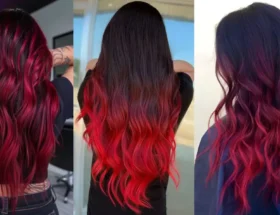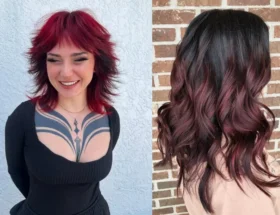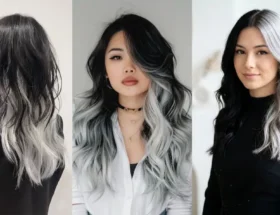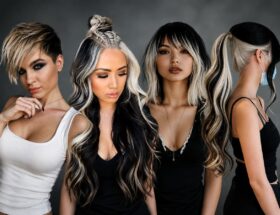

If you are looking for the best black and purple hair ideas, you are in the right place. Pairing deep black with varying shades of purple, from subtle plum to vivid violet, is one of the most flattering ways to wear vivid fashion colors. Because black grounds the look, it requires less bleaching, adapts to different skin tones, and grows out beautifully.
Whether you want purple highlights on black hair, a peekaboo style, or an ombre, we have rounded up 27 stunning, colorist-approved black purple hairstyles to inspire your next salon visit. Embracing black purple hair is a fantastic way to experiment with vivid fashion colors.
Before diving into the styles, it is important to understand the science of lifting black hair. As any licensed cosmetologist will tell you, black hair naturally pulls warm red and orange undertones when bleached. Achieving a true, cool-toned purple requires a stylist who knows how to properly neutralize this underlying warmth. Always consult a professional for vivid colors to ensure your hair remains healthy and the tone does not turn muddy.
27 Stunning Black and Purple Hair Ideas
1. Purple Highlights on Black Hair with Violet Babylights
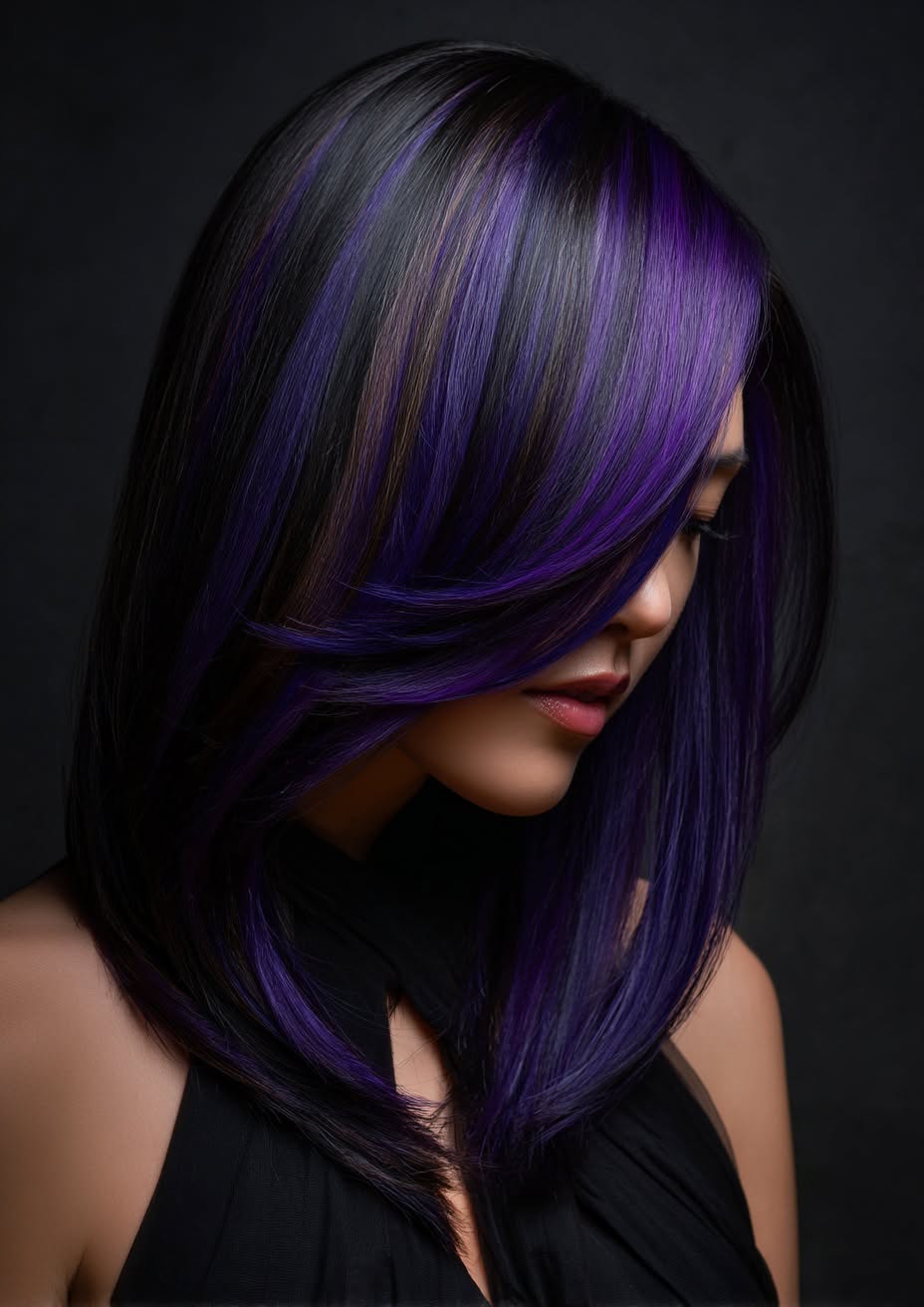
If you are testing the waters with hair color black with purple highlights, ask for babylights. Unlike traditional highlights, babylights are woven micro-finely and placed in foils to process. When laid against a jet-black base, these ultra-thin violet streaks create a shimmering, iridescent effect that catches the light without overpowering your natural color.
2. Black and Purple Ombre Hair

The key to a modern ombre is avoiding the harsh “dip-dye” line of the early 2010s. Your stylist should use a feathering technique to melt pitch-black roots into a vivid, cool-toned violet at the ends. The transition should happen around the cheekbone, creating a seamless, vertical gradient.
3. Black Hair With Purple Underneath
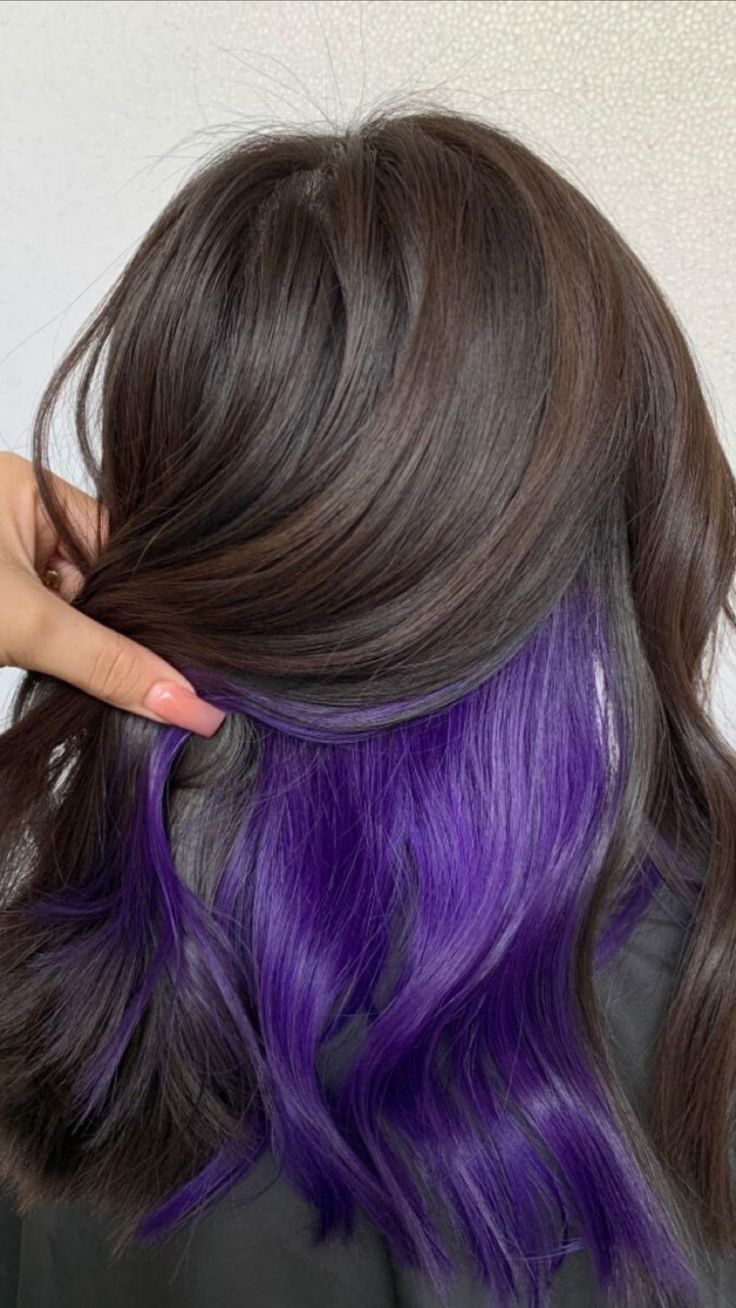
Perfect for corporate environments or those who want to hide their edgy side. Your stylist will isolate the bottom layer of your hair (underneath the parietal ridge) and color it a bright purple. When worn down, your hair looks entirely black. Tie it up in a half-updo, and the vibrant purple peekaboo layer is instantly revealed. If you love this hidden color trend, check out these creative underneath hair color ideas for more inspiration.
4. Chunky Y2K Purple Highlights for Black Hair

If you appreciate the look of black hair and purple highlights, the 90s and Y2K chunky highlights are back, but with a twist. For those who love black and purple hair, this is a bold choice. Instead of bleached blonde, ask your stylist for thick, free-hand painted panels of bright purple against your black base. Placing them asymmetrically (thicker on one side) gives a high-fashion, editorial vibe.
5. Face-Framing Purple Money Piece

A purple money piece is incredibly flattering because it brightens the complexion. Your stylist will lighten the hair framing your face (usually about an inch or two wide on either side of your part) to a pale blonde, before depositing a vivid purple. The rest of the hair stays a glossy black.
6. Smudged Purple Balayage on Black Hair

Balayage offers a lived-in, natural grow-out, making it a perfect choice for black with purple highlights hair. Your stylist will hand-paint purple onto the mid-lengths and ends using a sweeping motion. To avoid a harsh line of demarcation, they will “smudge” the black root color down a few inches into the purple, creating a diffused, shadowed root.
7. Black and Purple Hair Without Bleach: Deep Plum Underlights

If you want to avoid the damage of bleach, ask for a deposit-only plum. Applied to the underlayers of your hair, a level-3 or level-4 deep plum gloss will show up as a rich, wine-inspired tint. It looks incredibly luxe in direct sunlight but remains subtle indoors.
Safety Note: Even semi-permanent, deposit-only colors can cause allergic reactions in some individuals. Always ask your stylist to perform a patch test 48 hours before application, even if you are skipping the bleach.
8. Midnight Galaxy Purple Color Melt
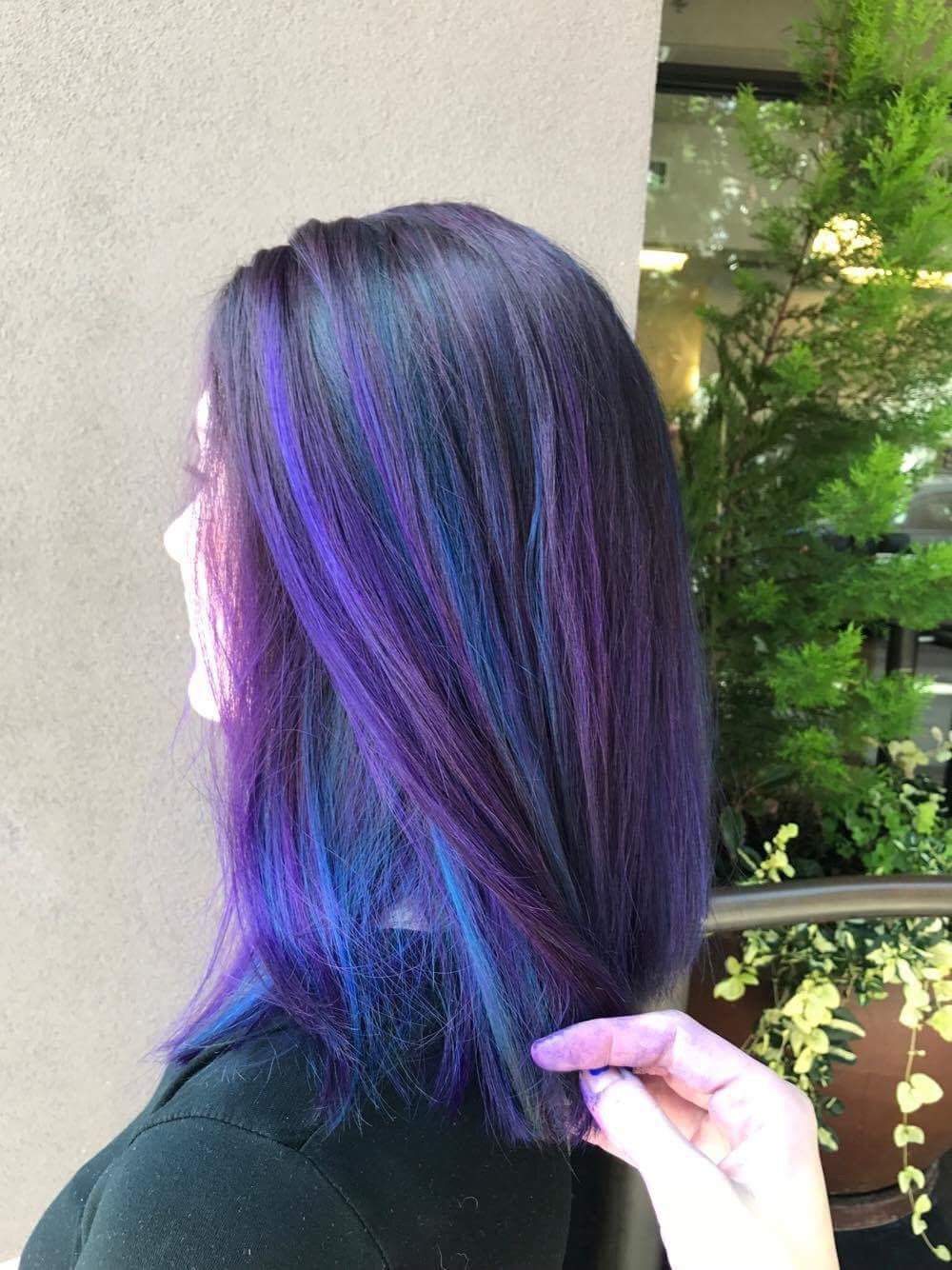
Why settle for one purple when you can have three? This color melt starts with black roots, transitions into a dark, level-4 eggplant purple at the mid-shaft, and finishes with a pastel, level-10 lilac at the very tips. The colors are brushed together meticulously to mimic a galaxy.
9. Two-Tone Black and Purple Split Dye
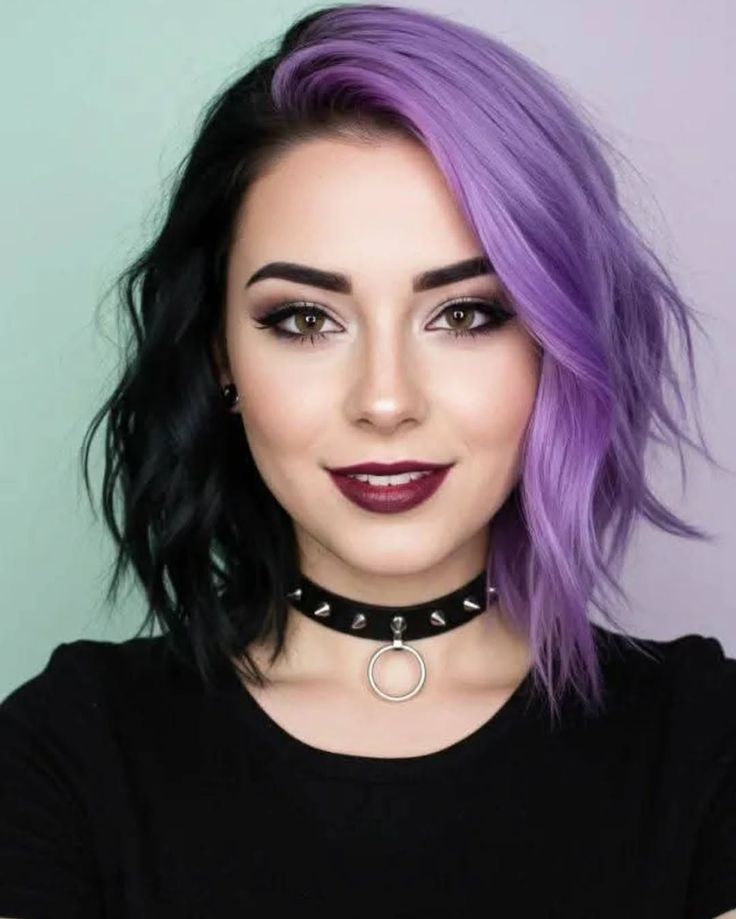
For the bold: literally split your hair directly down the center part. Color the left hemisphere jet black and the right hemisphere a striking, vivid purple. Achieving this bold take on purple hair with black requires precise sectioning and foiling to ensure the colors do not bleed into one another at the back.
10. Pastel Lilac Ombre on Black Textured Hair
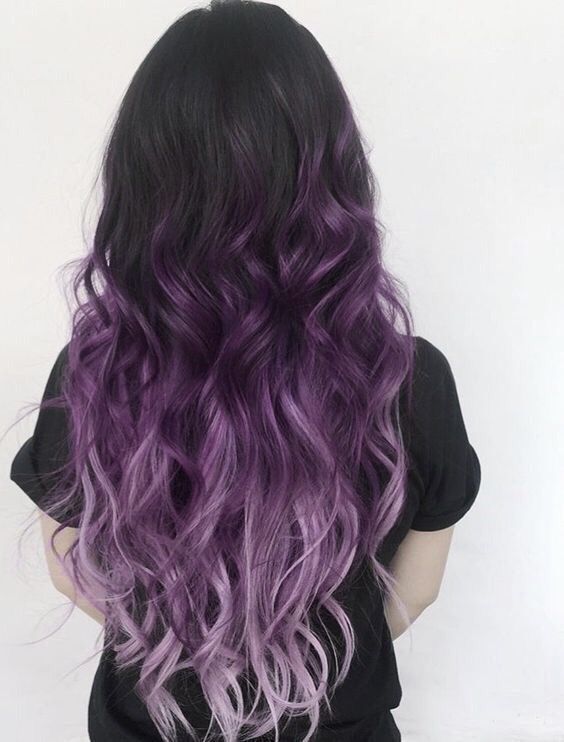
If you have naturally curly or wavy black hair, bleaching the bottom three inches to a level 10 and toning it with a pastel lilac creates a stunning contrast. The pastel color emphasizes the texture of your curls, making them look like cotton candy floating on a dark base. If you love high-contrast looks, you might also enjoy exploring black and white hair ideas for a similarly striking aesthetic.
11. Neon UV Purple Highlights in Black Hair

Neon direct dyes are heavily pigmented and do not require pre-lightening to a perfect platinum. Usually, a level 8 orange-yellow base is enough. Ask your stylist to weave in some UV-reactive neon dyes to create vibrant purple hair highlights in black hair. Under regular light, it is a bright violet; under blacklight, it glows electrically.
Stylist Tip: Neon direct dyes are highly pigmented and can stain skin and clothing easily. Have your stylist use a barrier cream around your hairline to protect your skin during application.
12. Burgundy to Purple Balayage Melt

Because black hair naturally pulls warm red and orange undertones when bleached, leaning into this can create a stunning transition. Roots start black, melt into a warm burgundy, and finish at the ends as a cool, vibrant violet. The warm to cool transition creates incredible visual depth.
13. Subtle Eggplant Purple Gloss Over Black Hair

Not ready for bleach? Ask your stylist to apply a semi-permanent, deposit-only eggplant gloss over your virgin black hair. Because the hair is not lifted, the purple will not be vivid, but it will give your hair a stunning, multi-dimensional purple sheen that looks different depending on how the light hits it.
14. Half-and-Half Purple Underlayers

Instead of a full hidden layer, try coloring just the bottom half of your hair purple, starting exactly at the occipital bone (just below your ears). This gives the illusion of a full head of vivid color when your hair is in a high ponytail, but looks like a sleek, black bob when worn down.
15. Reverse Purple Ombre: Purple Roots to Black Ends
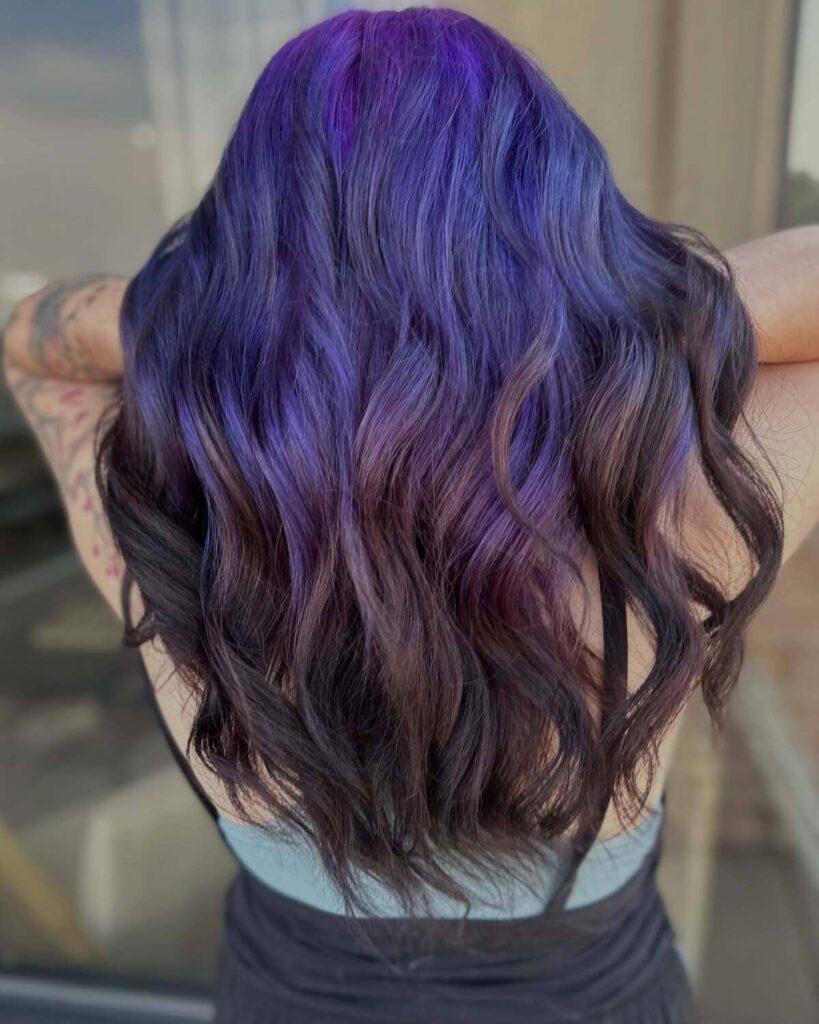
Flip the script! A reverse ombre features vivid purple roots that melt down into pitch-black ends. This is a high-maintenance look, as root touch-ups are required every 4 to 6 weeks, but it offers a striking, avant-garde grunge aesthetic.
Safety Warning: Bleaching hair directly at the root carries a high risk of scalp irritation and chemical burns. This technique should only be performed by a licensed professional, and never on freshly washed hair to protect the scalp’s natural acid mantle.
16. Frosted Purple Tips on Black Hair
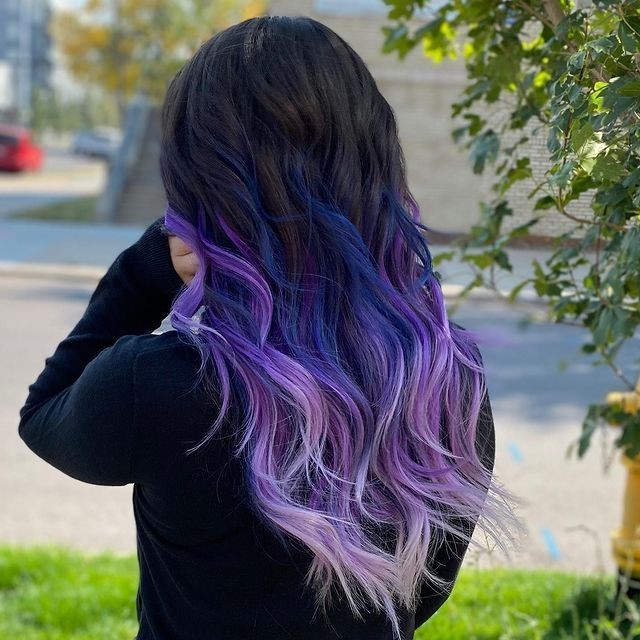
Keep the hair entirely black, but have your stylist backcomb the ends and apply lightener just to the very tips (the last inch or two). Once lifted, these tips are toned a bright white-purple. It creates some of the sharpest black and purple hairstyles, and requires virtually no maintenance as it grows out.
17. Hidden Purple Peekaboo Stripes
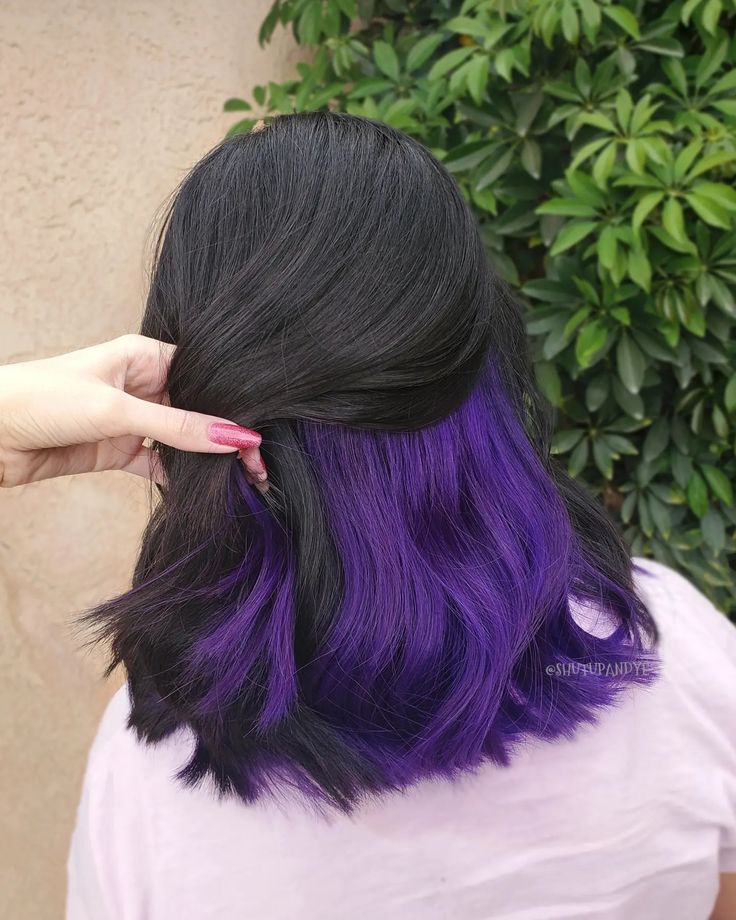
If you want peekaboo color with structure, have your stylist place three horizontal foils of bright purple underneath your black top layer. When your hair moves, these distinct stripes of color flash through, giving the illusion of a hidden, structured rainbow. To ensure your hidden color looks flawless, be aware of common peekaboo highlight mistakes and how to fix them.
18. Purple Money Piece with Peekaboo Highlights
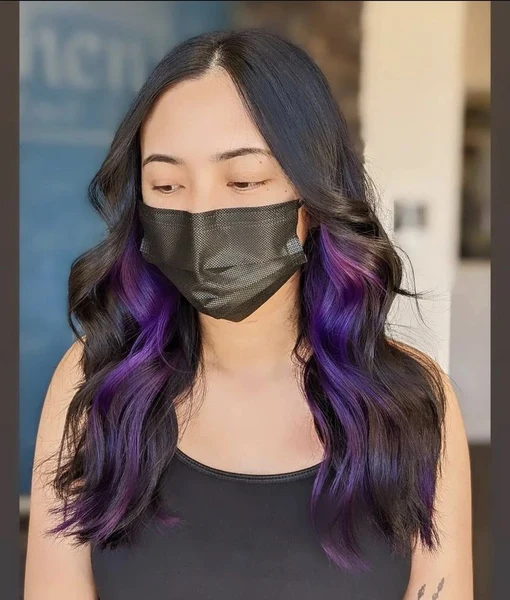
Combine two trends for ultimate dimension. Frame your face with a bright purple money piece, and add a single hidden peekaboo panel at the nape of your neck. This ties the look together perfectly, ensuring the color is not isolated to just the front.
19. Geometric Purple Panel Highlights

For a highly structural, fashion-forward look, ask for block coloring using diagonal sections. This involves dyeing sharp, angled panels of your hair purple, leaving the rest black. When styled straight, the diagonal lines create a visually striking, architectural effect.
20. Grunge Purple Skunk Stripe Highlight
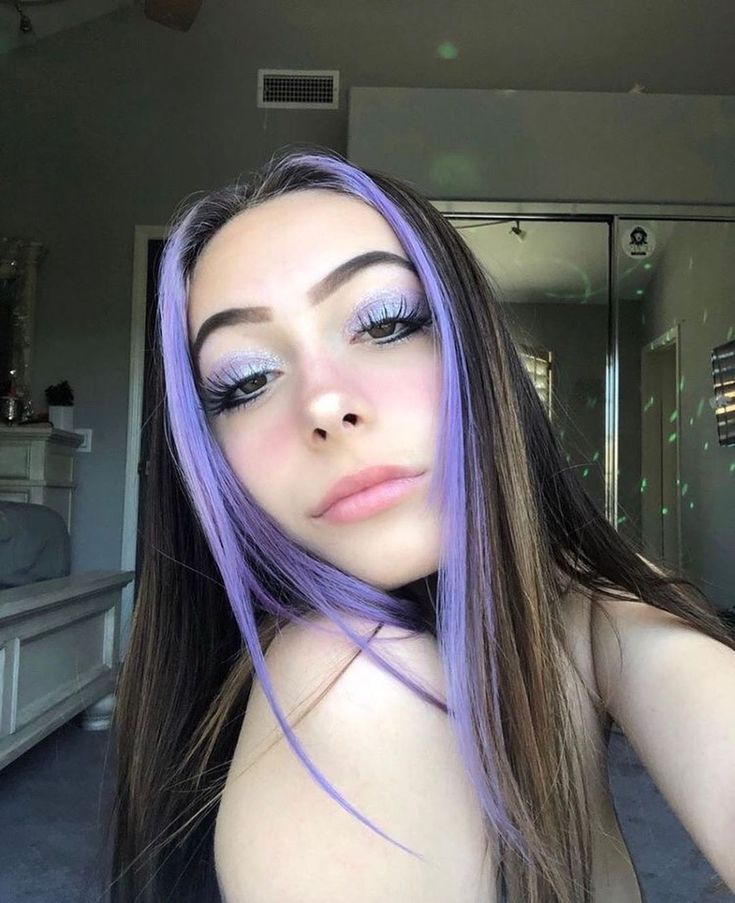
The “skunk stripe” is a bolder, thicker version of the money piece. A solid, 1.5-inch chunk of bright purple is placed right down the middle of your part, contrasting heavily with the surrounding black hair. It is a nod to the 90s grunge era and looks incredible with choppy layers.
21. Smudged Black Root Shadow on Purple Hair

If you are transitioning from solid black hair to a full head of purple and black hair, ask for a black root shadow. Your stylist will apply black to your roots and smudge it down 2 to 3 inches, melting it into a vivid violet. This creates a lived-in look and saves you from harsh root grow-outs.
22. Muted Mauve Purple Balayage

Mauve is a dusty, muted purple with pinkish-beige undertones. When balayaged over jet black, it offers a softer, more romantic vibe than a neon violet. It is highly flattering on fair skin tones with pink undertones.
23. Amethyst Purple Highlights on Black Hair
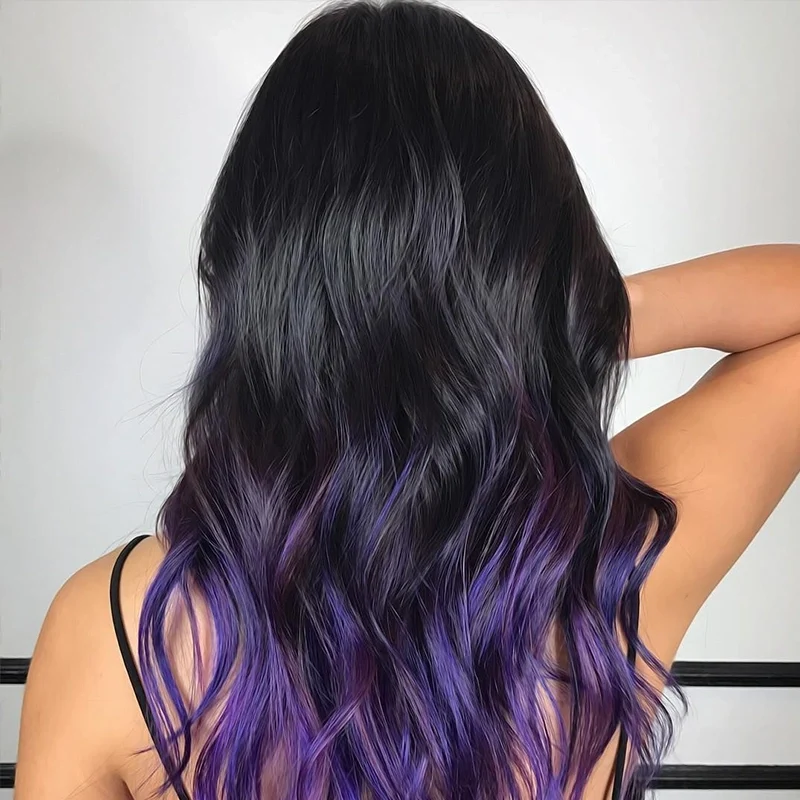
Inspired by the gemstone, amethyst highlights are a rich, saturated medium purple (think a level 6 or 7). Placed throughout the mohawk and top layers of black hair using foils, they catch the light like a glowing jewel, adding incredible shine and dimension.
24. Purple Fringe Accent on Black Hair

Keep the rest of your hair solid black, but dye your blunt-cut bangs a vibrant purple. To do this, your stylist will isolate the fringe, lighten it to a level 9, and deposit the violet. It draws immediate attention to your eyes and is a fun way to experiment with color without committing to a full head of bleach.
25. Black to Purple to Pink Color Melt

Why stop at purple? A tri-color melt requires precise formulation. It starts with black roots, blends into a vibrant purple mid-shaft, and finishes with a hot magenta-pink at the ends. The key is brushing the colors together where they meet so there is no harsh line, just a fluid gradient.
26. V-Shaped Black to Purple Ombre

If you have long black hair, ask your stylist to cut a deep V-shape into the back, and apply the purple ombre starting right at the point of the V. Add a few face-framing purple pieces to the front. This cut and color combination creates a beautiful, cascading effect that highlights the haircut’s geometry.
27. Iridescent Purple “Oil Slick” Hair
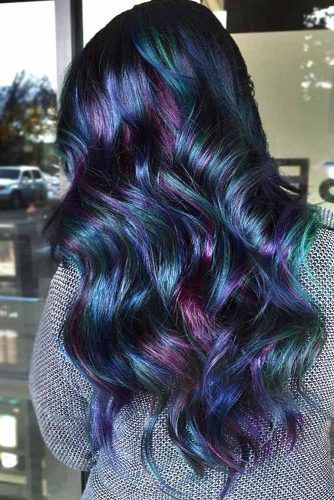
If you love the black and purple hair aesthetic, the oil-slick hair trend is designed specifically for dark hair and requires no bleaching of the top layer. Your stylist will apply iridescent colors, like deep purples, dark blues, and magentas, underneath the top layer of black hair. When light hits the top layer, the dark colors underneath shine through, mimicking a shimmering puddle of oil.
Helpful Note: While the top layer stays unbleached, the underneath layers still require lifting to show off the iridescent colors. This is a great lower-damage option, but still requires bond-building treatments to keep the underlayers healthy.
How to Prepare Your Hair for a Vivid Color Transformation
To achieve vivid purple tones on your black and purple hair, your hair must be lifted safely. Bleach can cause damage, but you can minimize breakage and ensure the color lasts longer by preparing your strands weeks in advance. Follow this pre-color checklist:
- Hydrate and Strengthen: Start using a bond-building treatment (like Olaplex No. 3 or K18) once a week for at least three weeks before your appointment. This strengthens the disulfide bonds in your hair, making it more resilient to the bleaching process.
- Avoid Chemical Overlap: Do not perm, relax, or chemically straighten your hair for at least four weeks before your coloring appointment. Overlapping chemicals can cause severe breakage when bleach is applied.
- Wash Less Frequently: Stop washing your hair every day. Aim for two to three washes a week leading up to your appointment. This allows your natural oils to build up, which protects your scalp from bleach irritation.
- Do Not Wash on the Day Of: Arrive at the salon with unwashed hair (at least 24 to 48 hours since your last wash). Your natural scalp oils act as a barrier against the harsh alkaline nature of bleach, preventing chemical burns and excessive irritation.
- Request a Patch Test: Vivid dyes and lighteners contain different chemicals than traditional hair dyes. Ask your stylist for a patch test 48 hours prior to ensure you do not have an allergic reaction to the direct pigments or bleaching agents.
What to Expect: Time and Cost for Black and Purple Hair
Understanding the financial and time investment of black and purple hair helps you plan accordingly. Vivid colors are multi-step processes that cannot be rushed.
- Time Commitment: Expect to be in the salon chair for 4 to 8 hours. The process includes a consultation, applying the lightener (bleach), processing time, rinsing, drying, applying the purple color, processing again, and a final style. Techniques like a full balayage or color melt will take longer than a simple peekaboo.
- Cost Breakdown: Vivid color services are priced based on the time, product, and expertise required. Generally, a partial service (like a money piece or peekaboo) ranges from $120 to $200. A full head of highlights, ombre, or a color melt typically ranges from $200 to $400 or more, depending on hair length and density.
- Hidden Costs to Consider: You also need to budget for maintenance. Plan for a gloss or root touch-up every 4 to 6 weeks ($50 to $100), and invest in high-quality, sulfate-free hair care products ($30 to $60) to keep the color from fading prematurely.
How to Communicate with Your Stylist for the Best Results
To ensure you get exactly what you want with your black and purple hair, clear communication with your colorist is vital. Bring inspiration photos, but also be prepared to discuss the technical details. Here is how to advocate for your hair:
- Bring Multiple Photos: Bring 3 to 5 photos of black and purple hair you love. Point out exactly what you like about each one. For example, specify if you love the placement of the color, the exact shade of purple, or the technique used. Visuals prevent miscommunication.
- Discuss Your Maintenance Tolerance: Be honest about how much time you are willing to spend on your hair. If you only wash it twice a week and use cool water, tell them. If you know you will not use purple shampoo, ask for a technique that grows out gracefully, like a smudged root or underlights.
- Ask About Underlying Pigments: Ask your stylist how they plan to handle the warm undertones in your black hair. A knowledgeable stylist will explain their plan for lifting your hair to the correct level and using a filler or toner to ensure the purple does not fade to a muddy pink or gray.
- Disclose Medical Conditions: Inform your stylist if you are pregnant, nursing, or have scalp conditions like psoriasis, eczema, or open wounds. This may change the types of lighteners and dyes they can safely use on you.
- Request a Strand Test: If you have previously colored or damaged hair, ask for a strand test. This involves snipping a tiny, hidden piece of hair and applying bleach to it. This tells the stylist exactly how your hair reacts to chemicals, ensuring it will not melt or break off during the actual service.
Colorist-Approved Maintenance Guide for Vivid Colors
Getting the color is only half the battle; maintaining your black and purple hair is where the real work begins. Because dark bases and vivid violet tones are both highly pigmented, they require specific, targeted care to prevent fading and brassiness. Here is how to protect your investment using salon-trusted methods:
- Wait 72 Hours Before Washing: Your cuticles remain open for up to 72 hours after a chemical service. Washing too soon will cause the purple molecules to wash right down the drain. Let the dye fully set into the hair shaft.
- Wash with Cool Water: Hot water opens the hair cuticle, leading to rapid color fading. Stick to lukewarm or cool water to seal the cuticle and lock in those vibrant violet hues.
- Invest in a Sulfate-Free, Color-Safe Routine: Sulfates (SLS and SLES) are harsh detergents that strip dye. Look for a high-quality, sulfate-free shampoo. Better yet, use a purple-tinted shampoo once a week to deposit a small amount of pigment back into your dark base and combat brassiness.
- Add Bond-Building Treatments: Lifting raven strands to a light enough level for vivid colors requires bleach, which breaks disulfide bonds. Incorporate a professional bond builder like Olaplex No. 3 or K18 into your weekly routine to prevent breakage and keep the hair porous enough to hold the dye.
- Limit Hot Tool Usage: Heat styling above 400°F can literally burn the color out of your dyed dark hair. If you must use hot tools, a thermal protectant spray is non-negotiable.
- Book a Gloss Refresh: About four to six weeks after your appointment, pop back into the salon for a quick, 20-minute purple gloss or glaze. This refreshes the tone, seals the cuticle, and adds incredible shine without requiring any additional bleach.
Frequently Asked Questions (FAQ)
Does purple show up on black hair without bleach?
Only if you use a very dark, semi-permanent plum or eggplant gloss. For vivid violets, pastel lilacs, or neon purples, you must lift the hair with bleach first so the color molecules can properly penetrate the cuticle and show up.
How long does black and purple hair last?
The black base is permanent, but the vivid purple will fade in 4 to 6 weeks depending on your washing routine. Using cool water and color-safe shampoos will extend the life of the violet tones significantly.
Is purple hair hard to maintain?
Vivid purples require more upkeep than natural colors. However, choosing techniques like a smudged root, ombre, or peekaboo underlayers makes the grow-out phase much more forgiving and lower maintenance.
Will dyeing my hair purple damage it?
If you are only applying a deposit-only semi-permanent color over virgin black hair, there is zero damage. However, to achieve bright violets, you must use bleach to lift the hair. This can cause dryness and breakage if not done professionally. Always consult a licensed stylist for heavy lifting and use bond-building treatments post-bleach.
What shade of purple is best for my skin tone?
If you have cool or fair skin with pink undertones, opt for cooler-based violets, plums, and pastel lilacs. If you have warm, olive, or golden skin tones, warmer purple shades like magenta, burgundy, and amethyst will beautifully complement your complexion.
Can I dye my black hair purple at home?
We strongly advise against lifting your own black hair with bleach at home. Box dyes often contain uneven developers and metallic salts that can cause severe chemical burns or irreversible breakage. However, if you are applying a deposit-only gloss to virgin hair, you can learn the basics of safely applying underneath hair color at home to achieve a subtle tint. For vivid colors, always seek a licensed professional.
Final Thoughts
Rocking black and purple hair is a stunning way to express your personal style, whether you opt for a subtle plum gloss or a full neon violet ombre. The key to a successful, safe transformation is finding a skilled colorist who understands how to lift dark hair safely, neutralize underlying warmth, and formulate the perfect purple to complement your skin tone. Take these specific black & purple hair ideas to your next consultation, and get ready to rock your most confident hair era yet! For even more expert styling tips and hair color inspiration, be sure to explore the resources at StagedBeauty.
Disclaimer: This article is for informational and educational purposes only. Hair bleaching and chemical dyeing carry inherent risks of damage, allergic reactions, and scalp irritation. Always consult with a licensed cosmetologist or dermatologist before undergoing major chemical hair treatments, especially if you have pre-existing scalp conditions or sensitivities.