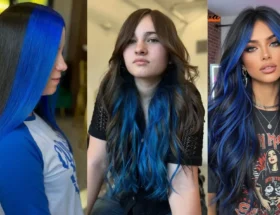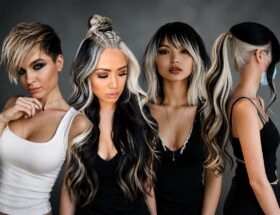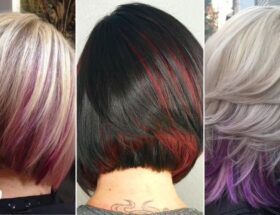
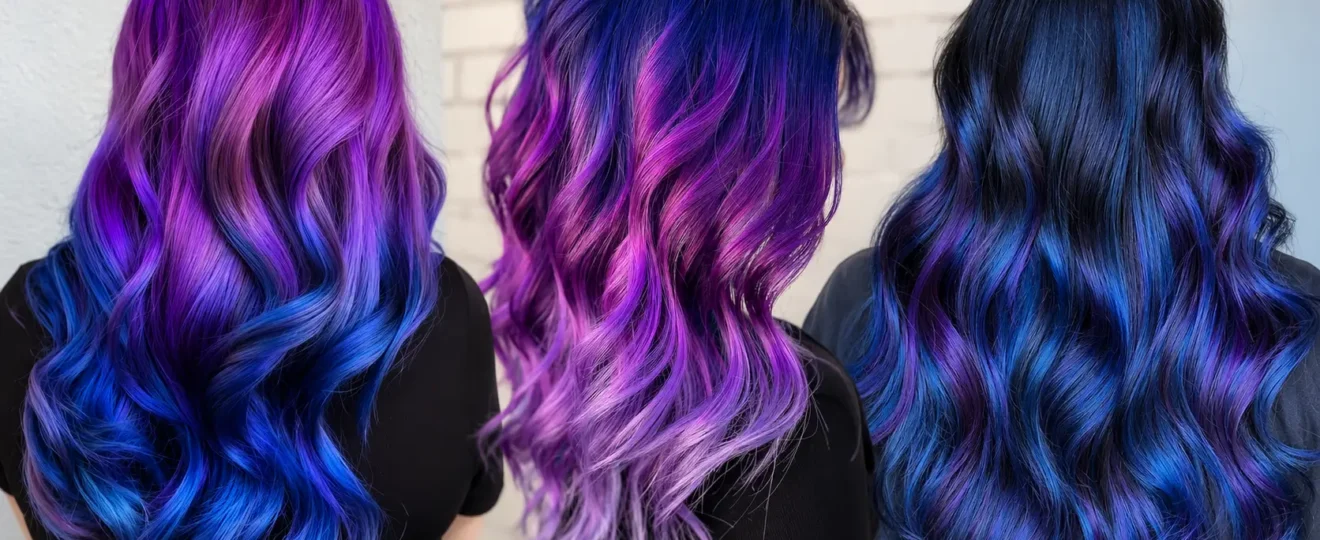
Blue and purple hair is a gorgeous way to experiment with color, whether you’re drawn to deep midnight shades, vibrant jewel tones, or dreamy pastel combinations. These two colors complement each other beautifully, creating hairstyles that range from subtle and sophisticated to bright and adventurous.
One of the best things about blue and purple hair color is its versatility. You can combine the shades through balayage, ombre, highlights, split dye, or colorful ends. Whether you have a short pixie cut, shoulder-length bob, natural curls, or long flowing waves, there’s a style worth exploring.
However, not every color combination requires the same preparation or upkeep. Pastel shades usually demand significant lightening, while deep blue and purple tones can create subtle results on darker hair with less processing.
Below, discover 22 blue and purple hair ideas, followed by a practical maintenance comparison, a salon consultation checklist, and expert-informed advice on keeping your color beautiful as it fades.
Image disclaimer: Images are for inspiration. Actual color results vary with your starting shade, hair condition and dye formula; lighting and screen settings can also affect how colors appear. Images for ideas 4 and 9 are AI-generated illustrations.
1. Midnight Blue and Deep Purple Balayage
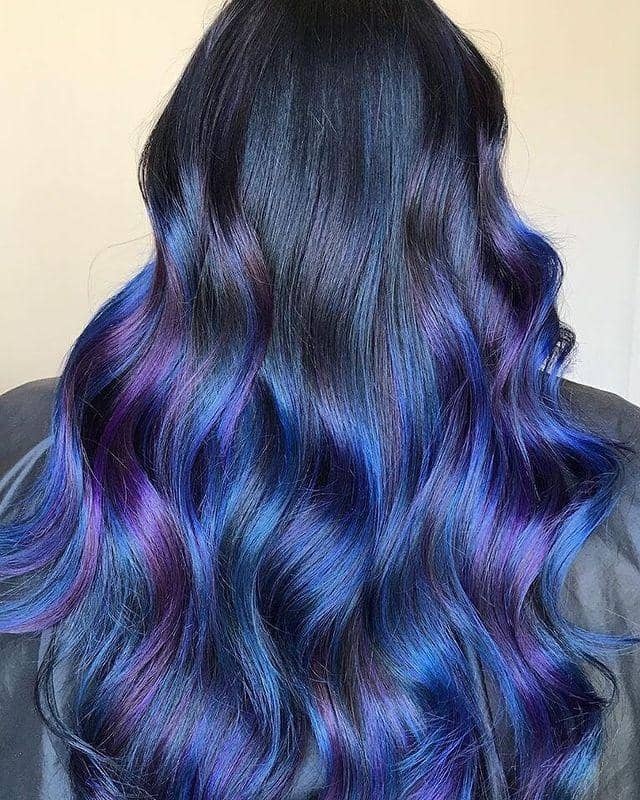
Midnight blue and deep purple balayage creates a rich, mysterious hairstyle with beautiful dimension. The darker blue blends into violet throughout the lengths, producing a sophisticated finish that looks especially striking in sunlight.
This style works beautifully on brunette hair because darker roots can remain intact. Your stylist may still need to lighten selected sections to make both colors visible. Soft waves help reveal the contrast between the shades.
2. Royal Blue to Purple Ombre
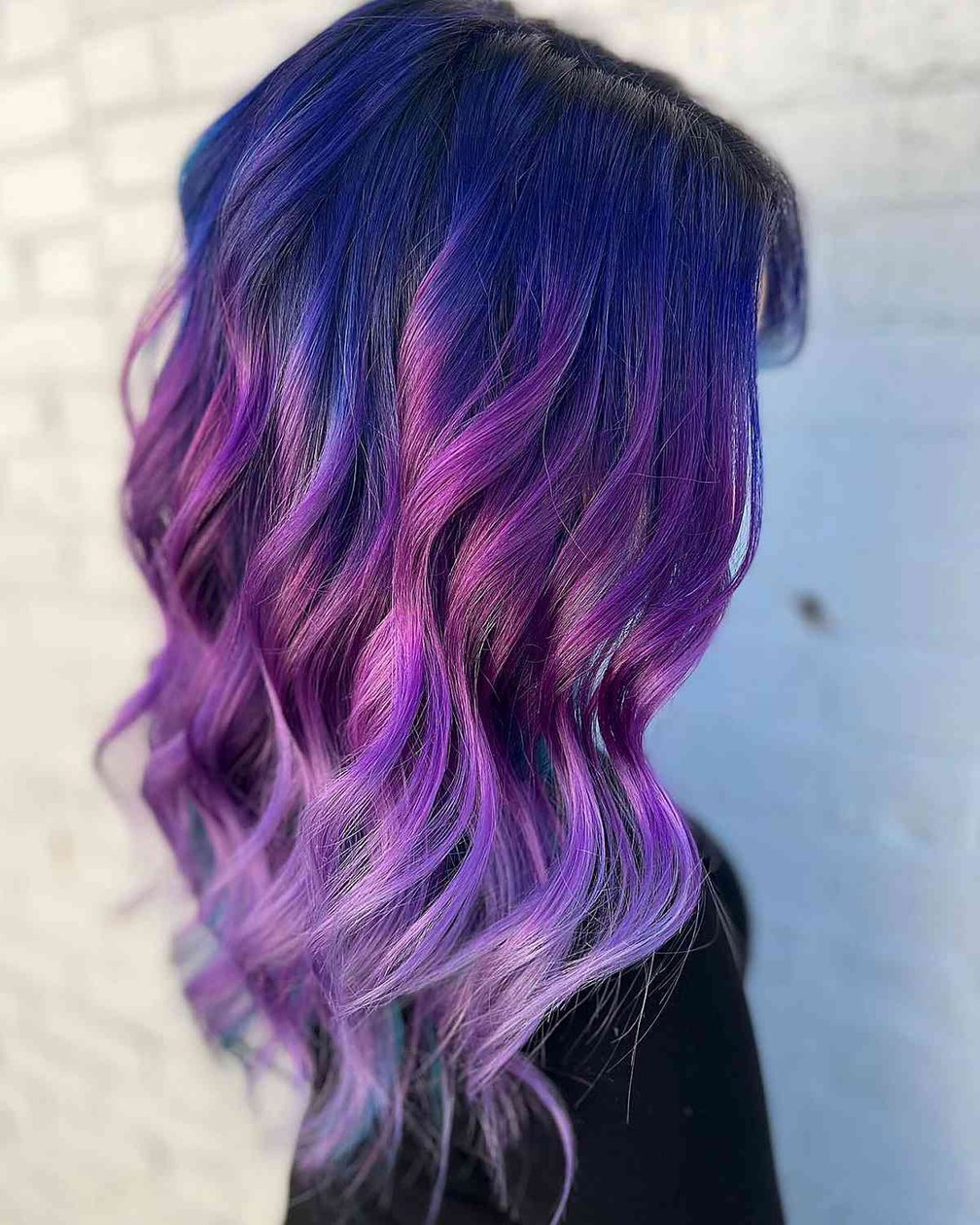
Royal blue to purple ombre is perfect for anyone who enjoys bold hair color. The look begins with saturated blue and gradually transitions into vibrant purple toward the ends.
It’s particularly flattering on medium-length and long hair, where the gradient has enough space to develop naturally. For a smooth finish, ask your stylist for a blended transition instead of a sharp line between colors.
3. Pastel Blue and Lavender Hair
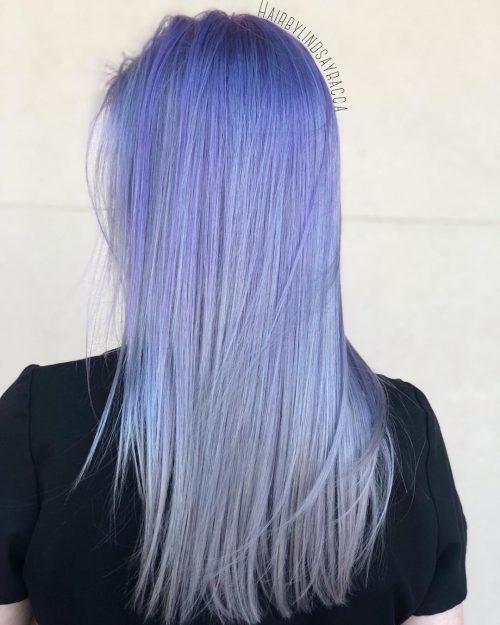
Pastel blue and lavender create a dreamy, soft hairstyle with a delicate, almost watercolor-like appearance. This combination looks beautiful with loose curls, soft layers, and romantic waves.
However, blue and purple pastel hair generally requires a very light blonde base, often around Level 9 or 10 on the professional hair color scale. Achieving that level from dark hair can involve significant lightening and may require multiple appointments.
4. Electric Blue Hair With Purple Roots
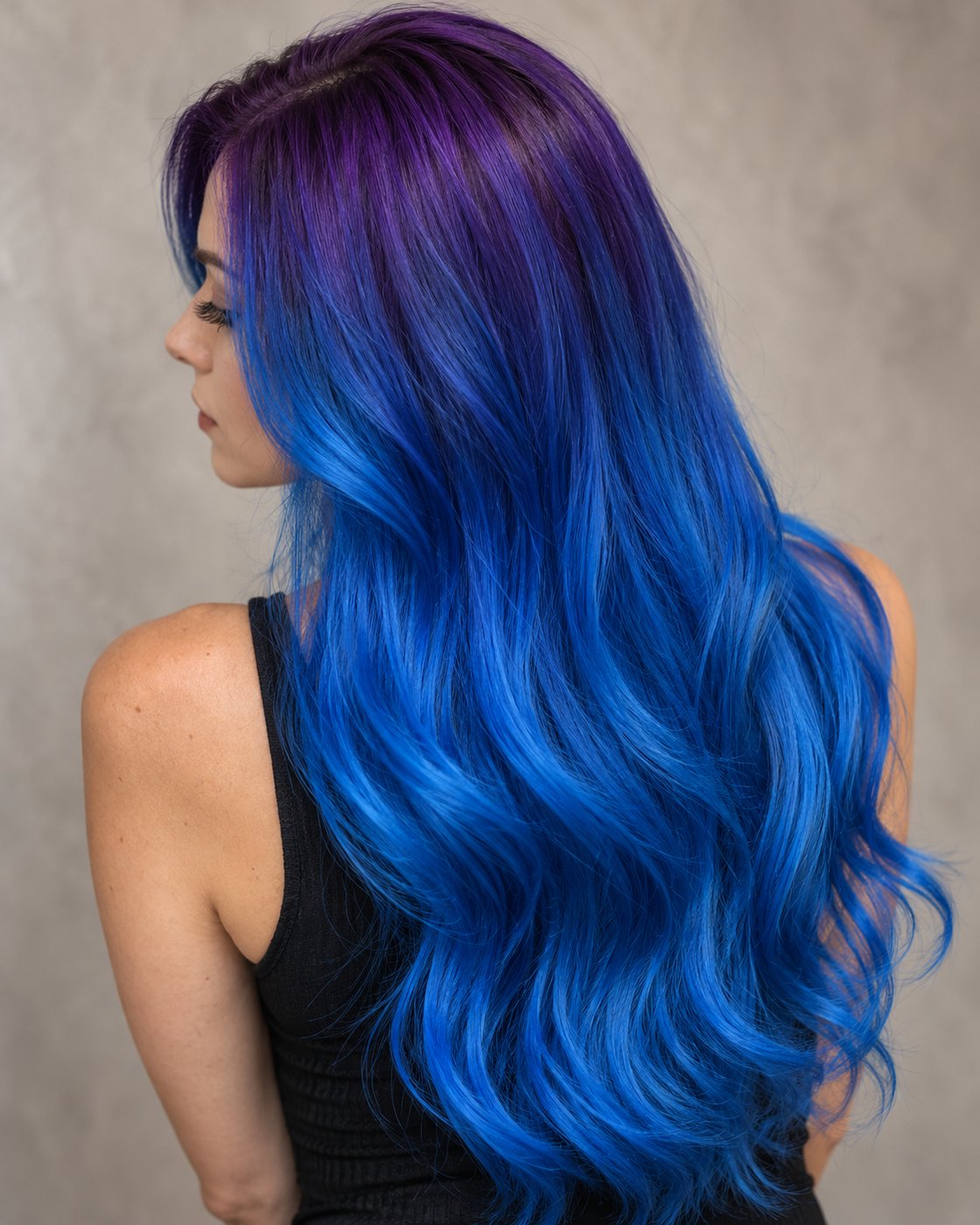
Electric blue with purple roots makes a dramatic statement. Deep violet near the scalp creates contrast against bright, saturated blue lengths.
This style is especially attractive with sleek straight hair, layered cuts, and textured bobs. Electric blue usually requires a sufficiently light base to appear vibrant, so ask your stylist about the lightening process before committing.
5. Purple Hair With Blue Tips
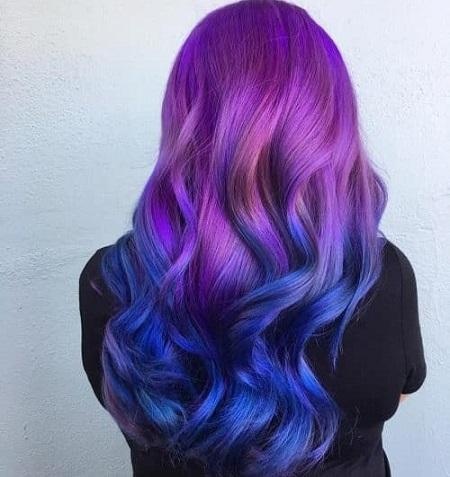
Purple hair with blue tips is an excellent option if you want to experiment without placing blue throughout your entire hairstyle.
Start with violet or plum-colored lengths and add cobalt or sapphire blue to the ends. Choose either a blended transition or a defined dip-dye finish.
This look works particularly well on long layers, shoulder-length cuts, and textured bobs.
6. Indigo and Violet Color Melt
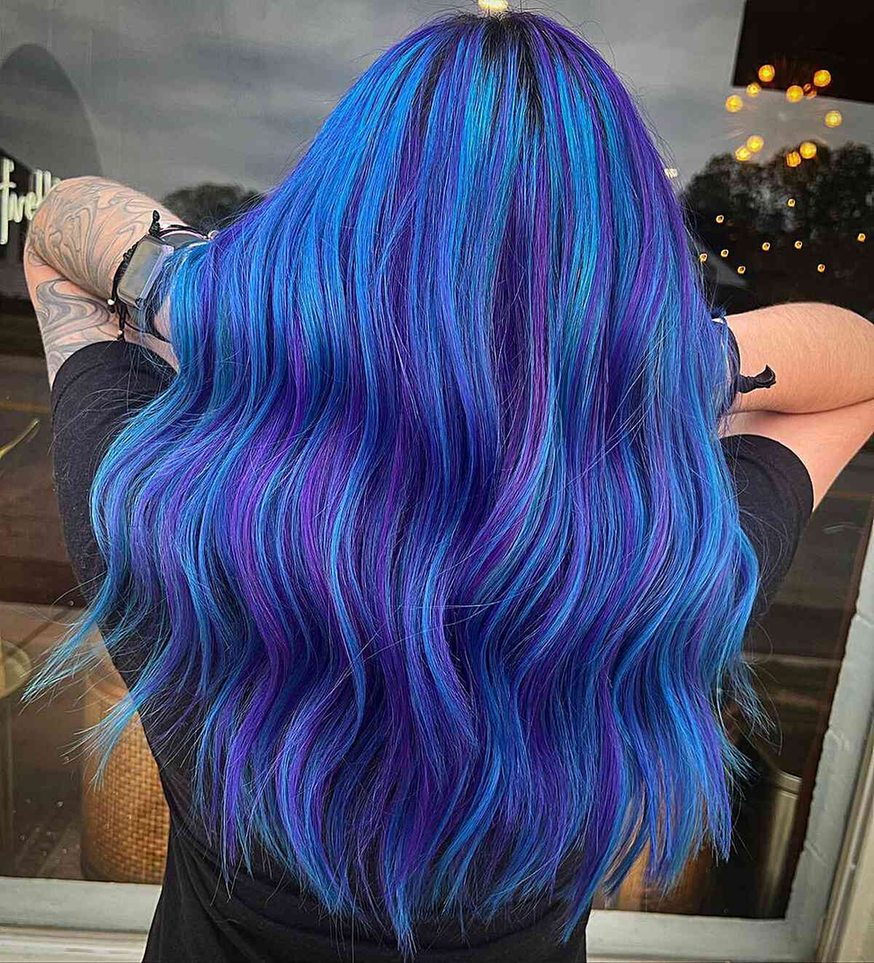
An indigo and violet color melt combines deep blue and purple into a nearly seamless gradient.
Unlike traditional ombre, which often has a more obvious transition, a color melt blends closely related shades through different sections of hair.
The result is multidimensional, glossy-looking color that becomes especially noticeable when styled with soft waves.
7. Blue and Purple Peekaboo Highlights
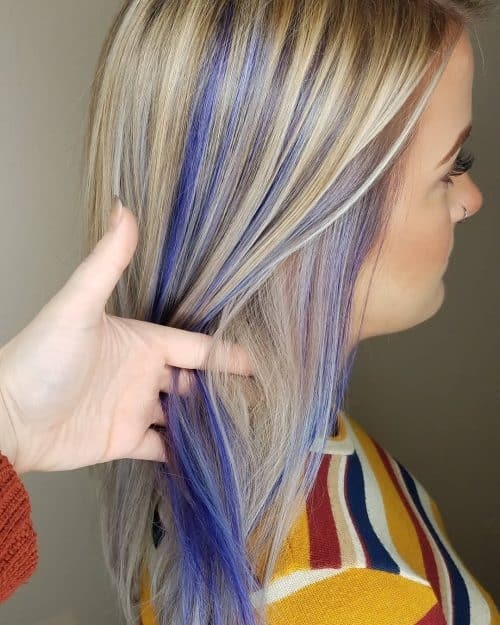
Peekaboo highlights allow you to enjoy vivid hair color while keeping most of your natural shade visible.
Blue and purple sections are placed underneath the top layers, appearing when your hair moves or when you style it in braids, ponytails, and half-up hairstyles.
Dark blue peekaboo highlights can be a lower-commitment option because only selected strands need coloring, although achieving a visible blue may still require localized lightening.
8. Blue and Purple Highlights on Dark Brown Hair
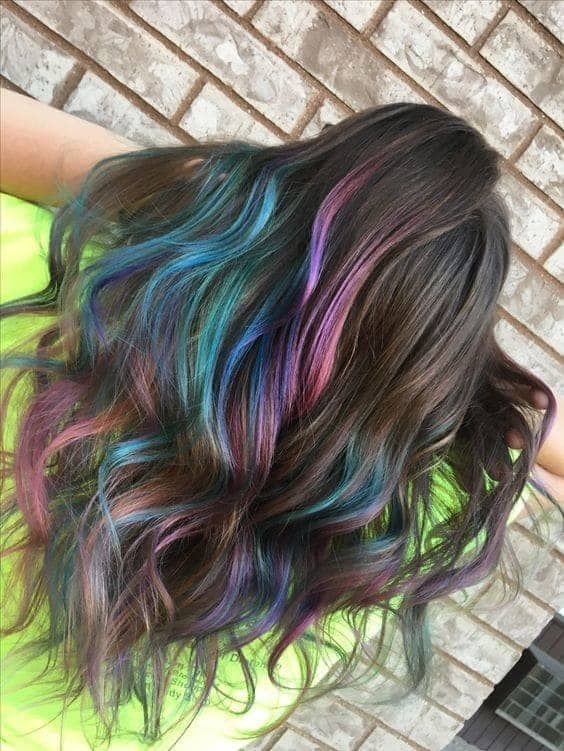
Adding blue and purple hair highlights to a dark brown base creates a colorful look without requiring a full-head transformation.
Choose sapphire, indigo, violet, or plum highlights for a rich finish. Fine highlights produce subtle dimension, while thicker pieces make the color more noticeable.
This is a versatile choice for brunettes who want purple and blue dyed hair while maintaining some of their natural color.
9. Face-Framing Blue and Purple Money Pieces
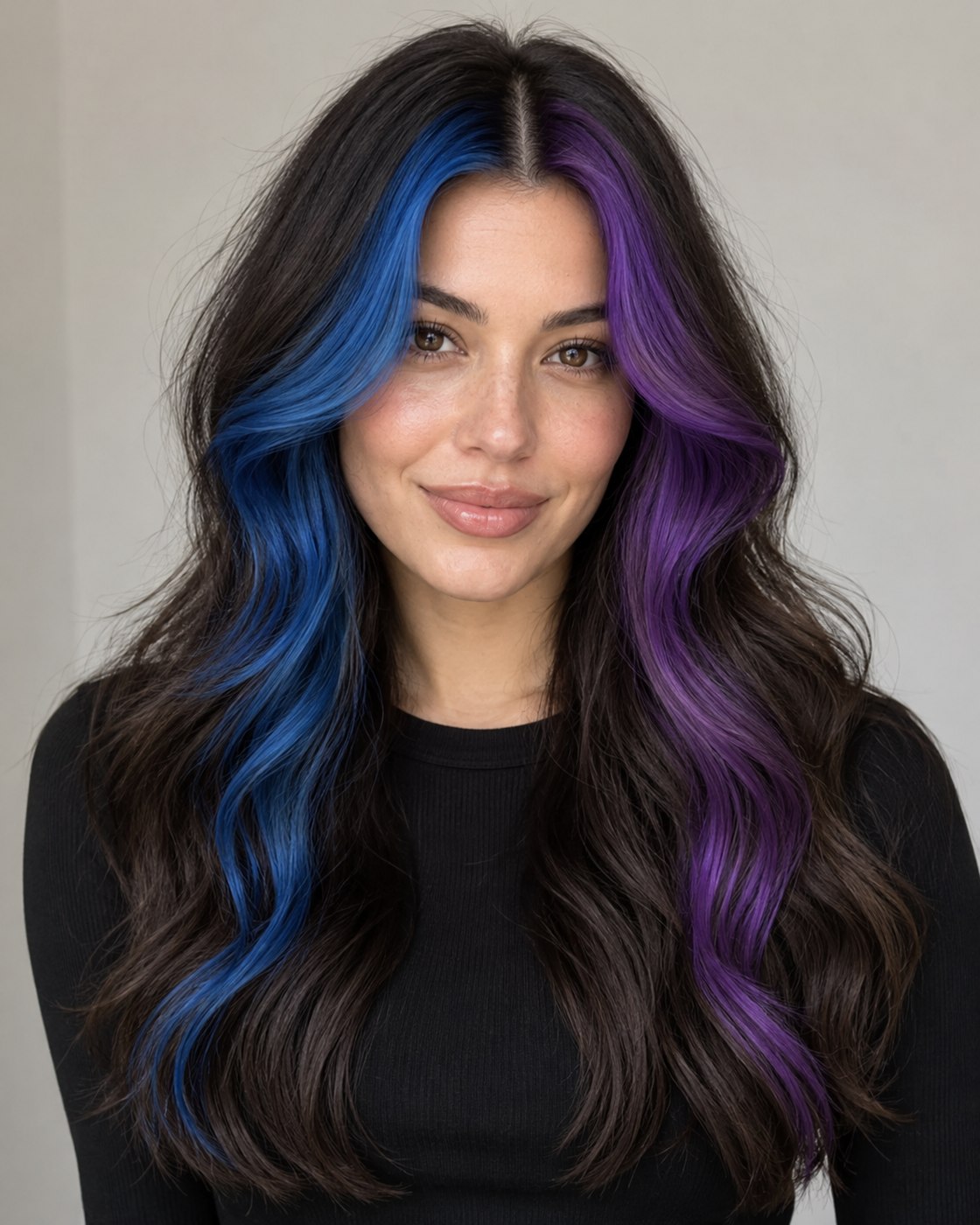
Blue and purple money pieces add vibrant color around your face.
Try cobalt blue on one side and violet on the other, or blend both shades within each front section. Keep the rest of your hair natural or dark for dramatic contrast.
This placement looks particularly stylish with curtain bangs, long layers, and middle-part hairstyles.
10. Smoky Blue and Dusty Lilac Hair
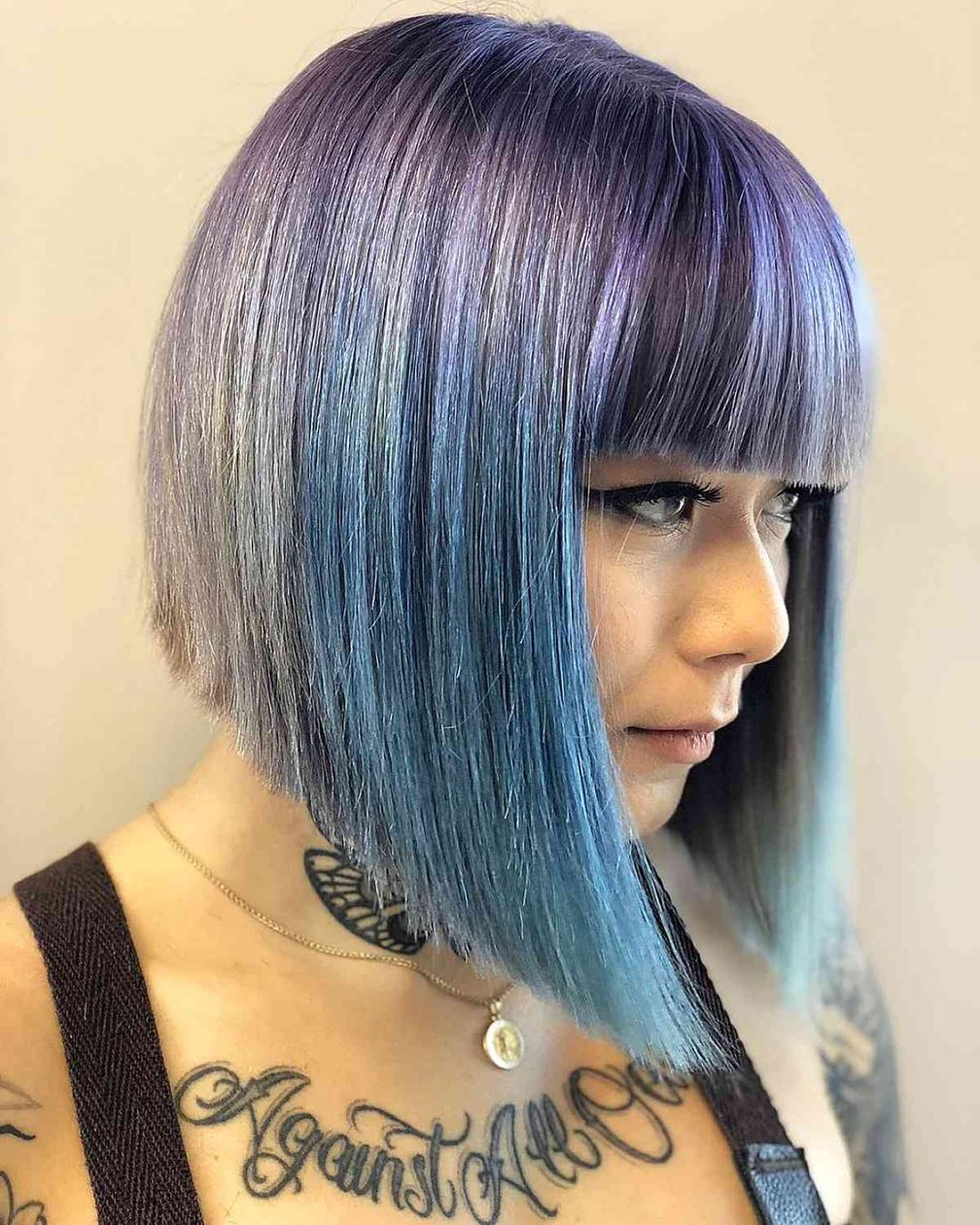
Smoky blue and dusty lilac create a muted, elegant alternative to brighter fashion colors.
The blue has a slightly gray-toned appearance, while the purple leans toward soft lilac. Together, they create a cool, misty finish.
This bluish purple hair combination is beautiful on layered bobs and medium-length waves, although clean, pale smoky shades can require extensive pre-lightening.
11. All-Over Blue Violet Hair Color
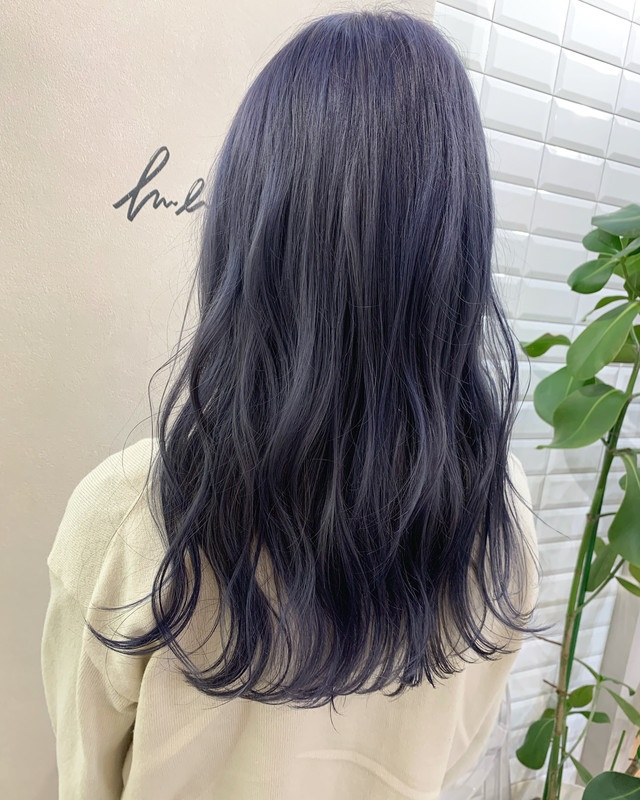
Blue violet hair color is ideal if you can’t decide between blue and purple.
Instead of placing the shades in separate sections, your stylist creates a blended color that sits somewhere between indigo and violet.
Depending on the formulation and lighting, your hair may appear more blue or more purple. It’s a wonderful choice for anyone who prefers an even, multidimensional shade.
12. Blue-Black Hair With Purple Reflections
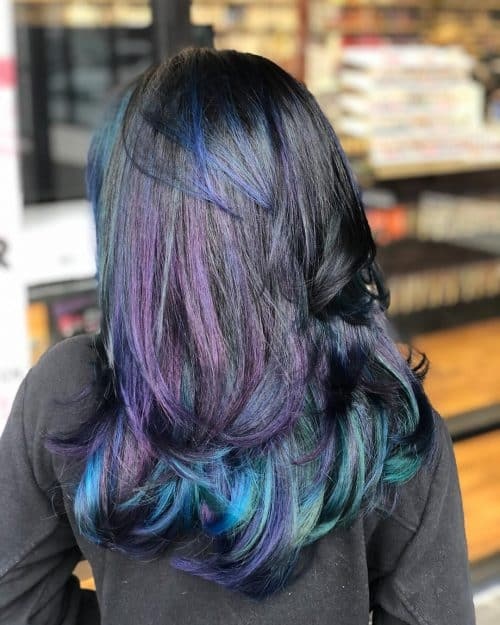
Blue-black and purple hair offers a subtle approach to vivid color.
The base appears nearly black, with navy and violet reflections becoming visible under brighter lighting.
On naturally dark hair, a subtle blue-black or purple sheen may be achievable without extensive bleaching. However, stronger color contrast typically requires additional preparation.
13. Chunky Blue and Purple Highlights
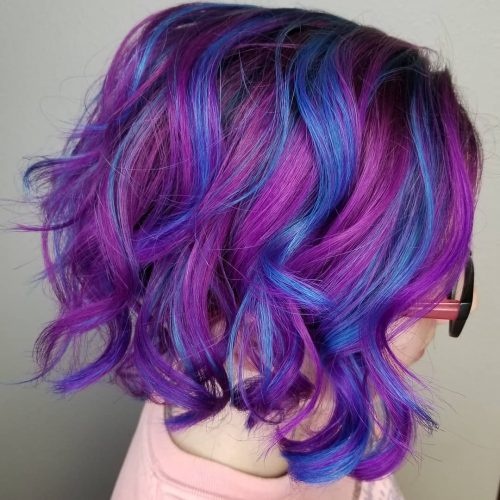
Chunky highlights are perfect for creating a bold, retro-inspired hairstyle.
Alternate thick sections of royal blue and electric purple throughout the hair, or concentrate them around the face.
Unlike delicate balayage, these highlights are intentionally visible. They look especially striking on blunt bobs, layered cuts, and straight hairstyles.
14. Galaxy-Inspired Blue and Purple Hair
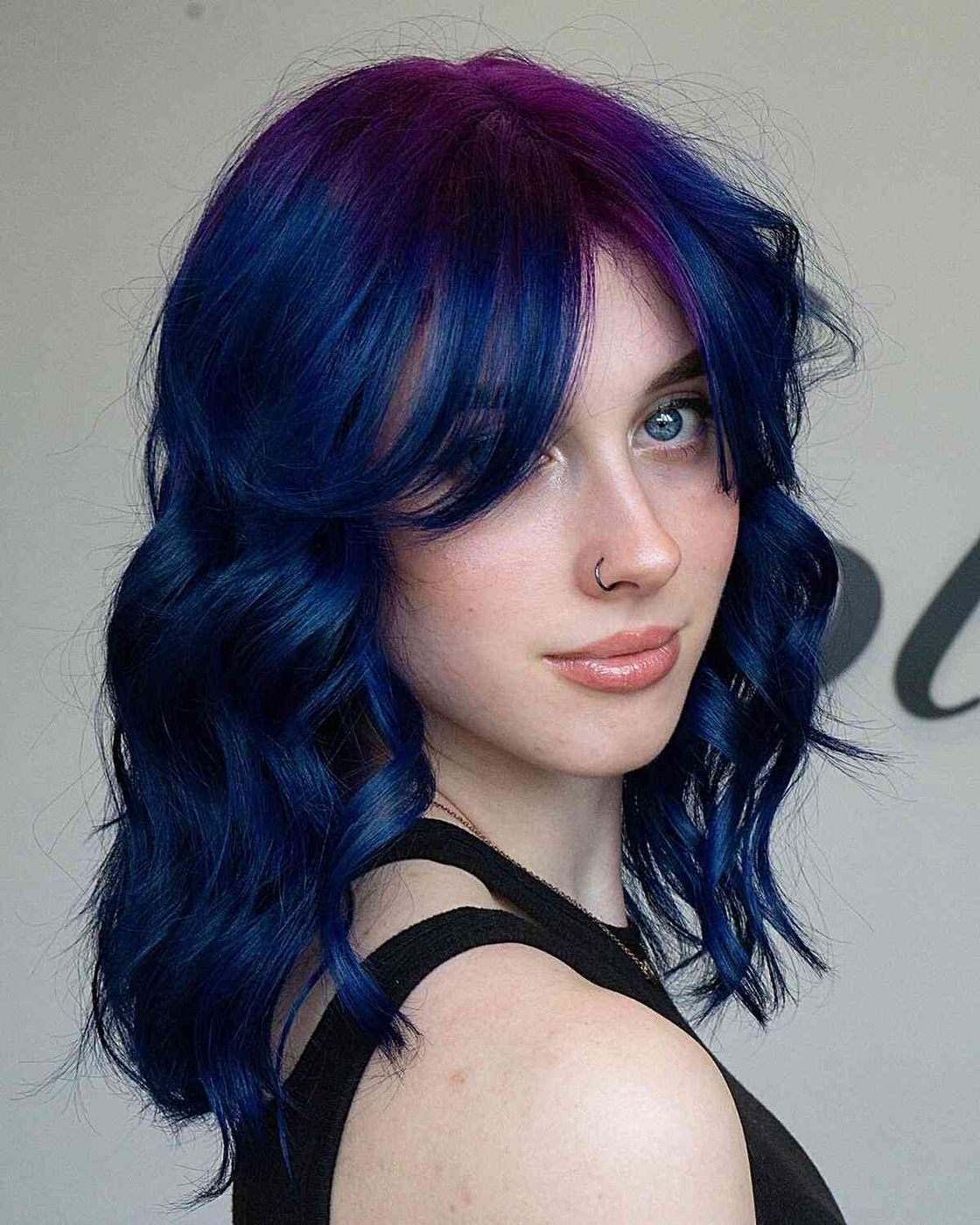
Galaxy hair combines midnight blue, violet, indigo, and lighter purple accents to resemble the colors of a night sky.
Instead of using only two shades, your stylist distributes multiple cool tones throughout the hair.
Long curls and flowing waves help showcase the color variation, making galaxy hair one of the most creative blue purple hair color ideas.
15. Half Blue, Half Purple Split-Dye Hair
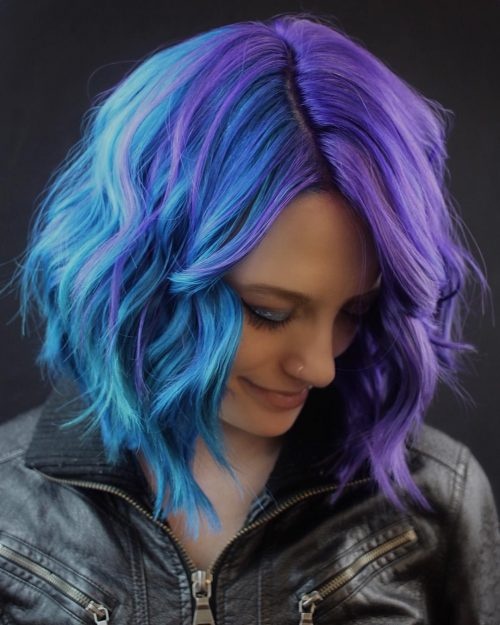
Split-dye hair divides the hairstyle into two distinct color sections.
One side is dyed blue and the other purple, creating a dramatic contrast. You can choose vibrant cobalt and violet or darker navy and plum.
A defined middle part highlights the split effect, making it especially attractive on sleek bobs and long straight hair.
16. Mermaid Blue, Purple, and Teal Hair
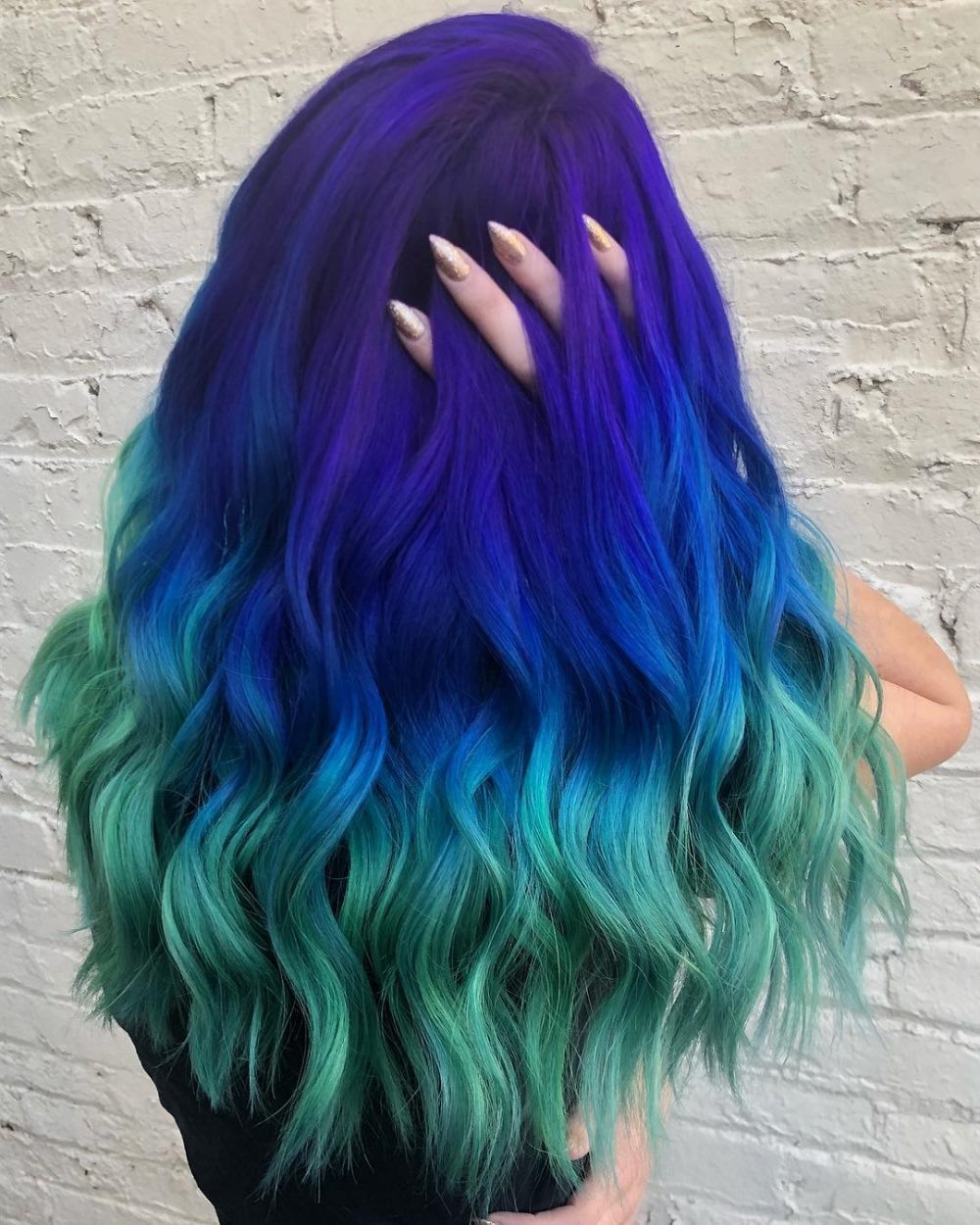
Mermaid-inspired hair combines ocean blue, purple, and touches of teal for a colorful underwater effect.
Deep blue roots can transition into violet mid-lengths and turquoise ends, while subtle highlights create extra movement.
This combination looks beautiful on long wavy hairstyles. Keep in mind that teal tones may become more noticeable as the blue pigment fades.
17. Blue and Purple Pixie Cut
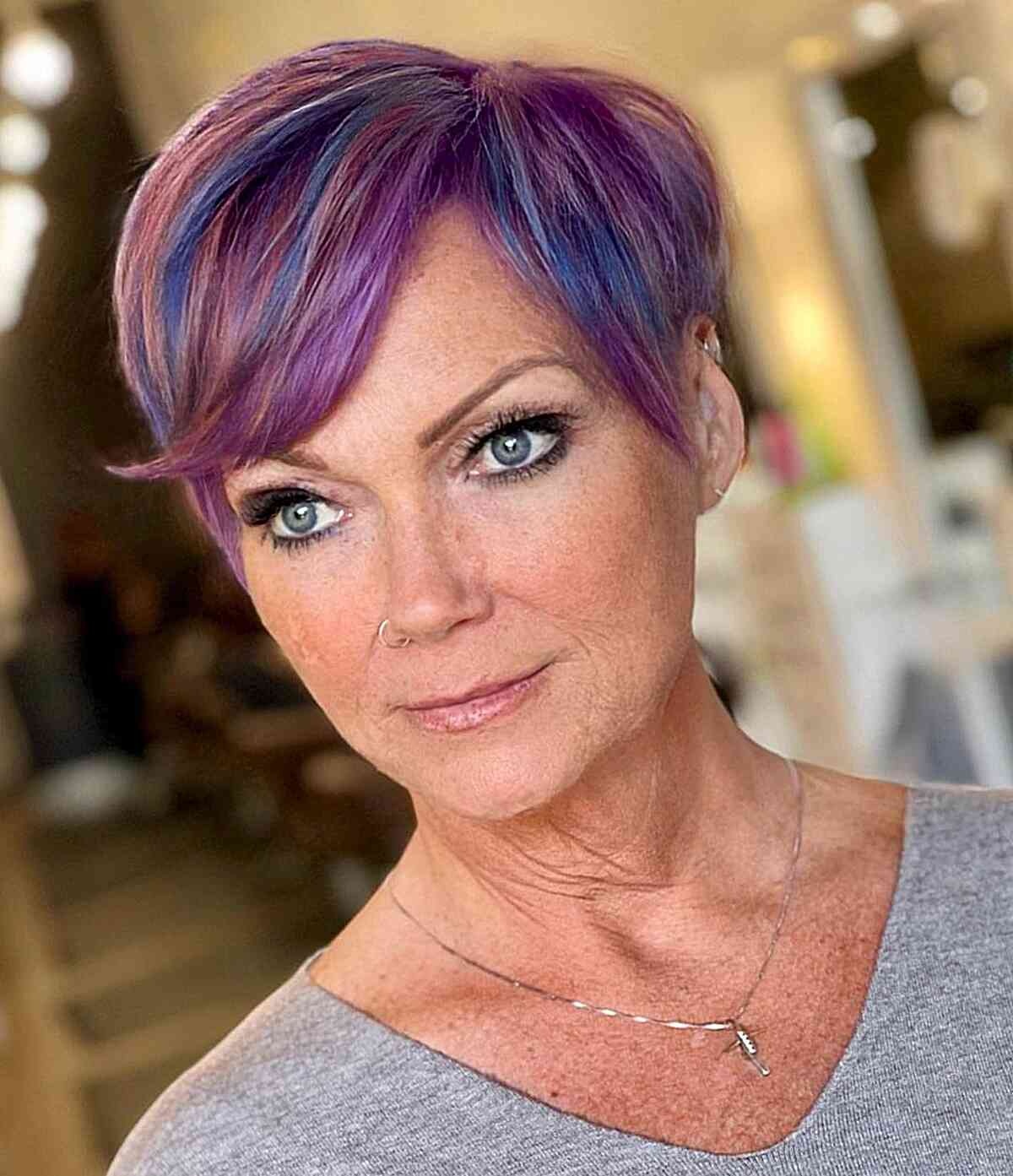
Short hair can showcase vivid colors just as beautifully as long hair.
A textured pixie with electric blue on top and purple around the sides creates a playful, edgy appearance.
Try a colorful fringe or asymmetrical color placement to emphasize the haircut’s shape. Discuss how frequent trims will affect your colored sections.
18. Blue and Purple Wavy Bob
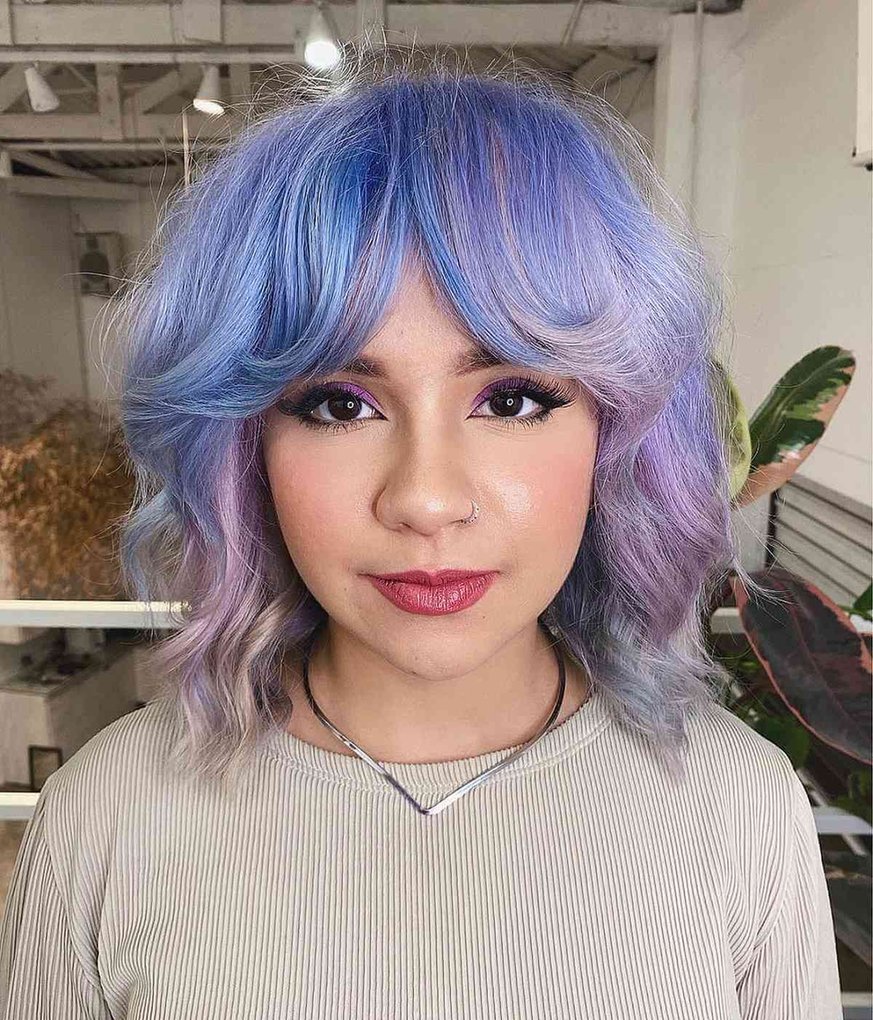
A wavy bob offers plenty of movement to display blue and purple highlights.
You can combine a dark blue base with violet ribbons or blend pastel purple and powder blue for a softer appearance.
Loose waves help separate the colors visually, revealing dimension throughout the hairstyle.
19. Blue and Purple Hair on Natural Curls
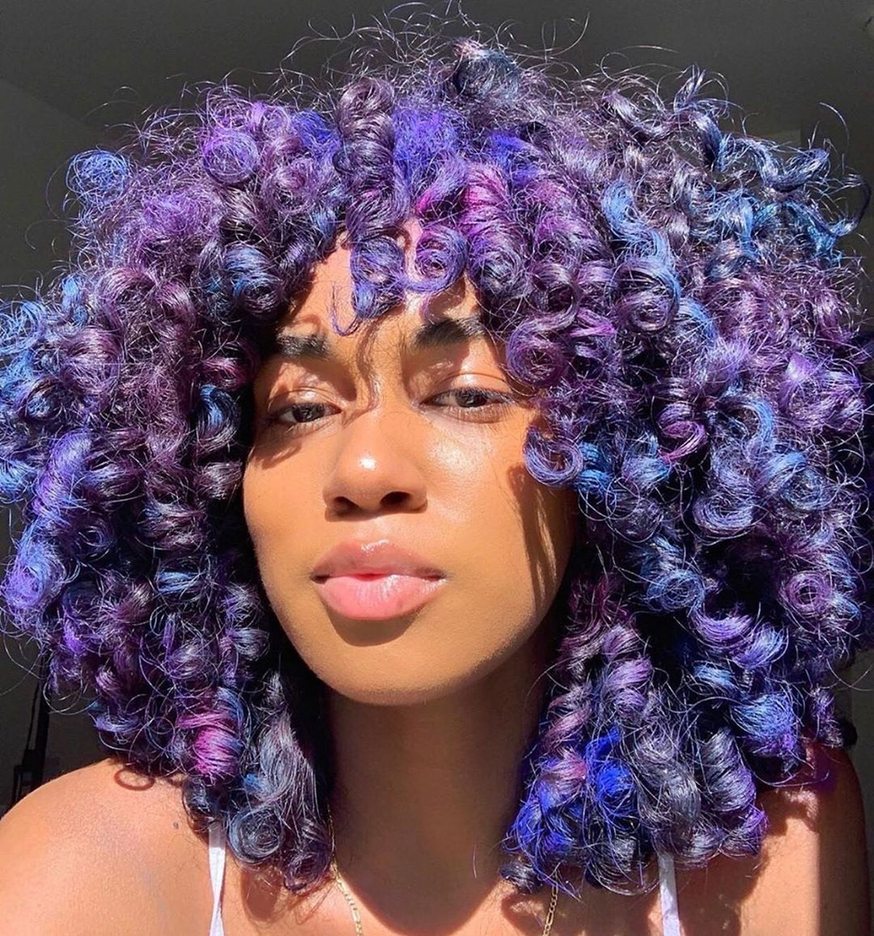
Natural curls and coils create beautiful depth when colored in blue and purple tones.
Try violet face-framing curls with blue ends, alternating colorful sections, or a blended ombre.
Work with a stylist experienced in textured hair, especially when lightening is involved. Curl shrinkage, porosity, and the condition of your hair can all affect color placement and results.
20. Purple and Blue Braids
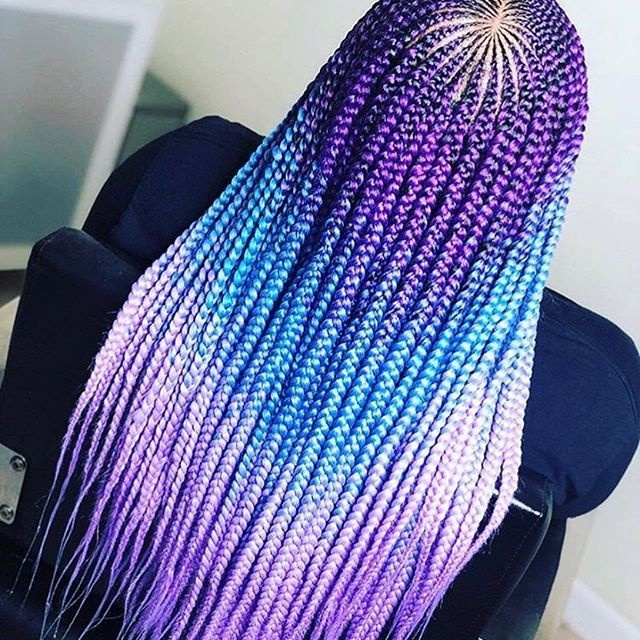
Purple and blue braids are a creative way to wear vivid colors without necessarily dyeing your natural hair.
Colored extensions can be used for box braids, knotless braids, and other braided styles.
Alternate blue and purple braids or use blended extension colors for an ombre appearance. Avoid excessive tension at the scalp, and follow appropriate cleansing and scalp-care routines.
21. Pink, Purple, and Blue Hair
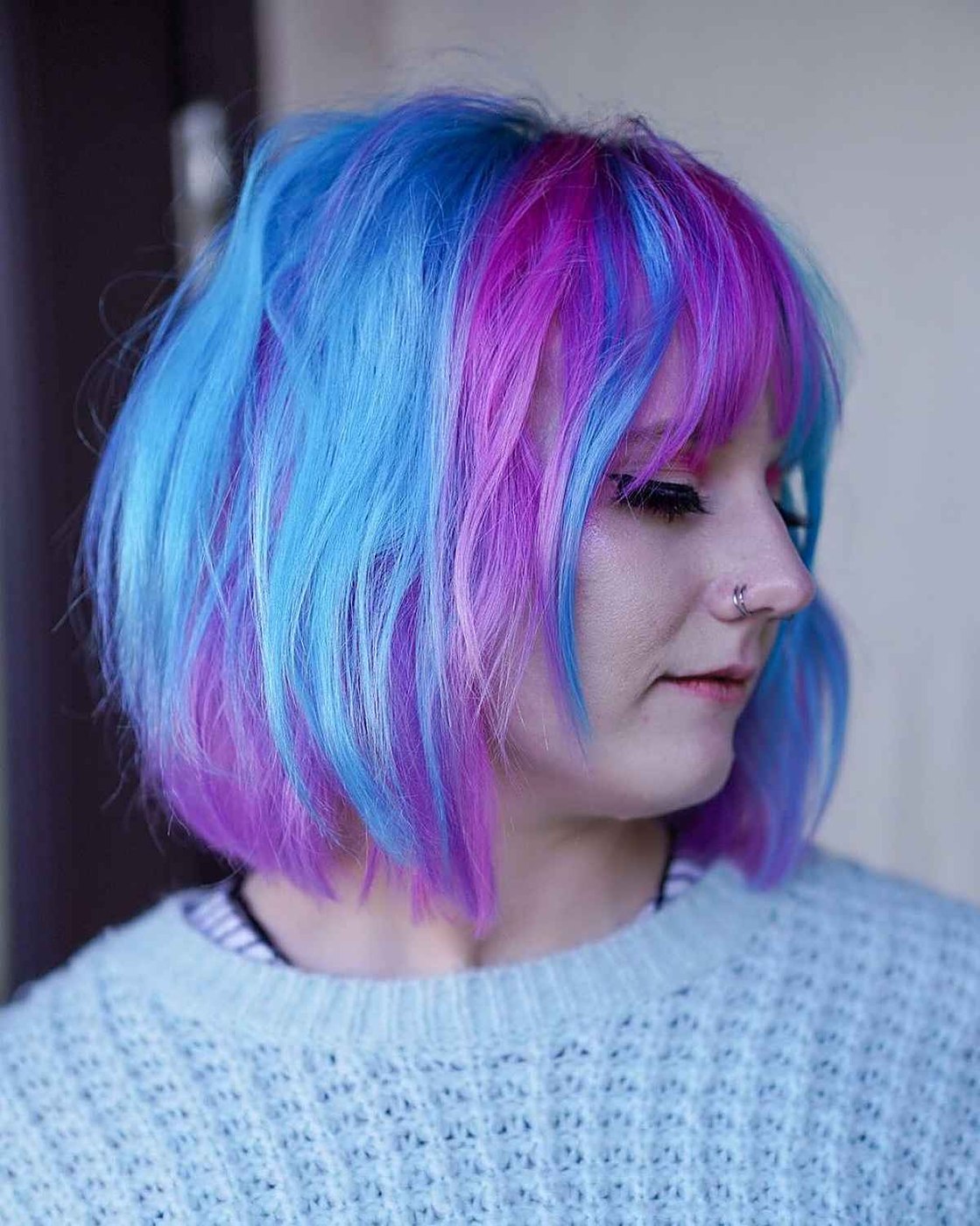
Pink, purple, and blue hair creates a colorful combination with both warm and cool tones.
Try pastel pink near the upper lengths, violet through the middle, and blue toward the ends. Alternatively, place all three colors in scattered highlights.
This combination works particularly well with soft waves and layered hairstyles. Smooth blending helps prevent the colors from looking overly separated.
22. Blonde Hair With Blue and Purple Ends
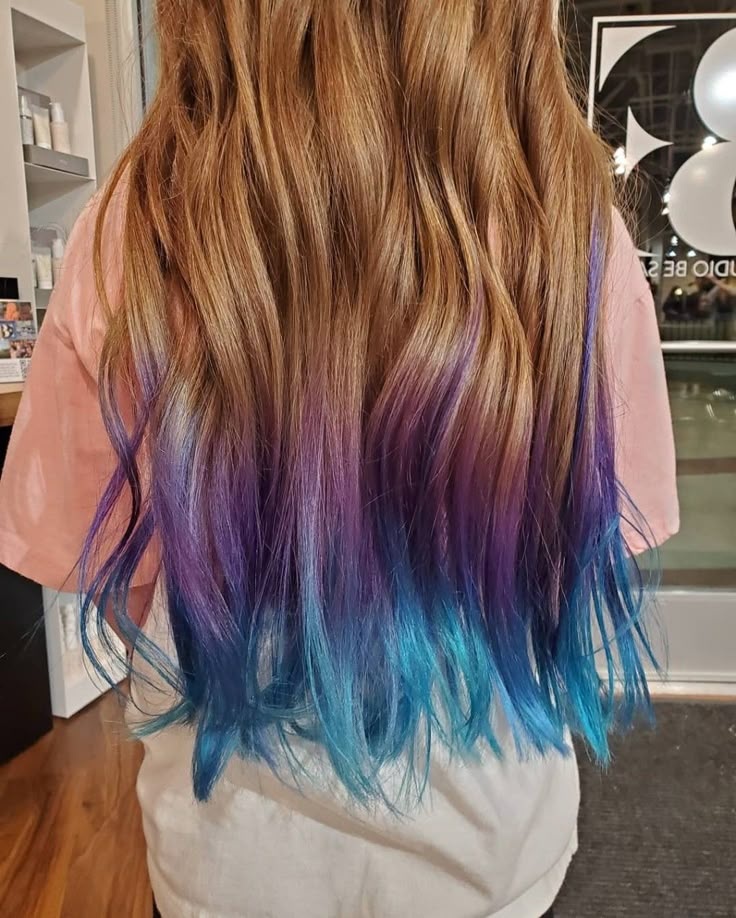
Blonde hair with blue and purple ends creates a playful contrast while keeping much of the blonde base visible.
Try baby blue and lavender for a soft look or cobalt and violet for something bolder.
If your blonde hair is already light enough and in good condition, you may need little or no additional bleaching. However, very pale pastel colors still require an appropriately toned base.
Vivids Maintenance Matrix: Which Blue and Purple Hair Style Is Right for You?
Not every blue and purple hairstyle requires the same amount of bleaching, color refreshing, or ongoing care.
Use this Vivids Maintenance Matrix to compare popular styles before choosing your next look.
| Blue and Purple Hair Style | Bleach Level Required | Maintenance Frequency | Damage Potential |
|---|---|---|---|
| Pastel Blue and Lavender | High — often Level 9–10 | High — approximately every 2–4 weeks | High |
| Electric Blue With Purple Roots | High for vivid blue | High — every 3–6 weeks | Moderate–High |
| Midnight Blue and Purple Balayage | Moderate, mainly selected sections | Moderate — every 4–8 weeks | Moderate |
| Dark Blue Peekaboo Highlights | Low overall; localized lightening may be needed | Low–Moderate — every 6–10 weeks | Low–Moderate |
| Indigo and Violet Color Melt | Moderate–High | Moderate — every 4–8 weeks | Moderate–High |
| Purple Hair With Blue Tips | Moderate, focused on ends | Moderate — every 4–8 weeks | Moderate |
| Smoky Blue and Dusty Lilac | High for pale tones | High — every 3–5 weeks | High |
| Galaxy Blue and Purple Hair | Moderate–High | High — every 3–6 weeks | Moderate–High |
| Blue-Black With Purple Reflections | None–Low for a subtle dark sheen | Low — every 6–8 weeks | Low if no bleach |
| Half Blue, Half Purple Split Dye | Moderate–High | High — every 3–6 weeks | Moderate–High |
| Bright Blue and Purple Highlights | Moderate, targeted sections | Moderate — every 4–8 weeks | Moderate |
| Purple and Blue Extension Braids | None if using pre-colored extensions | Style upkeep varies, often 4–8 weeks | Low chemical damage; tension risk remains |
How to read the matrix:
- Bleach level required: Estimates the amount of lightening usually involved, assuming you are starting with naturally dark hair.
- Maintenance frequency: Gives approximate intervals for refreshing color or maintaining the look. Root retouches and lightening appointments may follow different schedules.
- Damage potential: Reflects the relative risk associated with the chemical processing needed, rather than the color pigments alone.
These are planning estimates, not universal rules. Naturally blonde hair may need considerably less lightening, while dark hair, previous dye, or fragile strands can require a different approach.
Best lower-commitment options: Blue-black with purple reflections, dark blue peekaboo highlights, and colored extension braids.
Best for maximum color impact: Electric blue with purple roots, pastel lavender and blue, and galaxy-inspired hair.
How to Choose the Right Blue and Purple Hair Color
The right color depends on your starting shade, hair condition, desired brightness, and styling preferences.
For dark brown or black hair: Choose midnight blue, indigo, navy, plum, or deep violet if you prefer rich, subtle color. Bright fashion shades generally require lightening.
For naturally blonde hair: Pastel lavender, icy blue, periwinkle, and brighter violet shades may be achievable with less preparation, depending on your natural level and existing tone.
For short hair: Consider a colorful pixie, chunky highlights, split dye, or face-framing sections.
For long hair: Ombre, balayage, galaxy color, and flowing color melts provide more space for gradual transitions.
For lower-commitment color: Try peekaboo highlights, colored extensions, or a limited number of face-framing pieces.
Remember that lighter isn’t automatically better. Aggressive lightening can leave hair dry, fragile, and prone to breakage. Prioritize your hair’s condition over reaching a specific shade in one appointment.
Stylist Consultation Checklist: What to Ask Before Getting Blue and Purple Hair
Save or screenshot this checklist before your salon appointment. These questions will help you understand the preparation, cost, maintenance, and realistic results of your chosen style.
Bring This Checklist to Your Colorist
- Starting level: “What is my current hair color level on the 1–10 scale?”
- Pastel requirements: “Does my hair need to be lifted to a Level 9 or 10 blonde to achieve pastel purple or baby blue?”
- Bleaching: “Can we achieve my preferred shade with partial lightening, or will I need a full-head bleach service?”
- Hair health: “Can you assess my hair’s porosity, elasticity, and previous color history before lightening?”
- Strand testing: “Can we perform a test strand to see how my hair lifts and whether the desired shade is achievable?”
- Color technique: “Would balayage, ombre, a root shadow, or a color melt create the result in my reference photo?”
- Dye formulation: “Will you use semi-permanent, demi-permanent, or permanent color, and how will that affect fading?”
- Fading profile: “Could this blue shade fade toward teal or green, and what can we do to reduce that possibility?”
- Color correction: “If unwanted green appears, what professional toning or color-correction options would you recommend?”
- Maintenance: “How frequently should I return for color refreshes, and what products should I use between visits?”
- Future color changes: “If I want blonde or another shade later, how difficult will it be to remove the blue pigment?”
- Budget and timing: “What is the estimated total cost, including lightening, toning, vivid color application, and future appointments?”
Salon tip: Bring two or three inspiration photos rather than relying only on descriptions such as “blue-purple” or “lavender.”
Show your stylist the color you want in both natural and indoor lighting if possible. Also explain what you don’t want, such as visible green undertones, extremely bright roots, or frequent touch-ups.
A good consultation should establish what can reasonably be achieved without compromising your hair’s condition.
Important: How Blue and Purple Hair Fades (and Why Blue Can Turn Green)
One detail worth understanding before trying blue and purple hair dye is that the two colors do not always fade in the same way.
Blue pigments can be particularly stubborn on porous, pre-lightened hair. Even when the original color loses its intensity, residual blue or teal staining may remain.
Why Does Blue Hair Sometimes Fade to Green?
Lightened hair often retains yellow undertones. When blue pigment sits over a yellow base, the combination can appear turquoise or greenish.
As the blue gradually fades, the underlying yellow can become more visible, leaving behind a teal, sea-green, or muddy green appearance.
However, not every blue hair dye fades green. The result depends on the dye formula, the amount of yellow underneath, the hair’s porosity, and how the pigments fade.
A cool, pale blonde base generally offers a better starting point for clear, icy blue than a strongly yellow base.
How to Reduce Unwanted Green Undertones
1. Discuss pre-toning before applying blue dye.
If your starting blonde has strong yellow undertones, your stylist may recommend neutralizing that warmth before applying certain shades of blue.
Violet-based toning products can help counteract yellow, although the correct formula depends on your current hair level.
2. Understand which toner corrects which color.
Color correction follows complementary color relationships:
| Unwanted Hair Tone | Common Corrective Pigment |
|---|---|
| Yellow | Violet or purple |
| Orange | Blue |
| Red | Green |
| Green | Red or pink-based warmth |
| Blue-green or teal | A customized warm corrective formula |
These are color-theory guidelines, not ready-made formulas. Hair color correction must account for existing dye, depth, porosity, and the result you want.
3. Be cautious with red or purple toning washes.
A purple toning shampoo or wash is designed primarily to counteract yellow, not to remove an existing green stain.
For genuinely green hair, a stylist may use a carefully formulated red-, pink-, or copper-based color correction to rebalance the tone. However, applying red pigment indiscriminately over blue-green hair can create a muddy or overly dark result.
Ask your colorist whether a customized color-depositing wash or salon treatment is appropriate. Always test a small section first.
4. Don’t repeatedly bleach stubborn blue pigment at home.
Some blue and green direct dyes can be difficult to remove. Repeated bleaching or aggressive color stripping may cause serious breakage, especially on previously lightened hair.
If you’re planning to change from blue hair to blonde, pastel pink, or another light color, professional correction is the safer option.
5. Plan your next color before choosing the first one.
If you frequently switch between pastel shades, ask about the removal behavior of the specific blue dye being used.
Some formulations fade more cleanly than others, and a darker or more saturated shade may be harder to transition away from.
How to Maintain Blue and Purple Dyed Hair
Beautiful blue and purple hair requires a maintenance routine suited to both your dye and your hair’s condition.
While no routine can completely prevent fading, a few practical habits can help preserve your color and reduce unnecessary damage.
Use Gentle Hair-Care Products
Choose shampoos and conditioners suitable for color-treated hair. Avoid excessive washing, especially if your stylist has used a semi-permanent fashion color.
A color-depositing conditioner may help refresh certain shades between visits, but choose one that matches your existing formula.
Limit Excessive Heat Styling
Frequent use of high-temperature styling tools can contribute to dryness and breakage in chemically treated hair.
Air-dry when practical, use suitable heat protection, and avoid unnecessarily high temperatures.
Protect Hair From Sun Exposure
Extended UV exposure can contribute to fading and damage.
Consider wearing a hat when spending significant time outdoors, particularly if your hair has been bleached.
Keep Your Hair Conditioned
Lightened hair can become more porous and fragile.
Regular conditioning, careful detangling, and salon-recommended treatments can help manage dryness. A treatment may improve hair feel and manageability, but it cannot fully reverse structural damage caused by excessive bleaching.
Refresh the Color When Needed
Pastel blue and lavender may show fading relatively quickly, while dark indigo or violet can retain visible pigment longer.
Your stylist can recommend a refresh schedule based on the product used, how often you wash your hair, and your desired intensity.
Follow Hair Dye Safety Instructions
Always follow the dye manufacturer’s directions, including allergy testing where instructed.
If you have a history of hair dye reactions, consult an appropriate healthcare professional before coloring.
Avoid applying incompatible dye products together or performing corrective bleaching without professional guidance.
Frequently Asked Questions About Blue and Purple Hair
What color does blue and purple make on hair?
Mixing blue and purple pigments generally creates a blue-violet or indigo-toned result. However, the exact shade depends on the specific dye pigments, their proportions, and your existing hair color. Applying blue over already-purple hair can produce a different result from mixing compatible dyes before application.
Can you dye dark hair blue and purple without bleaching?
Yes, some dark blue and purple dyes can create a subtle tint or reflection on dark hair without bleaching. However, vibrant electric blue, bright violet, and pastel shades typically require pre-lightening for clear visibility.
Can you put blue hair dye over purple hair?
It may be possible, but the result depends on the remaining purple pigment. Adding blue to purple can create indigo or bluish-purple tones, while uneven fading may produce patchy color. A strand test helps determine whether the combination will work as intended.
How long does blue and purple hair color last?
There is no single timeline. Semi-permanent fashion colors fade with washing, while longer-lasting formulas and certain direct dyes may leave residual pigment. Hair porosity, previous lightening, product choice, and washing habits all influence longevity.
Does blue hair always fade to green?
No. Some blue dyes fade toward teal or green, while others become softer blue, grayish, or less saturated. Yellow undertones in lightened hair can contribute to a greener appearance, but the original dye’s formulation also matters.
Can purple shampoo fix green hair?
Not reliably. Purple shampoo is primarily intended to neutralize unwanted yellow tones. Actual green discoloration usually needs a different color-correction strategy, potentially involving a controlled amount of warm red, pink, or copper pigment.
For significant green staining, consult a professional rather than experimenting with multiple toning products.
Are blue and purple highlights easier to maintain than full color?
They can be, especially when they’re placed away from the roots and blended into your natural shade. However, the colored sections may still need periodic refreshing, and any bleached hair will require appropriate care.
Is pastel lavender more damaging than dark purple hair?
Pastel lavender often requires a much lighter starting base than dark purple. If your natural hair is dark, reaching a pale blonde level can involve more chemical processing and therefore a higher damage risk.
The final level of damage depends on your starting hair condition, previous treatments, and how the lightening is performed.
Final Thoughts
Blue and purple hair offers endless opportunities for creativity, from deep midnight balayage to pastel lavender waves and bright galaxy-inspired color.
If you’re looking for a more manageable introduction to vivid shades, consider blue-black reflections, purple and blue peekaboo highlights, or colored extensions. If you’re ready for a more dramatic transformation, electric blue ombre, split dye, and pastel color melts can make a beautiful statement.
Before booking your appointment, compare the options in the Vivids Maintenance Matrix and bring the Stylist Consultation Checklist to your colorist.
Most importantly, remember that achieving the perfect shade is only part of the process. Understanding bleaching requirements, maintaining your hair’s condition, and planning for blue and purple fading will help you make a more informed decision.
The best hairstyle is one that reflects your personality while fitting your hair’s needs, maintenance preferences, and long-term color goals.